
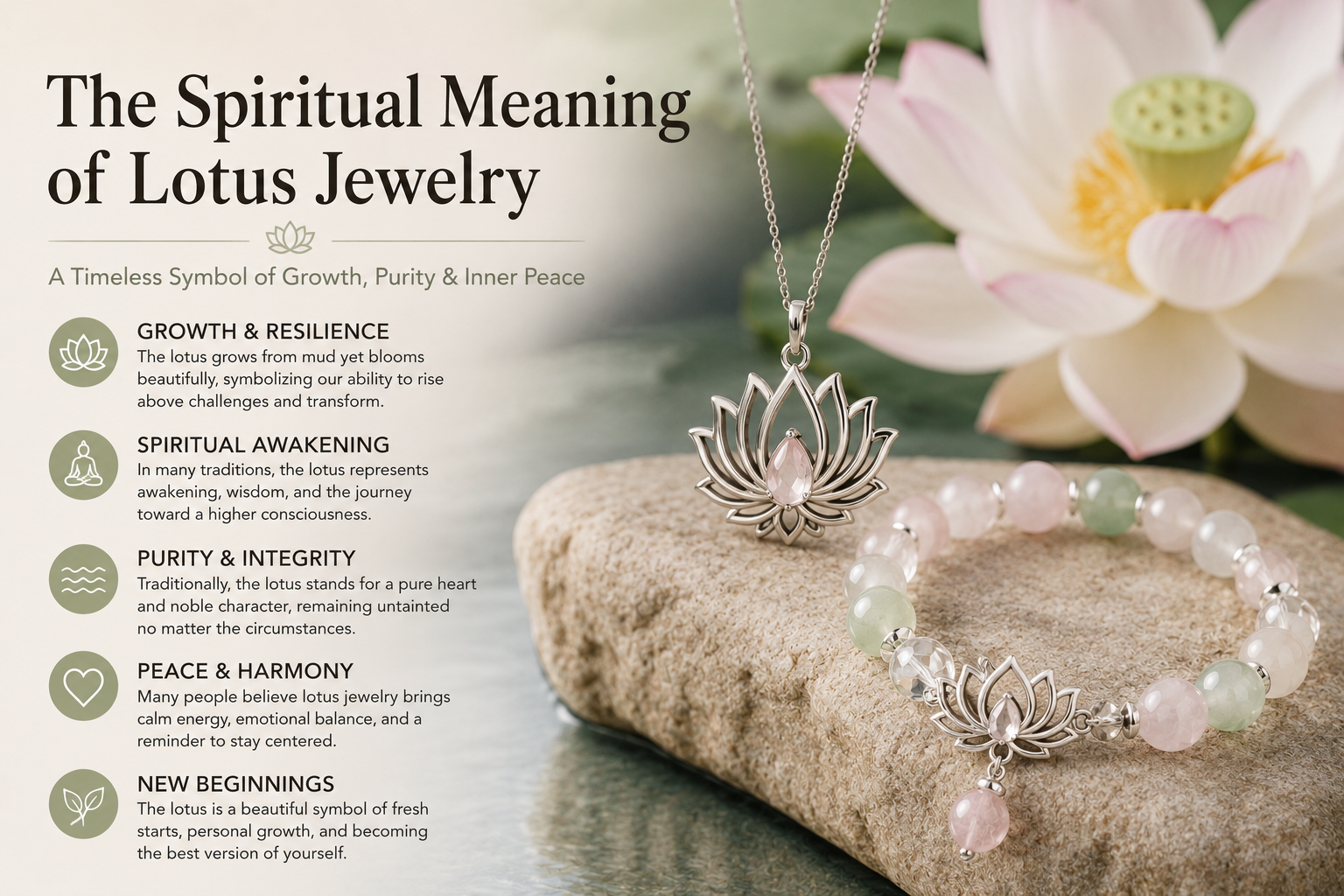
Lotus jewelry can suggest purity, integrity or a personal idea of renewal, but it does not carry one compulsory meaning. A flower outline on a pendant cannot by itself identify the wearer’s religion. The design, its documented inspiration and the wearer’s own association all deserve consideration.
More than one reading in Chinese art
In an original study published by The Metropolitan Museum of Art, Robert E. Harrist Jr. discusses several Chinese lotus meanings. He distinguishes Buddhist associations, Zhou Dunyi’s praise of purity and an artist’s particular poetic interpretation. This is a useful warning against reducing every lotus image to one generic message.
A modern pendant may borrow the flower’s shape without reproducing any one of those artworks. If its seller names a tradition, ask which image or text inspired the piece rather than assuming that a floral motif proves a religious origin.
A specific textile gives another example
The Smithsonian’s description of the Ming textile Dragonfly and lotus plants connects its lotus imagery with purity and integrity, as well as Buddhist transcendence. It also notes a Chinese sound-based association with peace. Those readings belong to a described object and linguistic context.
Our guide to specific Asian jewelry and symbolic traditions considers why named examples are more helpful than sweeping statements about an entire continent. Similar-looking flowers can appear in different settings.
Choosing a meaning for yourself
You might connect the motif with beginning again, keeping a promise to yourself or appreciating a particular work of art. Say that this is your own interpretation. It does not need to be advertised as an ancient rule to be worthwhile.
A symbolic association also does not make the jewelry a treatment for emotional difficulties. If you like it as a reminder, that can remain a modest personal choice rather than a promised effect.
Read the design before ordering
Look at whether the piece depicts a flower, bud, pedestal or a larger scene. Ask whether it includes a figure, inscription or additional symbol you have not identified. A close-up photograph and an explanation of the design may tell you more than a long list of abstract benefits.
Our bracelet selection guide helps with the practical side: dimensions, fastening and how the piece sits during daily activities. Choosing a meaningful motif should not mean accepting an uncomfortable accessory.
Giving lotus jewelry
Ask whether the recipient likes the design and welcomes its associations. Explain the thought behind your choice without prescribing how they should understand a difficult experience. A gift does not have to tell someone that suffering was necessary for growth.
For comparison, our Pixiu meaning article shows how another motif expresses different hopes. Choose the symbol that suits the person rather than treating all meaningful jewelry as interchangeable.
The lotus offers rich possibilities precisely because its history has more than one voice. A clear explanation can preserve that variety while leaving room for the wearer.
Comments
Leave a comment
Please note, comments must be approved before they are published.