
For the complete topic overview, start with our guide to meaning, materials and everyday use. This article addresses the specific question below.
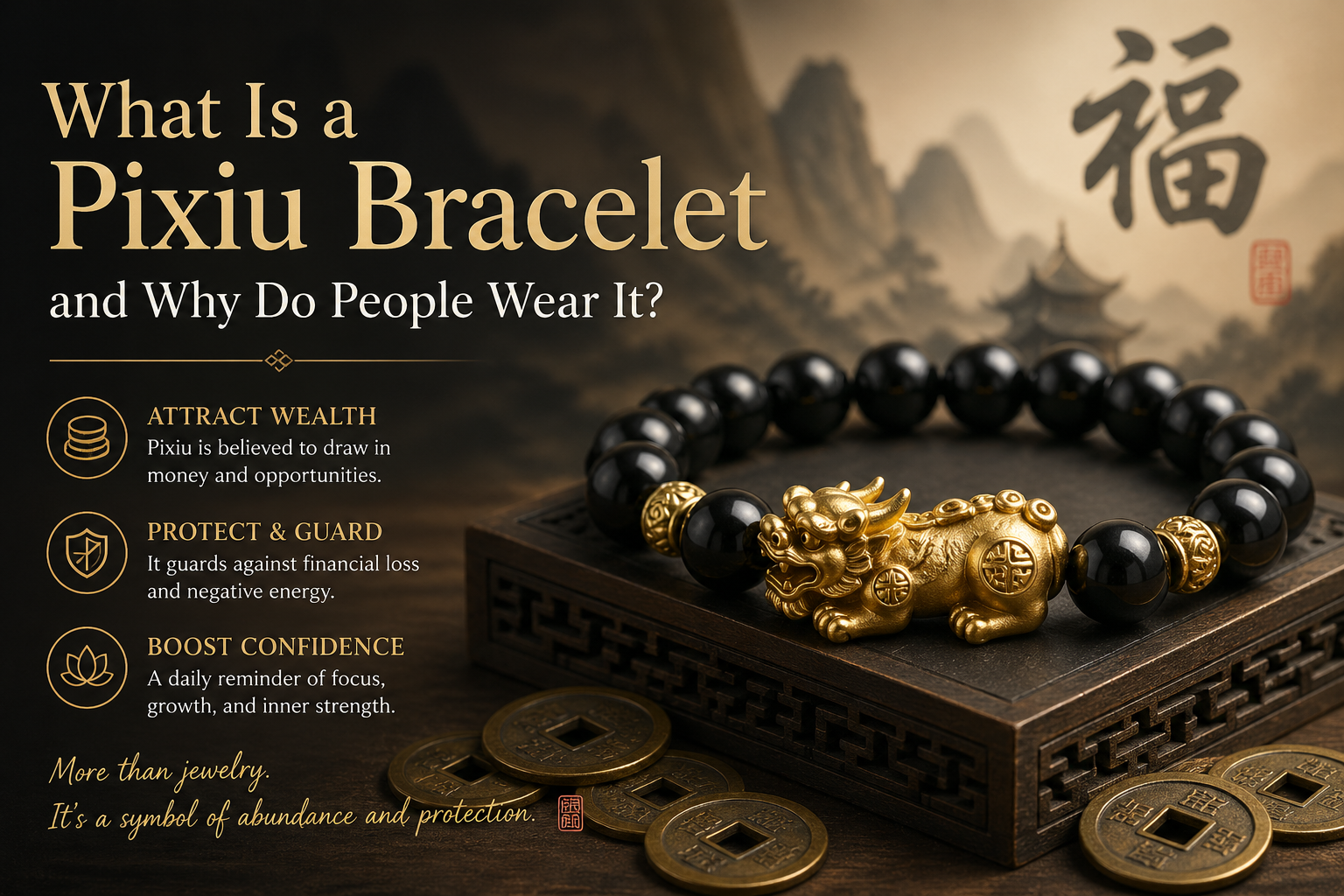
A Pixiu bracelet uses a carved or molded mythical-animal motif as part of its design. Its charm, beads and fastening answer different questions. This introduction explains how to read those parts; it leaves detailed folklore and wearing customs to their own articles.
Start with the design, not a fixed silhouette
Look at the actual carving and the maker’s description. Names and appearances of mythical beasts can vary; a rule about a single horn or an exact animal outline is not enough to identify every historical or modern object. The National Palace Museum Southern Branch’s exhibition on fantastic creatures provides context for those changing identities.
Reading the Beads Separately from the Motif
The charm tells one story; its surrounding materials tell another. Jade, dark beads, red cord, and metal settings change the visual character of a piece. Their presence does not make the wealth symbolism more effective.
The National Palace Museum's The Virtue of Jade describes jade's historical associations with moral qualities. Our introduction to Hetian jade develops that separate material and cultural context.
For a banded stone design, the agate guide explains why treatment information matters. Identify what the actual bracelet contains, including its metal and cord, rather than assuming the animal motif establishes quality or authenticity.
Compare three parts of the same bracelet
Read the charm material separately from the bead material. Ask whether a metal-colored surface is described as a color, plating or a specified metal. Then check the cord or clasp and the usable wrist circumference. A material named for one part should not silently become a claim about the whole piece.
Use photographs to compare the charm’s scale against the beads and wrist. Projecting details, overall weight and the fastening can affect whether you enjoy wearing the design. None of those observations establishes laboratory identity, treatment or provenance.
Choose the next question you actually have
For the guardian image, read Pixiu guardian symbolism. For the prosperity story, read the “in but not out” folklore. These explain associations rather than product effects.
For a purchase, use the Pixiu buying checklist; for wrist, direction and handling questions, use the wearing-customs article. Keeping those questions separate makes it easier to check what the specific product description actually establishes.
Comments
Leave a comment
Please note, comments must be approved before they are published.