
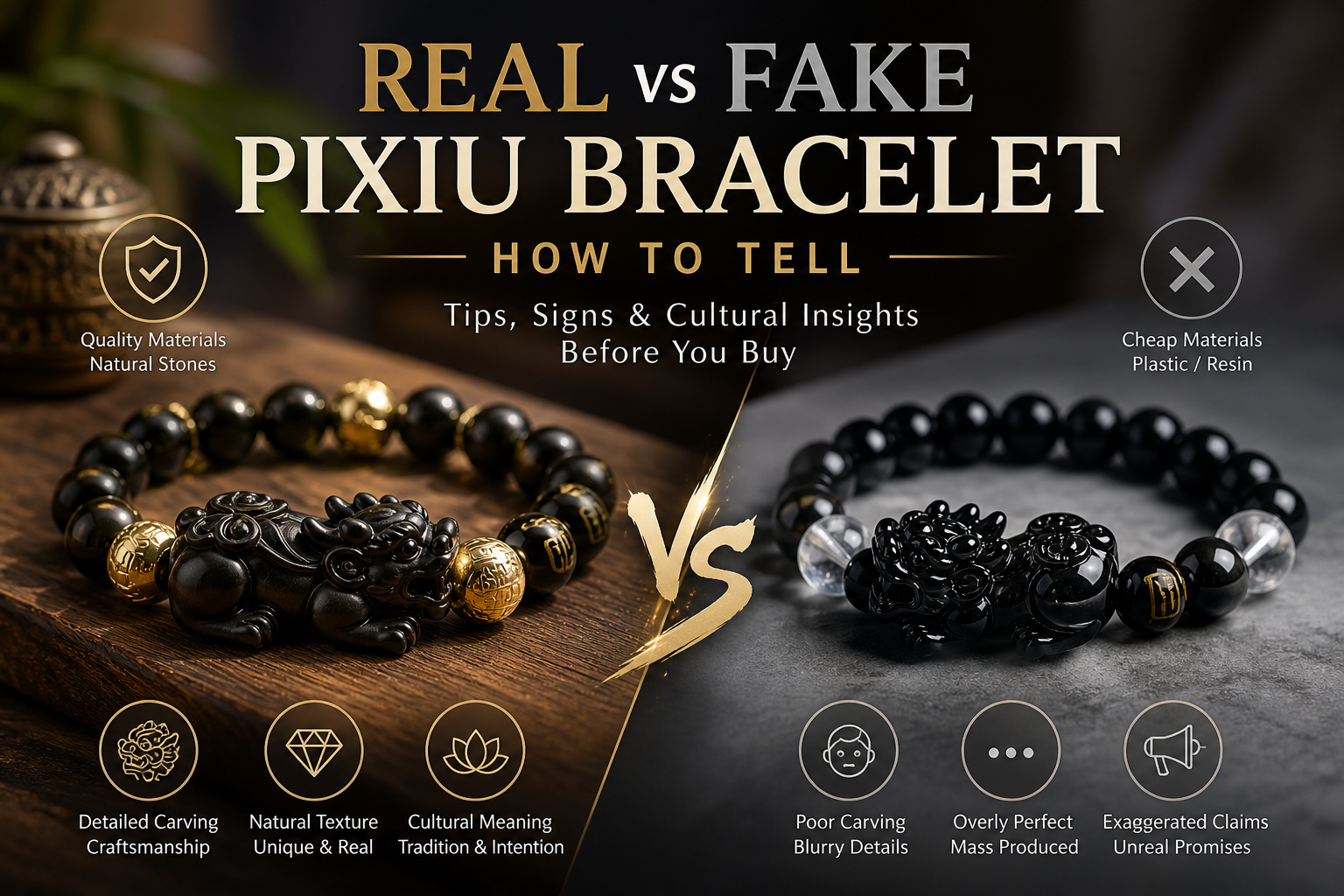
If you’ve ever searched for a Pixiu bracelet online, you’ve probably noticed something strange — two bracelets can look almost identical, but one costs $15 and another costs over $150.
So what’s the difference?
I remember buying my first Pixiu bracelet years ago from a crowded market shop in Asia. The seller spoke softly, wrapped the bracelet in red cloth, and told me, “A real Pixiu chooses its owner.” At the time, I honestly had no idea whether I bought something authentic or just a tourist souvenir.
Since then, I’ve handled many different Pixiu bracelets — some beautifully crafted, others clearly mass-produced. And while there’s no perfect way to judge spiritual authenticity, there are a few signs that many people believe help separate a meaningful piece from a fake one.
First, What Is a Pixiu?
In traditional Chinese culture, Pixiu is a mythical creature believed to attract wealth and guard against bad fortune.
Traditionally, Pixiu was associated with protection, prosperity, and loyalty. In Feng Shui culture, many people wear Pixiu bracelets as symbolic charms for financial luck or emotional confidence.
But because Pixiu jewelry became popular worldwide, the market is now flooded with cheap replicas and factory-made copies.
That doesn’t automatically mean a lower-priced bracelet is “bad.” But many people believe there’s a noticeable difference in craftsmanship, materials, and energy between authentic artisan pieces and mass-produced imitations.
1. Look at the Material Carefully
One of the easiest clues is the material itself.
Real Pixiu bracelets are traditionally made from natural stones like:
- Obsidian
- Jade
- Tiger’s Eye
- Black Agate
- Citrine
Fake versions are often made from dyed plastic, resin, or glass.
Here’s something many beginners miss: natural stones usually have tiny imperfections. Small lines, uneven textures, or slight color variations are normal. In fact, perfectly identical beads can sometimes be a warning sign.
For example, real obsidian often reflects light softly and has depth beneath the surface. Cheap plastic beads tend to look overly shiny or flat.
Traditionally, natural materials were considered important because people believed the stone itself carried energy from nature.
2. The Pixiu Carving Matters
A real Pixiu bracelet usually has detailed craftsmanship.
In traditional depictions, Pixiu has:
- Fierce eyes
- A strong mouth
- Wings or carved body details
- A posture that looks alert and protective
Cheap fake versions often look cartoonish or poorly shaped. Sometimes the face looks blurry, uneven, or rushed.
Many experienced collectors believe the expression of the Pixiu matters because the creature symbolizes strength and guardianship.
Hand-carved Pixiu pieces often feel more alive compared to factory molds.
3. Be Careful With “Too Perfect” Products
This is something I learned the hard way.
If every bracelet photo online looks exactly the same, it’s usually mass production.
Authentic stone bracelets naturally vary a little. No two jade beads are completely identical. Traditionally handcrafted pieces may also have small carving differences.
Ironically, slight imperfections can sometimes make a bracelet feel more genuine.
4. Watch Out for Fake Spiritual Claims
This is probably the biggest red flag.
Be cautious when sellers promise things like:
- “Guaranteed wealth in 7 days”
- “Instant money attraction”
- “100% life-changing power”
Traditionally, Pixiu was never treated like a magic shortcut.
In Chinese culture, many people see Pixiu more as a symbolic companion — something that represents intention, discipline, protection, and opportunity.
A bracelet cannot replace effort, wise decisions, or real financial planning.
That’s why trustworthy sellers usually speak respectfully about tradition instead of making extreme promises.
5. The Red String Tradition
Many authentic Pixiu bracelets include red string elements.
In Chinese tradition, red symbolizes protection, vitality, and good fortune. Historically, red thread was often used in charms, wedding customs, and spiritual accessories.
Of course, not every red-string bracelet is authentic. But traditionally, the combination of Pixiu and red cord carries cultural meaning beyond decoration.
6. Pay Attention to the Feeling
This part is personal.
Many people believe you can “feel” the difference between a meaningful bracelet and a cheap imitation.
Not necessarily mystical energy — sometimes it’s simply the craftsmanship, weight, texture, or emotional connection.
I’ve picked up bracelets that felt cold, lifeless, and rushed. I’ve also held simple handmade ones that somehow felt calming immediately.
That feeling is difficult to explain logically, but in traditional spiritual culture, intention has always mattered.
Final Thoughts
At the end of the day, buying a Pixiu bracelet isn’t only about spotting fake materials.
It’s also about respecting the culture behind it.
Traditionally, Pixiu was never just fashion jewelry. It represented protection, prosperity, and personal intention. Many people today still wear Pixiu bracelets as reminders to stay focused, disciplined, and open to opportunity.
And honestly, that may be the most important part.
A real Pixiu bracelet doesn’t need to promise miracles.
Sometimes, the meaning you bring to it matters just as much as the bracelet itself.
Comments (0)
No comments yet. Be the first to comment!
Leave a Comment
Please note, comments must be approved before they are published.