
A few years ago, I visited an old courtyard house in southern China. It wasn't large or luxurious. In fact, the furniture was simple, and the decorations were minimal. Yet the moment I stepped inside, I felt something different. The space felt quiet, balanced, and surprisingly comforting.
The owner smiled and said, "A peaceful home doesn't happen by accident."
That idea stayed with me.
Today, many people are searching for ways to create a calmer home environment. Some turn to minimalism, while others explore meditation, mindfulness, or Feng Shui. Whatever path you choose, creating a calm energy space is often less about buying expensive things and more about being intentional with your surroundings.
Why Your Environment Affects How You Feel
Many people believe that our surroundings influence our mood, focus, and emotional well-being. Even without any spiritual beliefs, most of us have experienced the difference between walking into a cluttered room and entering a clean, peaceful space.
Traditionally, in Chinese culture, the home was viewed as an extension of the people living inside it. In Feng Shui, the arrangement of objects, natural light, and the flow of movement were thought to affect harmony and daily life.
Whether you see it as energy, atmosphere, or simply psychology, the principle remains surprisingly relevant today.
Start by Removing What Feels Heavy
One of the simplest ways to create a calmer space is to remove things that no longer serve a purpose.
This doesn't mean your home must look empty.
Instead, pay attention to how certain items make you feel. Are there piles of unfinished projects creating stress? Clothes you never wear? Decorations that no longer bring joy?
Traditionally, many Chinese households would thoroughly clean their homes before the Lunar New Year. It wasn't only about cleanliness. Many people believed that clearing physical clutter helped make room for fresh opportunities and positive energy.
Sometimes a calm space begins with letting go.
Bring Natural Elements Indoors
In many traditional Asian philosophies, nature plays an important role in creating balance.
You don't need a garden to benefit from this idea.
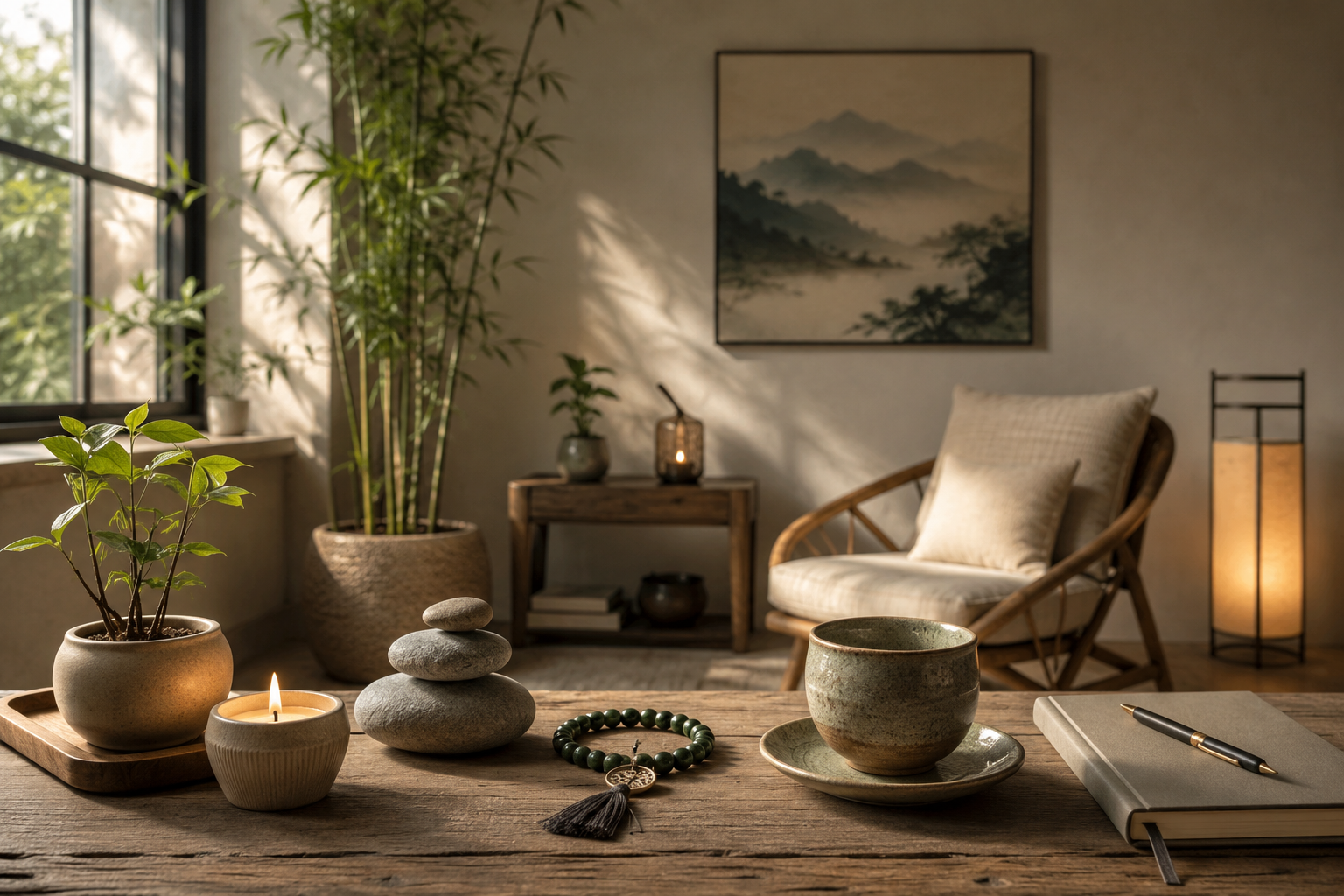
A small plant near a window, a wooden tray on a coffee table, or a bowl of natural stones can subtly change the feeling of a room. Natural textures often make a space feel warmer and more grounded.
Many people believe that materials like wood, stone, and bamboo help create a stronger connection to nature, especially for those living in busy cities.
Personally, I've found that even a simple plant on my desk makes the room feel more alive.
Create a Small Quiet Corner
One of my favorite practices is creating a dedicated corner for quiet moments.
It doesn't need to be large.
A comfortable chair, a small table, a candle, a journal, or a favorite bracelet can be enough. The goal is simply to create a place that signals, "This is where I slow down."
Traditionally, many people in China kept small spaces for tea, reflection, reading, or prayer. These areas were often simple but meaningful.
In today's fast-paced world, having a physical space connected to rest can be surprisingly powerful.
Use Meaningful Symbols
Throughout Chinese history, symbolic objects have been used to represent wishes and values.
For example, many people believe that lotus flowers symbolize inner peace because they bloom beautifully despite growing from muddy water. Traditionally, jade has been associated with harmony and balance. Red string bracelets are often connected with protection, good fortune, or meaningful relationships.
The key is not the object itself.
What matters is the meaning you personally attach to it.
A meaningful object can serve as a daily reminder of the qualities you want to cultivate, whether that's patience, gratitude, confidence, or calmness.
Pay Attention to Light
Lighting is often overlooked, but it has a huge impact on the atmosphere of a room.
Whenever possible, allow natural sunlight into your home during the day. In the evening, softer lighting usually creates a more peaceful feeling than bright overhead lights.
Many traditional Chinese homes were designed to maximize natural light and airflow. The goal was to create a comfortable balance between the indoor and outdoor environment.
Even small changes, like opening curtains in the morning or adding a warm lamp, can noticeably affect the mood of a space.
Introduce Rituals, Not Rules
One lesson I've learned is that a calm home isn't created by following strict rules.
It's built through small daily habits.
Maybe it's making tea before work. Maybe it's spending five quiet minutes with a journal. Maybe it's lighting incense while reading a book.
Many people believe that simple rituals help anchor the mind and create a sense of stability.
Traditionally, tea culture in China was never only about drinking tea. It was also about slowing down, appreciating the present moment, and creating a pause in a busy day.
A peaceful home often grows from these small moments repeated over time.
Final Thoughts
Building a calm energy space at home doesn't require a complete renovation or expensive decorations.
In my experience, it's more about creating an environment that helps you feel centered and comfortable.
Traditionally, Chinese culture has emphasized harmony between people and their surroundings. Many people believe that when a space feels balanced, daily life becomes a little easier too.
Whether you incorporate Feng Shui principles, meaningful symbols, natural materials, or simply a few quiet rituals, the goal is the same: creating a home that feels like a place to breathe.
And sometimes, that's exactly what we need most.


Comments (0)
No comments yet. Be the first to comment!
Leave a Comment
Please note, comments must be approved before they are published.