
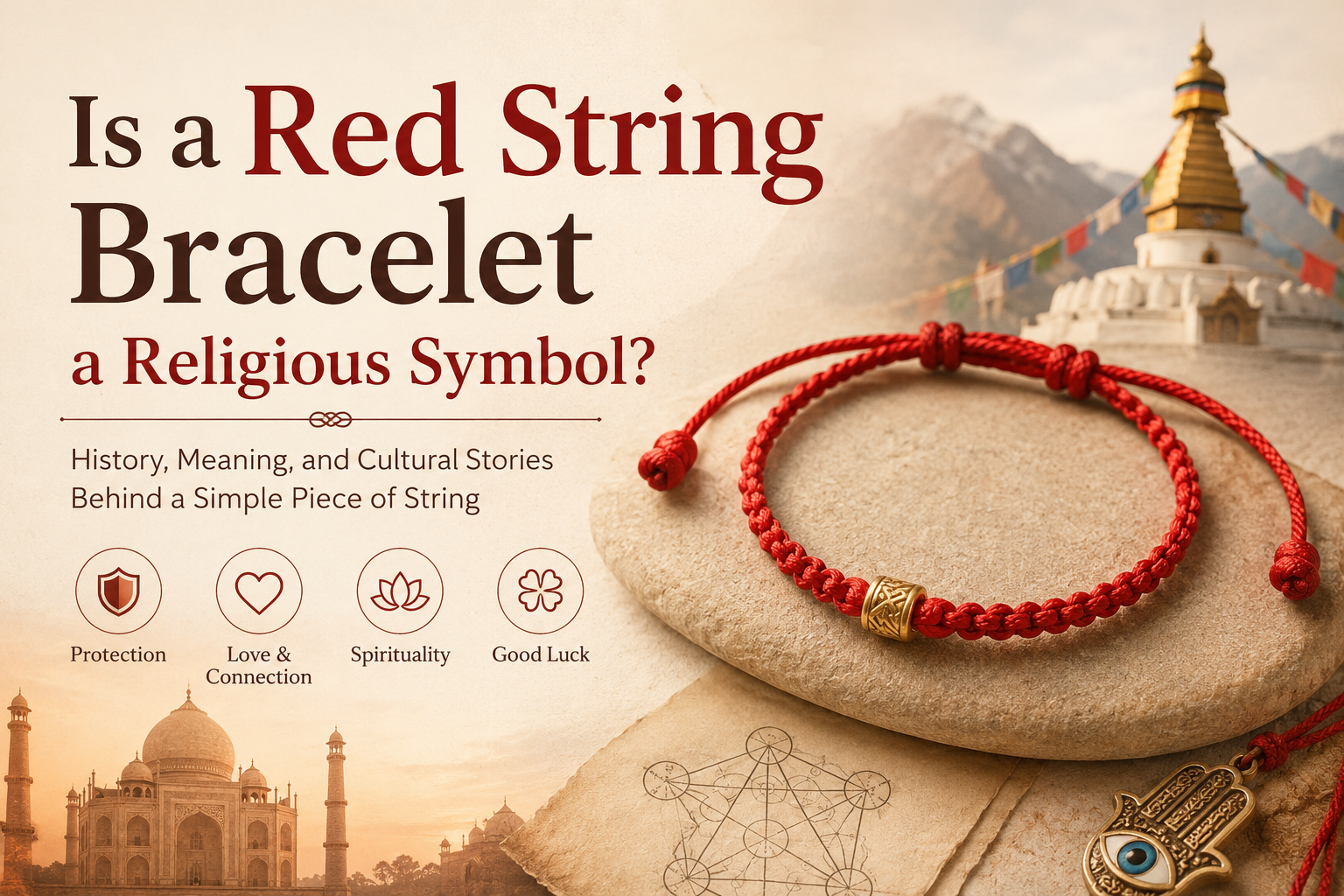
A red string bracelet may have religious meaning, but its color alone cannot establish that meaning. The useful questions are where it came from, what its giver said, and whether it belongs to a particular practice. An ordinary cord sold as jewelry is not automatically a religious object.
It is especially misleading to combine Chinese culture, Tibet, and Buddhism into one explanation. A place, a cultural tradition, and a religion are different kinds of context, each containing significant variation.
A Chinese marriage example has a named religious setting
Lungshan Temple’s Yue Lao page describes Daoist red thread marriage matchmaking. That specific reference cannot tell you what another person believes; ask about an individual object rather than generalizing from its color.
Someone may choose jewelry inspired by a story while understanding it as a personal or cultural symbol. For the narrative background, read the red string of fate guide.
A Hindu festival offers a different example
BAPS explains Raksha Bandhan through decorated threads, family obligations, and religious devotion. Its account includes sisters tying a thread on brothers’ wrists and describes practices within its own community.
That example has its own occasion and relationships. It should not be used to explain a red cord from a different temple, a fashion shop, or a romantic gift. Similar materials do not make distinct practices interchangeable.
Religious communities can also disagree
In Chabad.org’s discussion of red string bracelets, Yehuda Shurpin questions the religious basis of using them for protection and outlines objections. This is one institutional perspective, rather than a position to attribute to every Jewish person.
The broader lesson is to avoid assuming that a symbol is universally accepted within a religion. A seller’s label cannot settle a community’s own understanding or an individual wearer’s beliefs.
What should you ask before wearing one?
If a cord was received in a religious setting, ask the giver or institution about its significance, who may wear it, and any instructions for removal or replacement. If you are choosing an ordinary bracelet, ask the seller for material and construction details rather than accepting vague promises about blessing or protection.
- Is there a named practice or community behind this item?
- Was any ritual actually performed, or is the wording decorative?
- Are wearing instructions specific to this object?
- Does a gift’s recipient welcome the meaning attached to it?
You do not need to assign religious beliefs to a person because of their jewelry. Nor should a fashion guide grant permission on behalf of every tradition. Specific questions produce more useful answers than a universal claim.
For broader context, read the red string bracelet tradition. Our red rope introduction considers a Chinese cultural reference while keeping personal meanings open.
Comments
Leave a comment
Comments are reviewed before publication.