
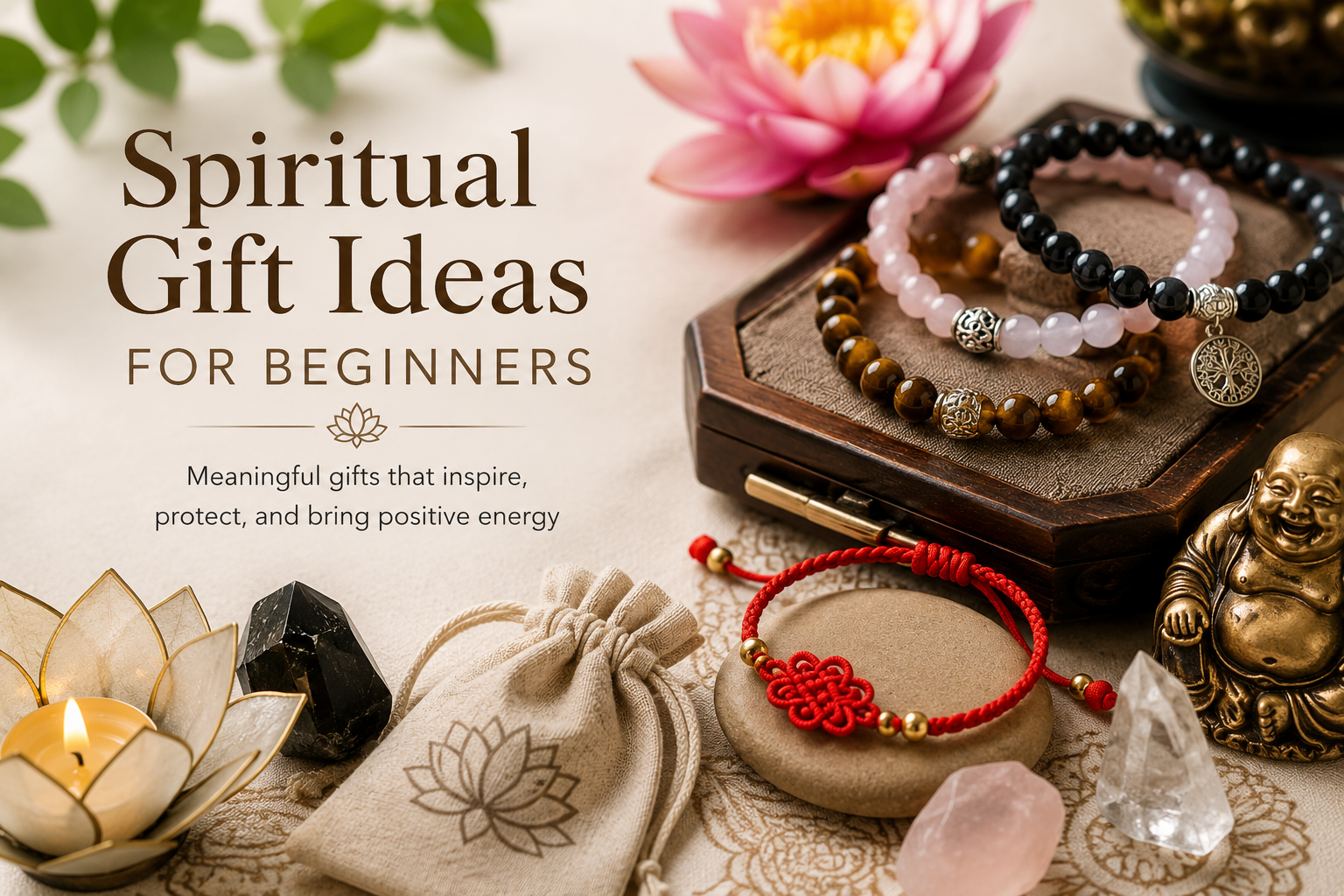
A beginner exploring spiritual subjects does not need a complete collection of objects. Start with what they are curious about: a particular tradition, meditation instruction, cultural art, or simply meaningful jewelry. One welcome item with a clear explanation is easier to choose than a set assembled around assumed needs.
Ask whether they would like a spiritual gift. Curiosity about a subject is not the same as agreeing to a practice, and a gift should leave them free to explore at their own pace.
If the interest is learning
A book or museum resource can be a useful first choice. Look for a named author or institution and a subject the person has actually mentioned. A short note explaining why you chose it can give them a starting point without prescribing what they should believe.
Choose depth over a box of unrelated symbols. An accurate introduction to one topic is more useful than claiming several objects share a single ancient tradition.
If the interest is prayer or meditation beads
The Rubin Museum’s Prayer Beads entry describes counting recitations in a specific Tibetan Buddhist setting. It is a good example of why an object’s function and religious context matter.
If the person wants to participate in a tradition, ask what their teacher or community recommends. If they only want an accessory, describe it as jewelry rather than assuming any bead strand is a complete introduction to meditation.
If the interest is a wearable keepsake
Choose one color, material, or small reference that the recipient likes. Keep the message simple: a shared memory, congratulations, or appreciation. There is no need to select a crystal for a supposed deficiency or promise that it will produce confidence, calm, or protection.
GIA advises checking buying and return details. Clear material information and an exchange option let a beginner learn their preferences without being stuck with a first choice.
Keep the first gift easy to use
- Set a comfortable budget before comparing designs.
- Check size, fastening, and any material sensitivities.
- Include straightforward care instructions.
- Leave optional rituals and later purchases optional.
A notebook, an existing keepsake, or time spent choosing together may be a better fit than new jewelry. You do not need to include fragrance, candles, or several stones just to make the gift look complete.
Our meditation bead guide offers more context. For a small cultural reference, explore the red string tradition guide; for other approaches, read bracelet gifts with a story. The beginner’s own questions can guide what comes next, and the gift can remain a kind invitation.
Comments
Leave a comment
Comments are reviewed before publication.