
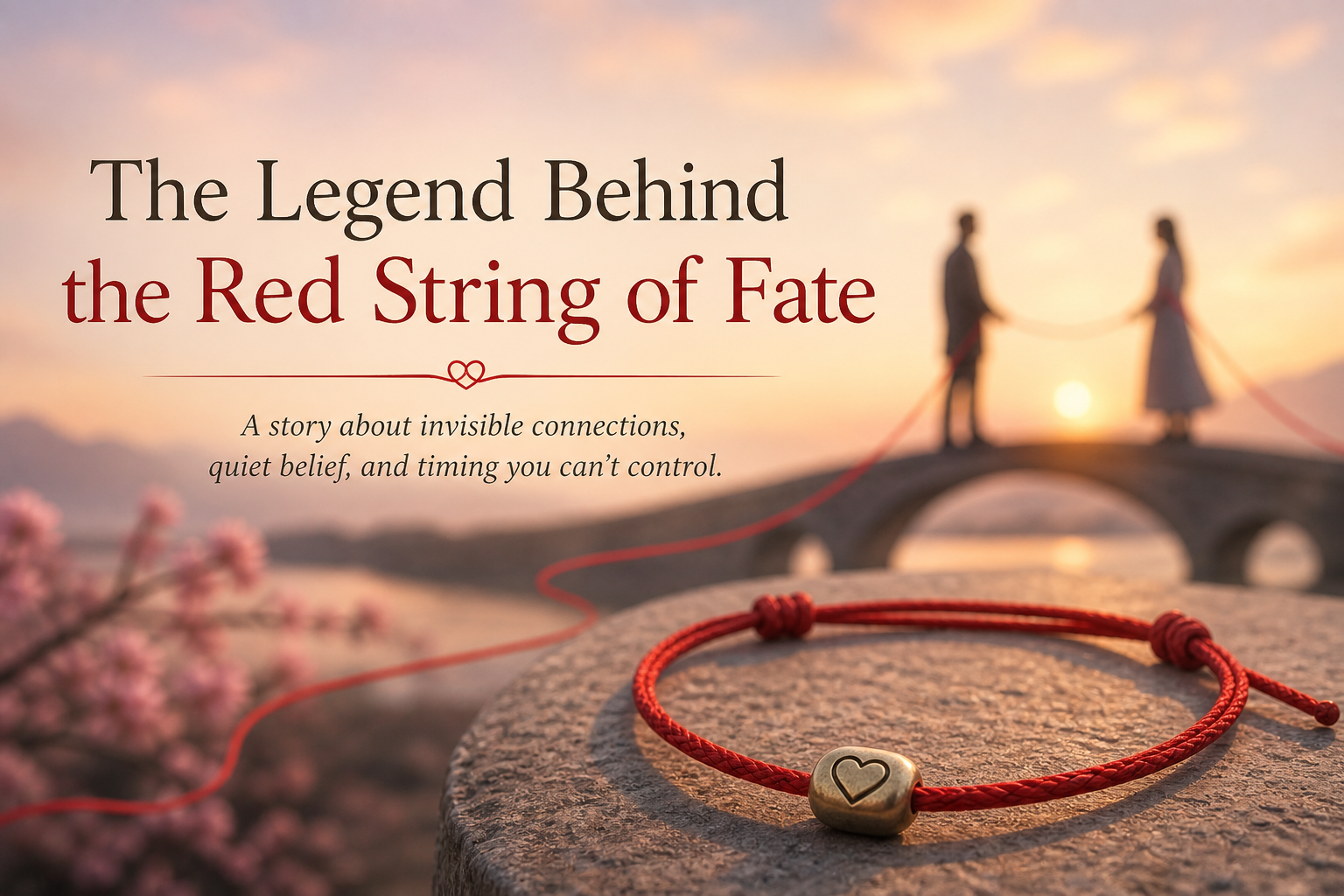
The red string of fate gives a small thread an expansive meaning: a connection between people, even when distance and circumstance seem to keep them apart. Its appeal is easy to understand. A simple image can hold a much larger hope.
To tell the story carefully, it helps to distinguish a named telling of the legend from modern interpretations of red string jewelry. A bracelet can borrow an image from folklore without proving that a relationship is destined.
Yue Lao and the Book of Marriages
San Qing Gong Taoist Cultural Centre in Singapore recounts a Yue Lao legend: Wei Gu meets an old man reading the Book of Marriages beneath the moon. His red strings join future spouses by their feet.
Wei Gu tries to have his predicted future wife killed, yet later discovers he has married her. This troubling episode belongs to the tale; it is not a model for relationships.
A Marriage Legend, Not a Rule for Every Connection
The temple's account concerns marriage. Today, someone may use the image of a red thread to express friendship, family affection, or gratitude for an important meeting. Those can be thoughtful personal interpretations, but they should not be presented as the original meaning of this particular telling.
For a closer look at the connection between the narrative and wearable jewelry, read the ancient story behind red string bracelets.
Why the Color Red Matters
Red also has a wider place in Chinese celebration beyond the Yue Lao story. The Victoria and Albert Museum's Lunar New Year material connects the color with good fortune and happiness. That festive background can help explain why red feels appropriate for a wish or a gift.
It does not mean every red cord has the same religious purpose. Our overview of red string bracelet meanings explores the distinction between a familiar color, different stories, and a wearer's own intention.
From an Imagined Thread to a Real Bracelet
A modern red string bracelet makes an invisible connection visible. You might give one to a partner as a reminder of a shared moment, or choose one for yourself because you enjoy the story. Neither choice requires you to believe that the thread controls whom you meet.
The cited Yue Lao account describes strings at the feet; it does not prescribe a left-wrist bracelet rule. If a particular temple or community gives instructions for an item received there, follow that source's guidance rather than assuming that all red bracelets share one ritual.
Giving the Symbol Room to Breathe
A note can make the gesture clear: “This reminded me of how we met,” or “A little thread to remember our friendship.” Explain the meaning you intend instead of promising that the bracelet will bring a partner back or settle an uncertain relationship.
Our article on red string bracelets for love considers those expectations in more detail. Affection, consent, and the way people treat each other matter beyond any symbol.
A Story You Can Appreciate Without a Prediction
The red string of fate remains an evocative way to talk about connection. You can enjoy its poetry, learn where a particular telling comes from, and still leave room for the choices people make. Worn that way, a simple cord carries a story rather than a promise.
Comments
Leave a comment
Please note, comments must be approved before they are published.