
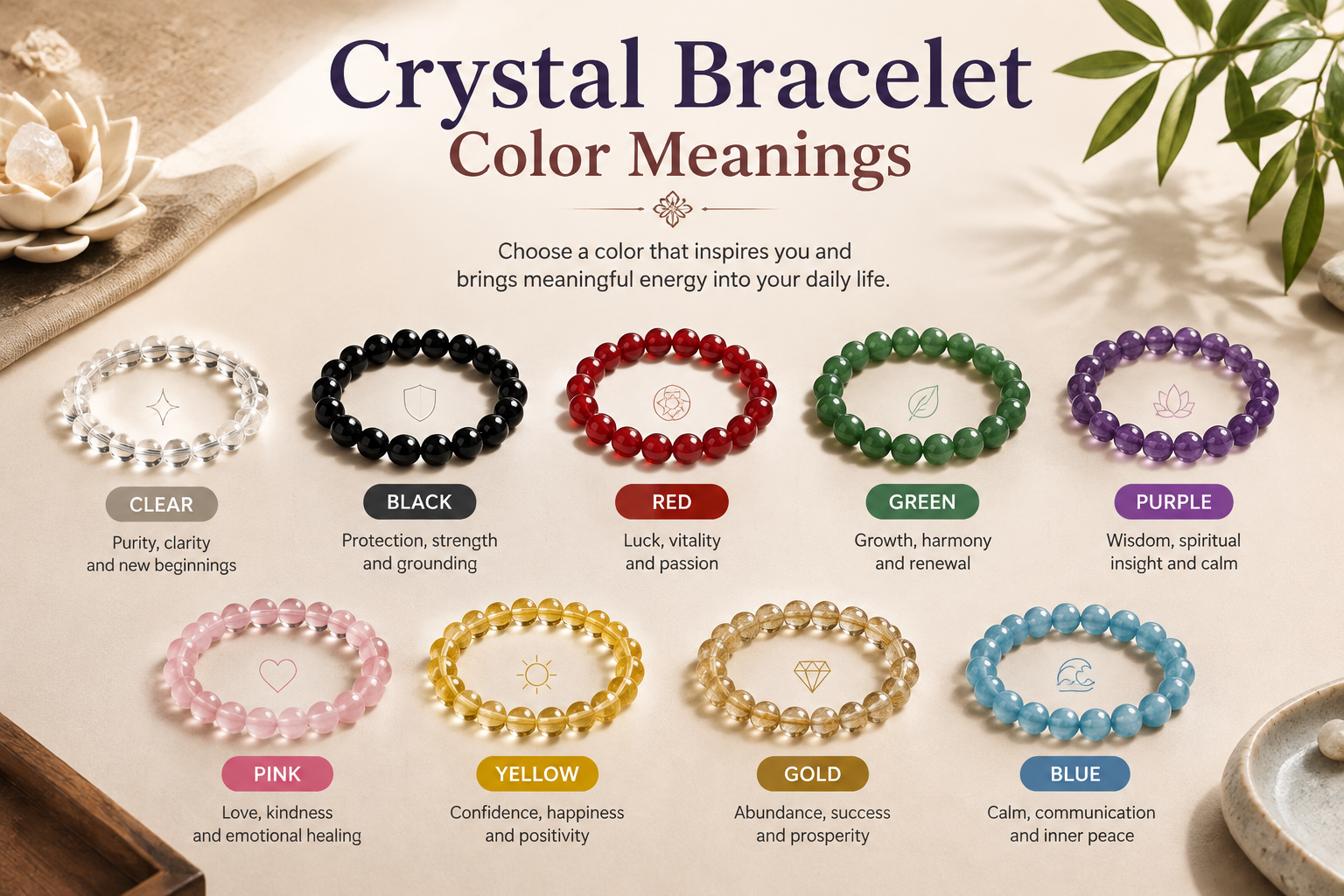
A bracelet color can suggest a memory, work with an outfit, or refer to a particular cultural account. It does not provide a universal diagnosis of what the wearer needs. Start by separating appearance, personal association, and a meaning documented in a named context.
That makes choosing more interesting: you can enjoy several interpretations without turning a color chart into a rulebook.
Red: one sourced cultural example
The Smithsonian National Museum of Asian Art’s Chinese Red discusses auspicious and celebratory uses of red. That is useful context for an occasion or gift, not evidence that every red stone protects its wearer.
If you choose red to express congratulations, say so in your own words. A cord, a mineral bead, and an enamel charm can share a shade while having different materials and histories.
Pink: a material description and a chosen message
GIA describes rose quartz as a pink quartz variety with a range of tones. “Pink” identifies an appearance here; “kindness” or “affection” can be a message you attach to the gift.
You do not need to assume the recipient wants romance or emotional healing because they enjoy the color. Ask what shades they actually wear.
Dark, clear, green, or purple: begin with your wardrobe
Compare color relationships rather than promised effects. A dark strand can form a strong outline beside a light sleeve. Clear or pale beads may give a quieter contrast. A green or purple accent can repeat a small detail already present in your clothes.
These are styling ideas to try, not meanings everyone experiences in the same way. Look at the actual piece in ordinary light, because translucency, finish, and bead size change the overall impression.
Make a small color shortlist
- Choose one neutral you wear often.
- Pick a color you would enjoy as a visible accent.
- Compare the two on your wrist, not only on a screen.
- Ask whether either has a personal association you want to keep.
If both appeal, you can rotate them. There is no need to assign one stone to work, another to sadness, and another to confidence. A favorite color can simply stay a favorite.
Check the object behind the shade
A color name does not establish a bead’s identity, treatment, or care requirements. Ask for the actual material and the complete bracelet’s construction. For a gift, include the explanation you can support and leave room for the recipient’s own meaning.
Explore rose quartz for a named material. Our layering guide covers combinations, while the daily-wear guide brings the choice back to comfort. Color can be expressive without being a promise about energy or psychological effects.
Comments
Leave a comment
Comments are reviewed before publication.