
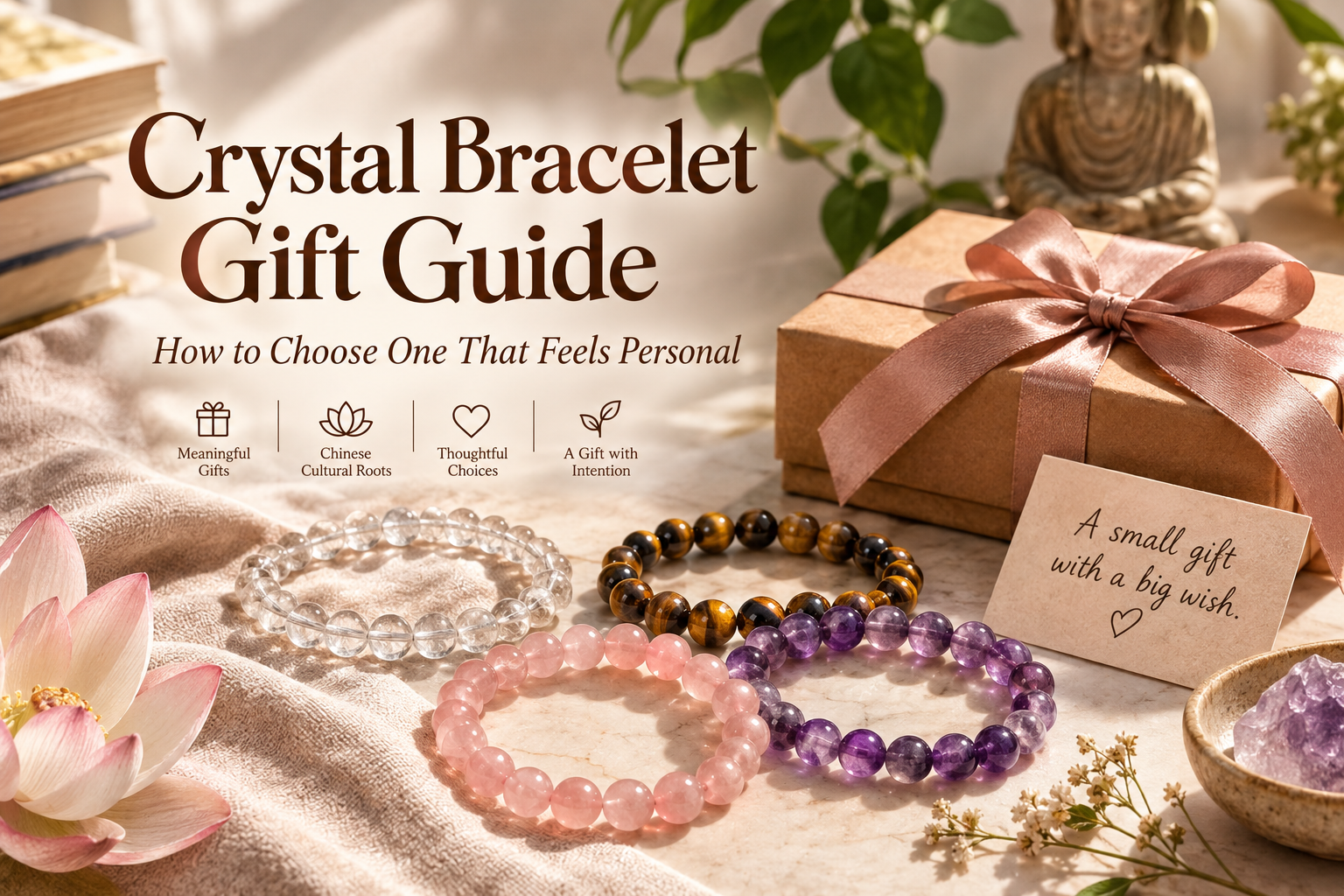
A crystal bracelet gift begins with the recipient’s preferences. Look at what they already wear, ask whether jewelry is welcome, and choose a design they can fit into their life. A symbolic message can be added afterward; it should not replace those practical details.
You do not need to choose a stone for someone’s supposed emotional needs. A color, a memory, or an occasion can make a complete gift idea.
Notice their style before building a shortlist
Consider bead size, metal color, visible charms, and how much jewelry they usually wear at once. A person who likes a narrow cord may not want a substantial strand, even if you find its story appealing.
If you are unsure, offer two or three directions and let them choose. The personal note can remain a surprise even when the recipient helps select the design.
Make a fit that can be changed
Ask how the seller measures wrist fit and what the adjustable range actually means. An adjustable bracelet is not automatically suitable for every hand or wrist. Check whether the closure is easy for the recipient to operate.
GIA recommends understanding return and warranty terms. Keep the relevant details with the gift, and check whether personalization limits the available options.
Check more than the headline stone
The AAD notes nickel in jewelry as a common contact allergen. Ask about clasps and spacers, particularly if the recipient has mentioned a material sensitivity.
Also confirm the cord, bead identity, treatments, and care instructions. If the gift mixes stone, metal, and wood, the cleaning method should cover the complete construction.
Write the message you actually mean
- “This color reminded me of our trip.”
- “I chose a small design because you like wearing your watch.”
- “I wanted to mark this milestone with something you could keep.”
These are possible notes to adapt, not traditional formulas. If you share a cultural reference, identify its source and distinguish it from your own interpretation. Avoid promising confidence, recovery, luck, or a relationship outcome.
Let the recipient make it theirs
They may wear the bracelet occasionally, combine it with existing jewelry, or exchange it for a better fit. The gift’s meaning should leave room for that freedom. A piece kept as a memento can be just as welcome as one worn daily.
For occasion-specific ideas, read the birthday and anniversary guide. Our meaningful bracelet guide explores ways to build a story, and the care guide helps you include useful instructions. Thoughtfulness shows in the details you notice and the choices you leave to the recipient.
A five-step decision path before you order
First, establish whether a bracelet is welcome. A gift is easier to choose when you know the person enjoys wearing jewelry. Ask a light question such as, “Would you rather choose a bracelet together, or would another kind of keepsake suit you better?” A preference for something else is useful information, not a failure of the idea.
Second, choose one visual direction. Use something you have actually noticed: a favorite color, a preference for small accessories, or a tendency to wear one statement piece. Make a short list based on that observation. Avoid choosing a crystal to diagnose the recipient as anxious, unconfident or in need of healing.
Third, resolve the fit. Ask the seller whether a listed dimension is the bracelet’s overall length, inner circumference or recommended wrist measurement. Those descriptions are not interchangeable. Follow that seller’s measuring method rather than adding an arbitrary amount to a guessed wrist size.
Fourth, check the complete construction. Confirm the bead material, cord, clasp, spacers and any surface finish. Ask what is known about treatments and what maintenance the assembled bracelet needs. Keep the answers with the order so the recipient receives useful information as well as a story.
Fifth, confirm an exit route. Before paying, establish how an exchange or return would work if the piece does not fit or the recipient prefers another style. Write down the deadline and who needs to contact the seller. A gift that leaves room for adjustment is easier to receive without obligation.
Three common situations, worked through
You know their taste, but not their wrist size
Keep the style choice and sizing question separate. You might know they like pale pink beads while having no reliable measurement. Show them the design and ask to confirm the fit, or offer to complete the order together. The card, presentation and reason for choosing the color can remain personal even when the size is discussed openly.
If surprise matters, ask the seller what options remain after the gift is opened. Do they offer resizing, replacement cord or an exchange for another size? What does each option cost, and does the recipient need the original purchaser’s help? Do not treat the word adjustable as an answer to all of those questions.
They wear a watch or dislike bulky accessories
Look at the space the bracelet would occupy in their routine. A large ornament may be an awkward match for someone who rests their wrist on a desk or prefers a close-fitting sleeve. Ask for bead diameter, total weight and photographs showing the fastening. Compare those details with a piece the recipient already finds comfortable, if they are willing to share it.
A smaller design is a possible direction, not a universal solution. The recipient may prefer wearing a bracelet occasionally, on the other wrist, or without the watch. Let their preference determine the choice rather than building a matching set they would feel expected to wear.
The occasion is emotionally sensitive
For someone going through a difficult period, make the gift easy to accept or decline. A note about a shared memory or your availability can be more considerate than assigning a stone the job of fixing the situation. For example: “This color reminded me of our walk by the sea. I thought you might enjoy it.”
Avoid asking for evidence that the gift has worked. They do not need to feel calmer, become more optimistic or wear the bracelet regularly to show appreciation. If jewelry seems likely to create pressure, choose another form of support that the person has said they would welcome.
Questions to send the seller
You can adapt this message: “I am choosing this as a gift. Please confirm the bead material and any disclosed treatments, the materials used in the clasp and spacers, the wrist range and measuring method, and the care instructions for the complete bracelet. What exchange or resizing options are available if it does not fit?”
If the recipient has mentioned a known material sensitivity, add a specific question about that material. AAD identifies nickel in jewelry as a common contact allergen. A general description such as natural crystal does not tell you what is in a metal fitting. If a seller cannot provide the relevant information, choose a better-documented option or discuss a different gift with the recipient.
Keep identification and symbolism separate. A pleasant description of what a stone represents does not establish what the beads are made from. Likewise, a report about a material does not establish a promised emotional effect. Ask for the information that answers your actual concern, and leave unanswered claims unresolved.
Budget, delivery and personalization
Set a total budget that includes delivery, gift wrapping and any optional customization. Decide which details matter most before comparing prices. If the recipient values a simple design and an easy exchange, spending more on an elaborate charm may not improve the gift.
For a dated occasion, ask about dispatch and delivery estimates separately. Find out what happens if an item arrives after the event or is damaged in transit. Keep the seller’s current terms rather than assuming a policy from another shop applies. These are questions to verify for your order, not promises about any particular store.
Check personalization before authorizing it. Confirm spelling, the exact text, and whether the work changes return or resizing options. If you are unsure about size or taste, a handwritten card can carry the personal message while leaving the bracelet easier to change.
What to include when you give it
Include a short note explaining your choice, the seller’s care instructions, and the information needed for an exchange. If the recipient would prefer not to see the price, ask whether a gift receipt is available. Let them know plainly that choosing another size or design is welcome.
Check the item on arrival against the description and order. Look at the fastening, bead condition and any personalization before wrapping it. If something is unclear or damaged, contact the seller rather than passing the problem to the recipient on the day of the gift.
Common questions
Which crystal is best for someone I do not know well?
Start with whether jewelry is appropriate and welcome. A neutral color does not guarantee a good fit with someone’s taste. Offer a choice, ask for a preference or select another gift when you lack the information needed for a personal accessory.
Does a meaningful gift need a traditional symbol?
No. A shared memory, favorite color or practical detail can explain the choice. If you use a cultural symbol, name the specific design and verify its context. Keep your own association clearly personal instead of presenting it as a universal tradition.
What if they exchange it?
An exchange can make the gift more useful. Tell them you chose it with care and want them to enjoy the result. Leaving that freedom intact is part of choosing a thoughtful bracelet, from the first question through the final handover.
Comments
Leave a comment
Comments are reviewed before publication.