
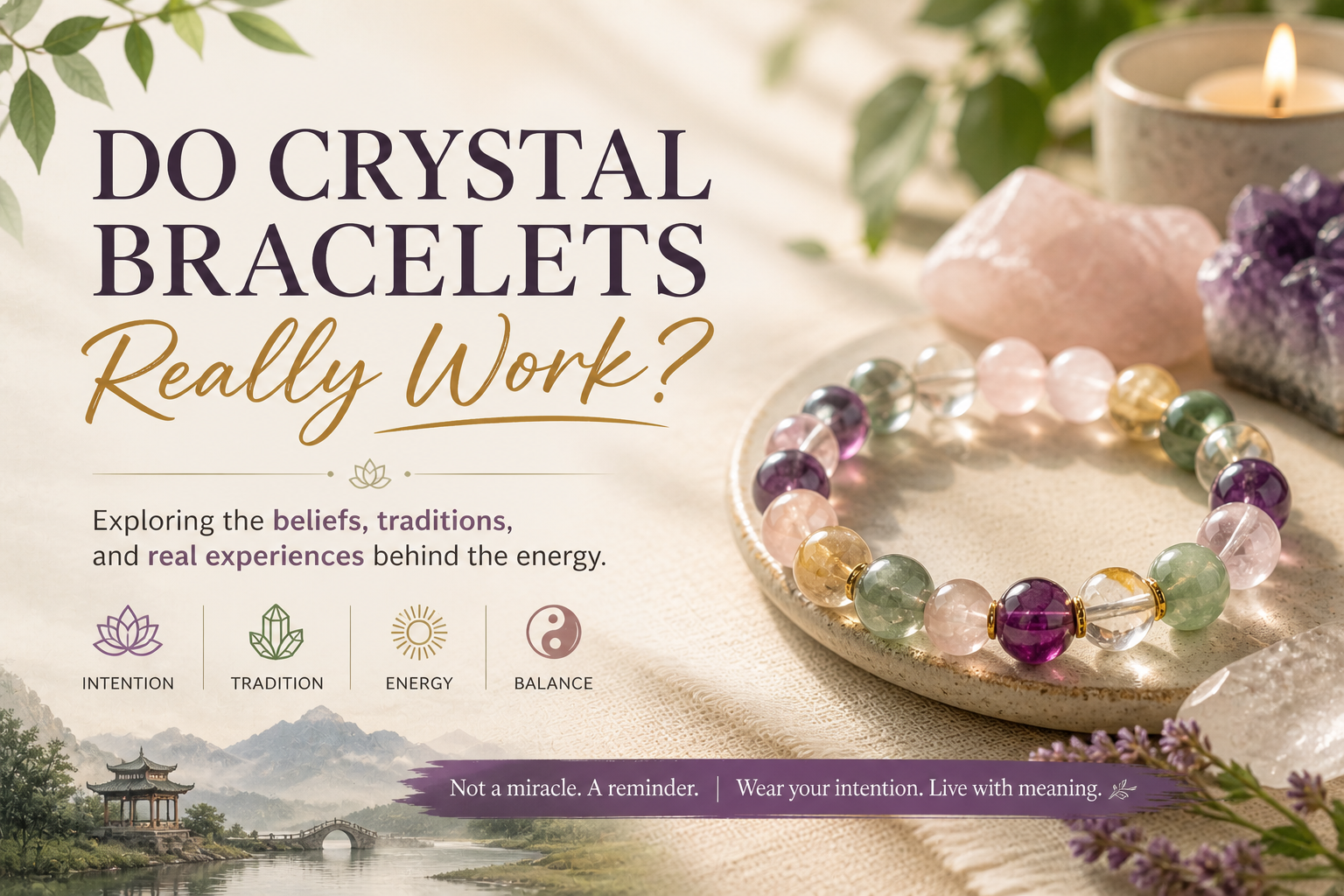
Crystal bracelets can be valued for their color, craftsmanship, or connection with a person or memory. Those are good reasons to enjoy jewelry. Claims that a stone treats anxiety, attracts love, or changes financial outcomes ask a different question: what evidence supports the result?
A personal meaning does not need a laboratory test. A therapeutic claim does. Keeping those two things separate makes it easier to appreciate a piece without expecting it to solve a problem.
What a Controlled Study Found
A 2025 study published in CNS Spectrums assigned 138 adults to rose quartz or a visually matched placebo for 14 days. It found no significant advantage for the real stone in reducing measured anxiety symptoms.
The study used a general-population sample and did not test bracelet jewelry, every stone, or romantic and financial outcomes. The authors also identified limits concerning the proposed conditioning explanation and whether people might recognize the imitation. It should be read within that scope, rather than used as a verdict on every personal experience.
Feeling Better Does Not Identify the Cause
The NIH's explanation of placebo effects describes how expectations can contribute to health responses. That helps explain why comparing an intervention with a matching inactive alternative matters.
It does not turn every reported feeling into evidence of crystal healing. A pleasant ritual, a gift, and a change in circumstances may occur together. A person's experience alone cannot show that a mineral produced the change.
Mineral Properties and Symbolic Meanings
GIA identifies rose quartz as a pink variety of quartz. Its color and appearance are material characteristics. A description such as “love stone” adds an interpretation; it is not a mineral test or proof of an emotional effect.
Other materials need their own identification. Our agate guide discusses banding and treatments, rather than assigning every bead a power. A trade name or spiritual description should not replace clear information about what an item contains.
Cultural meanings also differ. Our article on Hetian jade and tradition explores a specific material history. That history should not be treated as proof that modern crystal-healing claims all belong to one ancient Chinese system.
A Personal Reminder Can Stay Personal
You might wear a bracelet because its color recalls someone you love, or choose to notice it when taking a break. You do not need to call that a treatment or assume everyone will have the same experience.
If you use a piece as a cue for a routine, describe the action you are choosing. It is different from claiming that the stone changes your body, attracts another person, or makes a decision successful.
For a wider discussion of this distinction, our article on bracelet meaning and evidence considers what testimonials can and cannot establish.
Choosing Jewelry on Clear Terms
Choose a design you enjoy at a price you are comfortable paying for jewelry. Check the stated material, treatments, size, and care instructions. GIA's gem-treatment guide explains why changes to a gem's appearance can also affect how it should be cared for.
A bracelet should not replace appropriate care for persistent anxiety or other health concerns. You can enjoy it for beauty and personal significance while keeping expectations about health and life outcomes grounded in evidence.
Comments
Leave a comment
Please note, comments must be approved before they are published.