
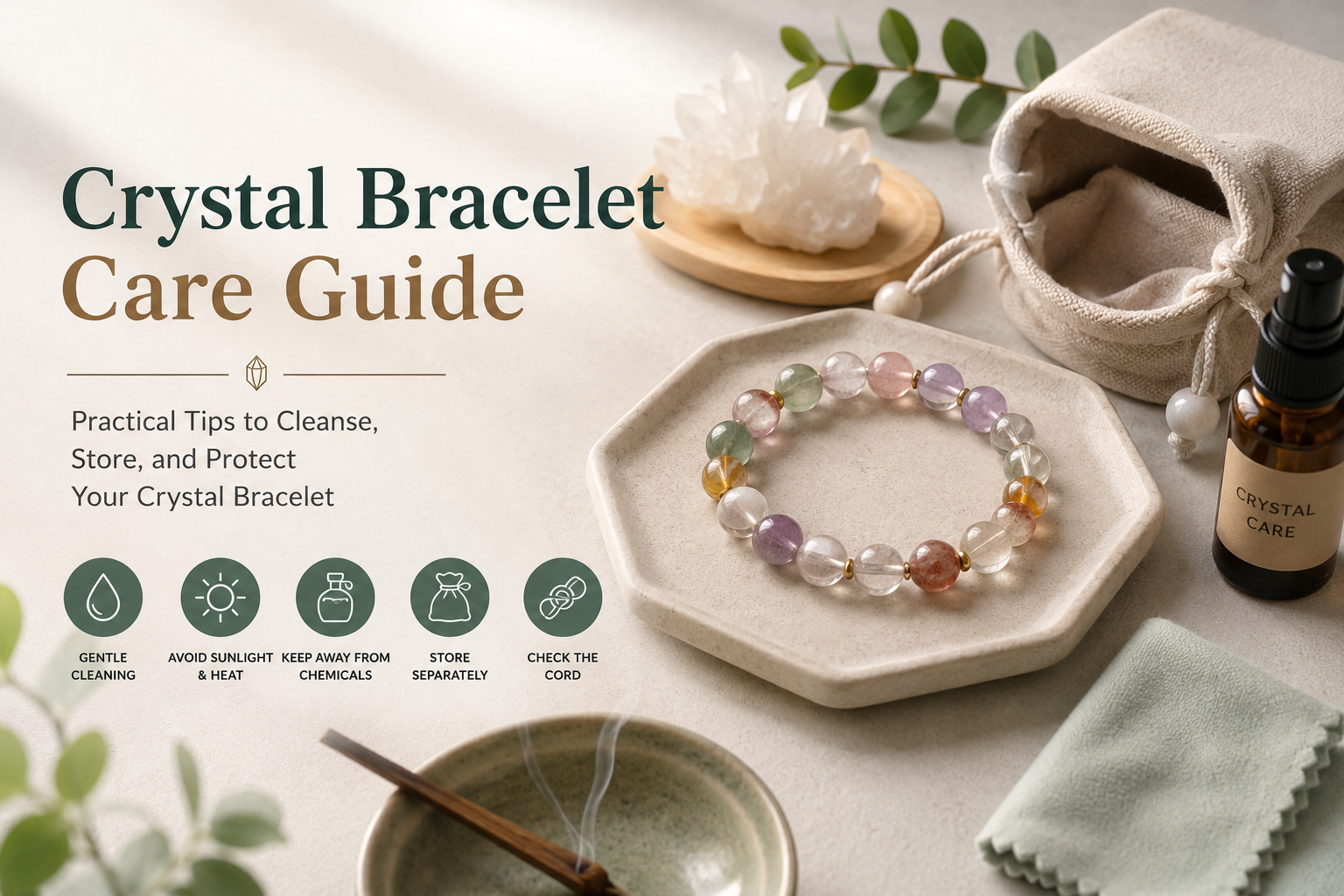
A bracelet is more than its most visible stone. The cord, knots, fittings, treatments, and any adhesive all matter when deciding how to clean it. Start with the complete construction rather than applying one “crystal cleansing” method to every item.
A useful routine has four parts: identify the materials, choose an appropriate cleaning method, inspect what holds the piece together, and put it away carefully.
Identify before adding water or cleaner
Keep the seller’s material and treatment information. Ask what is known if you inherited a piece or no longer have its description. A pale bead might resemble another material while needing different care.
For a mixed bracelet, request instructions for the whole piece. A method suitable for one gemstone does not automatically suit wood, elastic, plating, or a glued detail beside it.
Use gemstone examples accurately
GIA recommends warm soapy water for rose quartz and advises against steam and ultrasonic cleaning. This is guidance for that gem, not permission to soak every bracelet containing it.
GIA’s jade guide shows how treatments can change cleaning choices. Do not assume that two similar-looking jade items have the same treatment history.
If the construction is unclear, pause before soaking or using a machine and ask a knowledgeable repairer or the maker. Avoid improvising with household chemicals.
For context on material numbers, read what Mohs hardness tells you about a bracelet.
Handle the surface gently
Follow the appropriate instructions for removing dust, fingerprints, or residue. Use clean tools or cloths suited to the item, and do not grind visible grit across a polished surface. More pressure is not necessarily more effective cleaning.
If dirt is caught in a knot or around a setting, avoid forcing it apart. A professional assessment may be more useful than repeated scrubbing on a valuable or sentimental piece.
Inspect the parts that carry the weight
- Look for fraying near bead holes and knots.
- Check whether a clasp closes fully.
- Notice stretched or damaged elastic.
- Keep cracked or sharp components out of continued use.
Arrange repair before relying on a weakening strand to hold its beads. Ordinary wear deserves maintenance; it does not need an explanation involving absorbed energy.
Store and wear with intention
Keep pieces from rubbing against each other, and follow their instructions about light, heat, and moisture. Remove jewelry when an activity creates a snag or impact risk or conflicts with workplace rules.
Our storage guide covers setting up a convenient place. The daily-wear guide helps you choose around your routine, while the rose quartz introduction explores one material in more detail. Optional symbolic rituals should remain compatible with the same physical care. The goal is a piece you can continue to enjoy, not a complicated set of tasks.
For checks that start before cleaning, see our seven practical bracelet mistakes to avoid, covering sizing, material descriptions and everyday wearing decisions.
Comments
Leave a comment
Comments are reviewed before publication.