
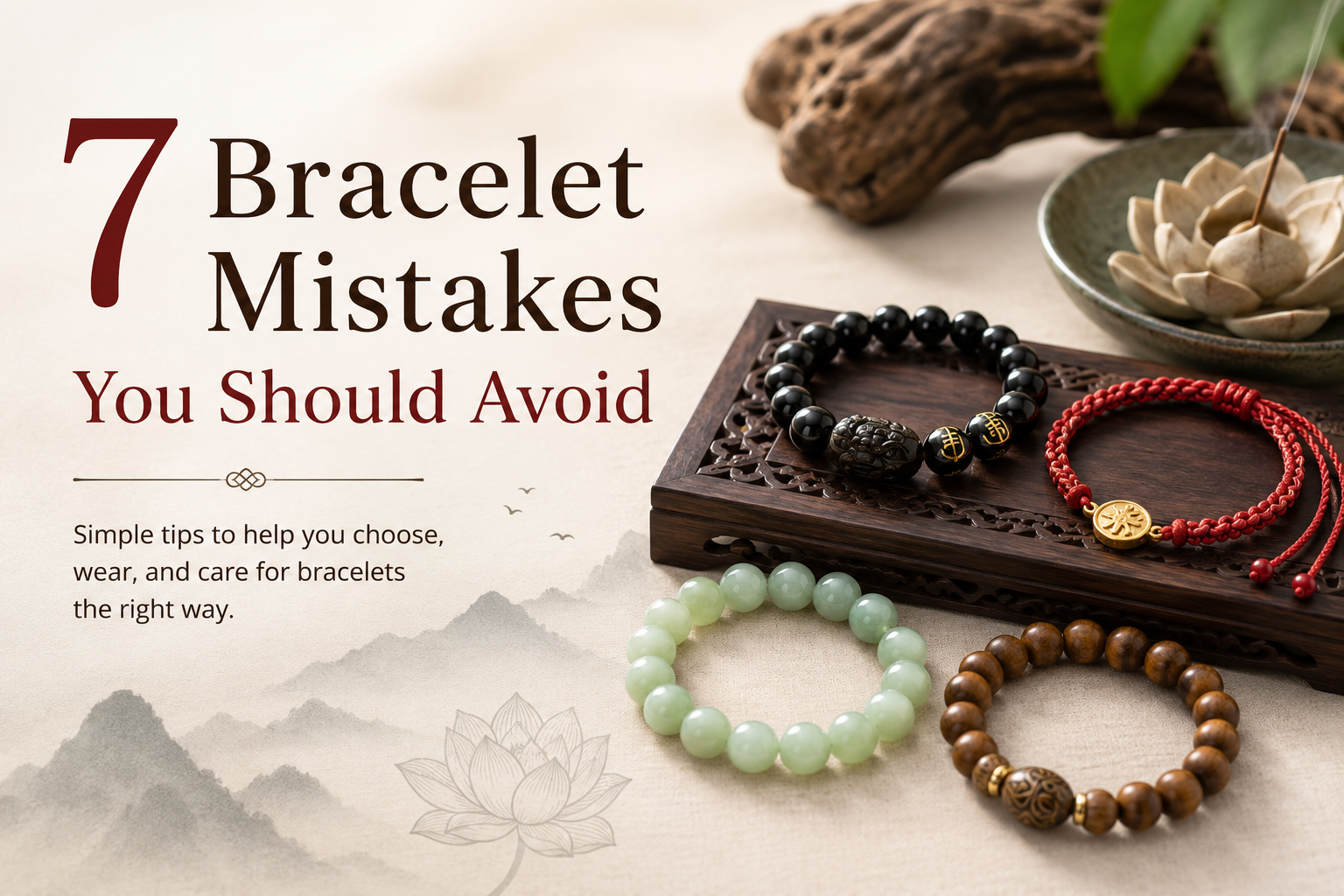
The most useful bracelet advice concerns the object you are buying and how it fits your life. You do not need to worry that choosing the wrong wrist or combining two colors will bring misfortune. Start with details you can check and habits that protect the actual piece.
1. Guessing the size from a photograph
Check wearable circumference or adjustment range and bead diameter. Large beads can sit differently from small ones. Ask how the seller measures the finished bracelet and compare that with your needs, rather than assuming the model’s wrist resembles yours.
2. Accepting a vague material name
“Natural crystal” does not identify every component. Ask about beads, spacers, focal charms and the closure separately. The FTC’s Jewelry Guides emphasize accurate descriptions of product characteristics, including materials and manufacture. Save the seller’s written description so you know what was offered.
3. Treating a story as authentication
An artisan account, a symbolic association or an expensive box cannot establish material identity. Our bracelet authenticity guide explains which questions to ask about an individual listing. Imperfections do not prove hand carving or a natural stone.
4. Wearing a piece through every activity
Notice when jewelry interferes with work, catches on something or is exposed to impact. Follow activity and equipment requirements. Taking it off is an ordinary decision, not a sign that you have stopped respecting a symbol or lost protection.
5. Applying one cleaning method to everything
GIA’s jewelry-care guidance explains that materials and treatments affect appropriate handling. Get instructions for the finished piece, including cord, plating and coatings. Our cleansing guide distinguishes that maintenance from optional symbolic routines. Salt, prolonged soaking or a machine is not a universal solution.
6. Ignoring wear because a piece is meaningful
Inspect loose fittings, damaged beads and frayed stringing. A cherished bracelet still needs assessment when its condition changes. Do not explain away a sharp edge or insecure knot as evidence that it absorbed bad luck. Put it aside until the physical problem has been addressed.
7. Letting rules replace enjoyment
You can appreciate symbolism without accepting every online wearing instruction. Our selection guide helps connect meaning with fit and preference. If you follow a particular custom, learn its context rather than presenting it as a rule for everyone.
Choose a bracelet you enjoy at a price you are comfortable paying for the disclosed object. Its role can be decorative, personal or connected with a tradition you understand. It does not need to guarantee health, wealth or a particular mood to be worth wearing.
Comments
Leave a comment
Comments are reviewed before publication.