
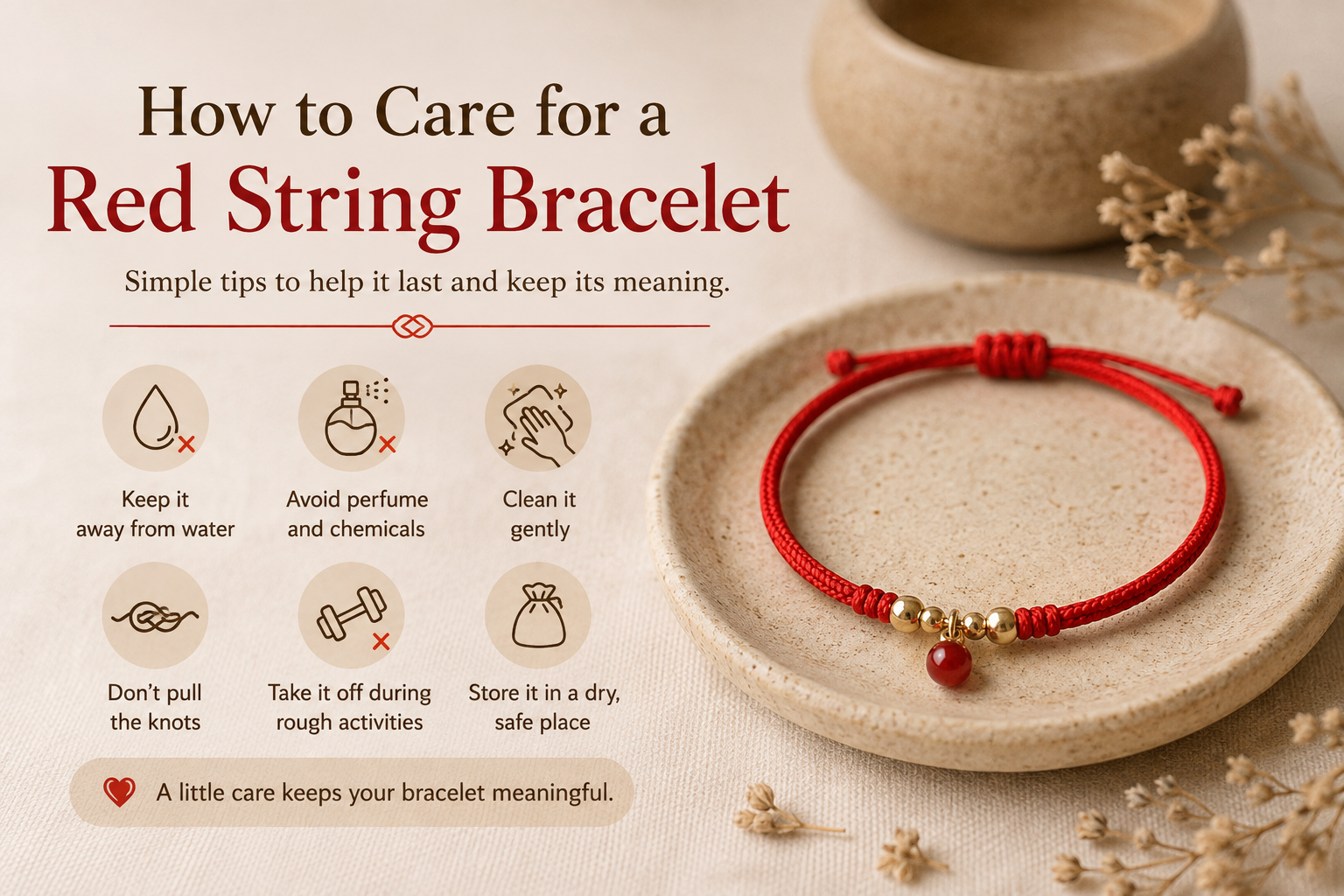
A red string bracelet needs care for the whole construction: dyed cord, knots, any beads, and the metal fittings that connect them. Identify those parts before deciding how to wash or dry it. A simple appearance does not make every design suitable for the same treatment.
Keep the maker’s instructions if available. If the piece is sentimental or its materials are unclear, ask before experimenting with soaking or cleaning products.
Start with the cord
Ask what fibre or synthetic material is used and whether the maker approves wet cleaning. The Canadian Conservation Institute explains that different fibres have different care properties. Its museum guidance supplies general principles, not a universal washing recipe for dyed bracelets.
Follow the recommended method for surface dirt or residue. Avoid rubbing weakened threads or aggressively working cleaner into a knot. If the maker approves a damp method, use only the amount and drying approach specified.
Check the bead before treating the bracelet
GIA’s rose quartz guidance allows warm soapy water for the stone but advises against steam and ultrasonic cleaning. That does not establish what a nearby cord, adhesive, coating, or plated fitting tolerates.
For another bead material, find its own guidance. Do not clean the complete bracelet by choosing the method for its most durable-looking part.
Adjust knots without forcing them
Support the cord and move the sliding parts as intended. If a knot sticks, stop rather than repeatedly yanking its tails. Check whether the closure is tangled, swollen from moisture, or beginning to fray.
A maker may be able to adjust or replace a closure more reliably than an improvised repair. Keep valuable or sentimental components out of continued use when the strand is weakening.
Make a quick inspection routine
- Look where cord passes through bead holes.
- Check knots and loose ends.
- Notice rough fittings that catch adjacent threads.
- Confirm that the bracelet still holds its setting.
Changes in color can be cosmetic, while thinning and damaged fastenings can affect whether the piece holds together. Treat those as separate questions rather than assuming every worn appearance is harmless.
Put it away dry and untangled
Use an appropriate clean compartment or pouch, with cord ends free from snagging hardware. Let a wet item dry as instructed before closing it away. Avoid unnecessary heat and exposure that conflict with the materials’ care guidance.
Our wearing-duration guide explains deciding when to remove a piece. If damage has occurred, read the broken-cord guide; for a replacement or more suitable construction, use the buying guide. Material care can remain a straightforward habit without an elaborate symbolic routine.
Comments
Leave a comment
Please note, comments must be approved before they are published.