
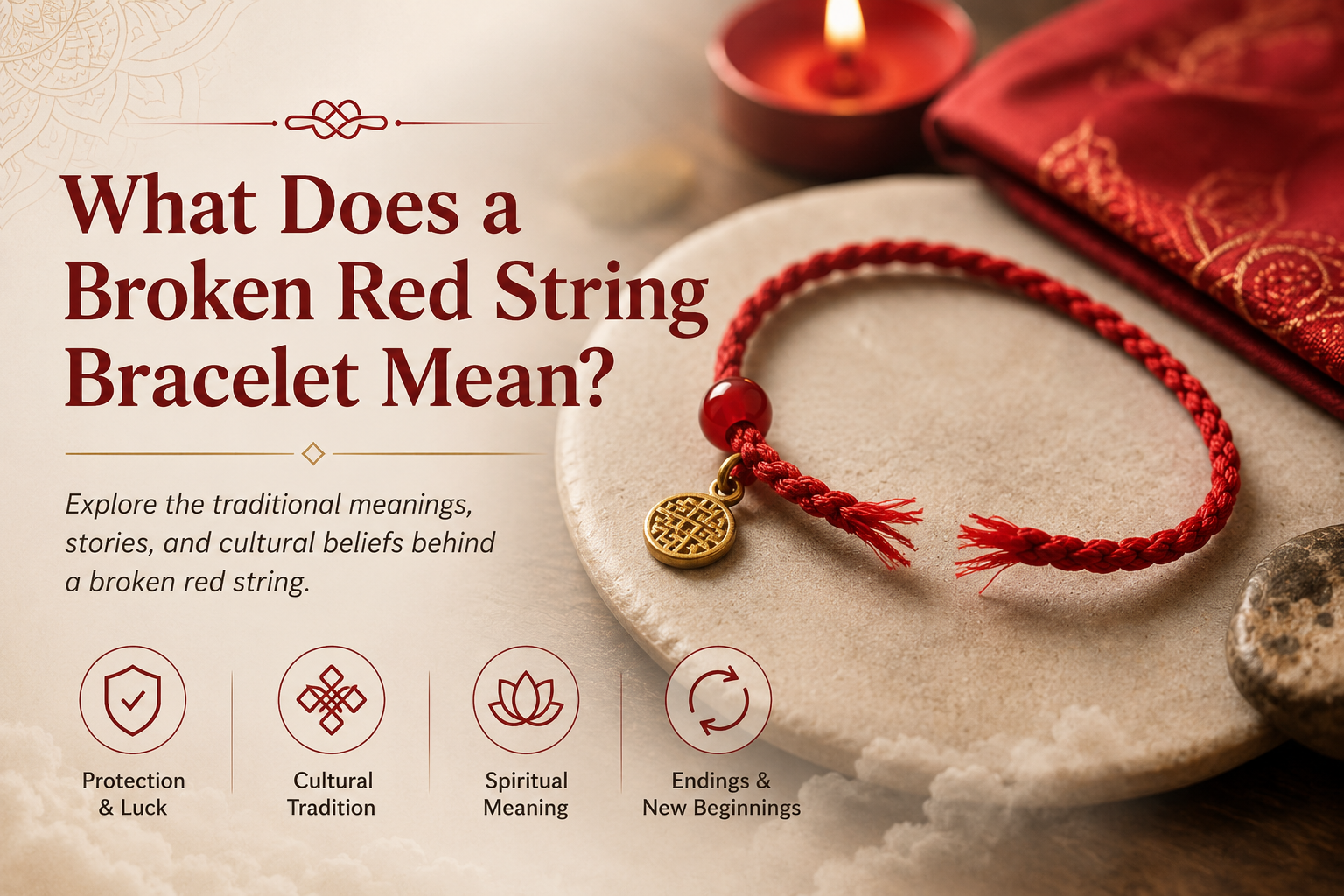
A broken red string bracelet is first evidence that its cord or fastening has failed. It does not reliably show that misfortune is coming, that a relationship will end, or that the bracelet absorbed an unseen danger. You can care about the object’s meaning without treating a material failure as a prediction.
If the bracelet was a gift or marked an important occasion, losing its original form may still feel disappointing. The practical next step is to recover the pieces and decide what can be repaired.
Look at where it failed
Place the bracelet and any loose beads on a clear surface. Check whether the cord snapped, a knot opened, or a metal connection came apart. Photograph the arrangement before taking it apart further, especially if you want the maker to reproduce it.
The Canadian Conservation Institute’s textile guidance describes damage from physical stress and abrasion, along with environmental causes of fibre weakening. That does not diagnose your bracelet, but it gives ordinary material reasons to investigate before assigning a supernatural explanation.
- Look for fuzzy or thinned cord near a knot.
- Check for repeated contact with a bead hole or charm edge.
- Inspect a clasp or connecting ring for a gap.
- Ask the maker whether the cord is suitable for the attached components.
Choose repair based on condition
A small loose knot and a badly weakened length of cord need different responses. Retightening one point may not solve widespread wear. If the bracelet carries a valuable stone or sentimental charm, ask an experienced jewelry repairer about restringing rather than trusting a hurried temporary fix.
Do not use an adhesive or cleaning product without checking compatibility. Cord, coatings, metal, and stones can respond differently. Our bracelet cleaning guide offers a starting point for asking material-specific questions.
Keep memory separate from a universal rule
You may choose to keep the old cord in a labeled envelope, photograph it, or retain a charm in the repaired piece. These are personal options, not mandatory traditional disposal methods. If the item came from a religious community, ask that community whether it has particular guidance.
The Canadian Conservation Institute’s basic textile care advice recommends avoiding unnecessary manipulation and storing clean, dry textiles appropriately. For an ordinary keepsake cord, handle it gently and keep it somewhere it will not be snagged or lost.
A story is different from an omen
The thread in a marriage legend and the string holding your bracelet are not the same kind of claim. Read the red string of fate story for its narrative context, and the red rope introduction for a wider perspective.
You can replace a worn cord without abandoning the memory it carried. Repair, preservation, or letting it go can each be a reasonable decision based on the object and your own wishes.
Comments
Leave a comment
Comments are reviewed before publication.