
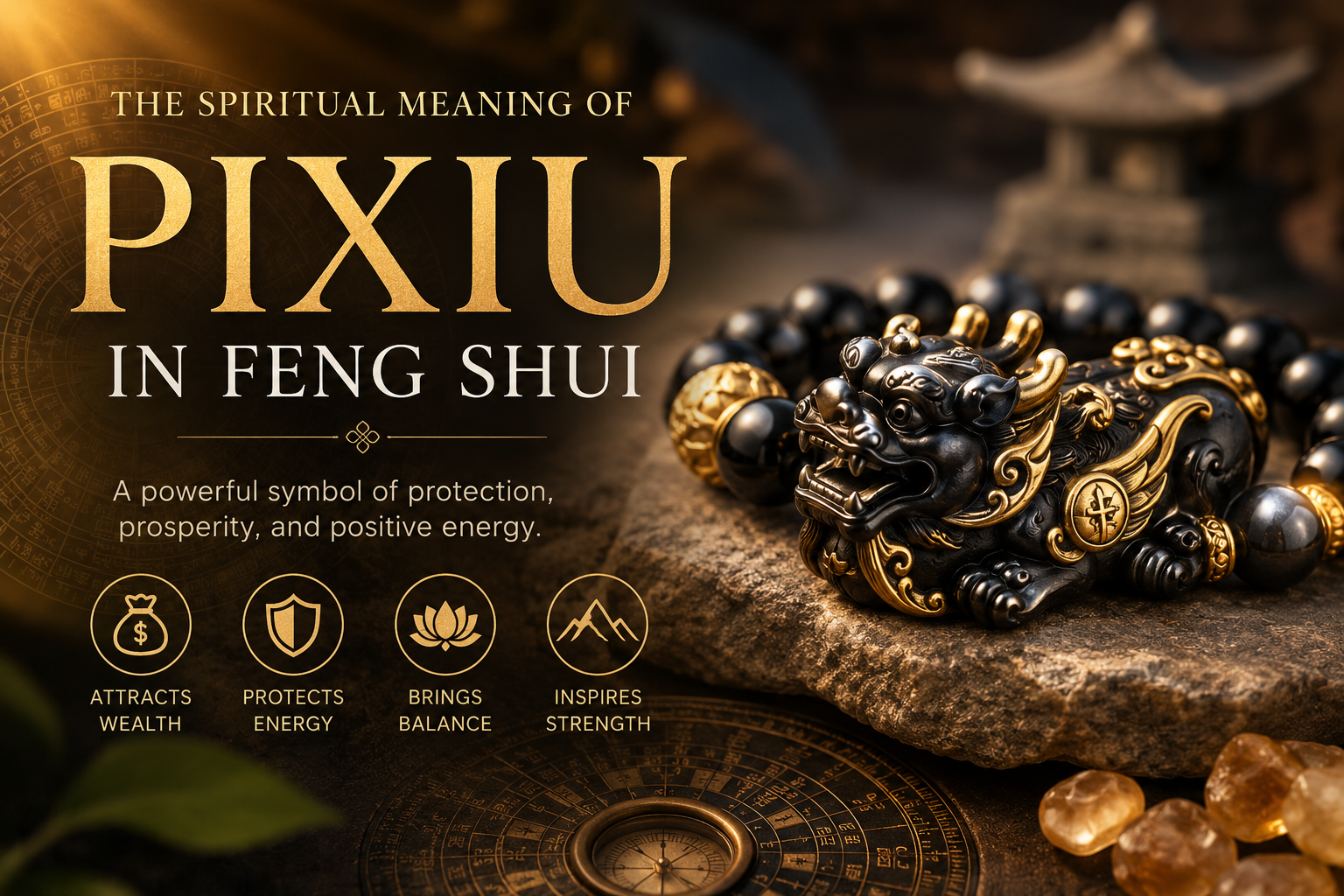
If you have ever visited a Chinese jewelry shop, temple market, or even browsed a Feng Shui bracelet store online, you have probably seen a strange creature called Pixiu. It usually looks like a mix between a dragon, a lion, and sometimes even a winged beast. At first glance, it may seem mysterious or decorative. But in Chinese culture, Pixiu carries a much deeper spiritual meaning.
Many people believe Pixiu is more than just a lucky charm. Traditionally, it is seen as a protector of wealth, a guardian against negative energy, and a symbol of loyalty and strength. In modern times, Pixiu bracelets have become popular around the world, especially among people interested in Feng Shui, mindfulness, and Eastern spirituality.
What makes Pixiu so fascinating is not only how it looks, but the stories behind it.
The Ancient Legend of Pixiu
In Chinese mythology, Pixiu is known as a powerful celestial creature. Traditionally, it was believed to be one of the sons of the Dragon King. Unlike ordinary animals, Pixiu was said to feed on gold, silver, and treasures.
There is also an old legend that explains why Pixiu became connected with wealth. According to folklore, Pixiu once broke a heavenly rule and was punished by the Jade Emperor. As part of the punishment, its body was sealed so that wealth could enter but never leave.
Because of this story, many people believe Pixiu symbolizes "attracting wealth and keeping it safe." This idea became especially popular among Chinese business owners, merchants, and investors throughout history.
Even today, in many parts of Asia, you may notice Pixiu statues inside offices, shops, or homes. Traditionally, they are placed facing doors or windows, as if guarding the space and welcoming fortune inside.
Pixiu as a Spiritual Protector
While wealth is the most famous meaning of Pixiu, its spiritual role goes beyond money.
In Feng Shui culture, many people believe Pixiu can help absorb negative energy and protect the wearer from harmful influences. Some compare it to carrying a spiritual guardian with you.
This belief became especially common during periods in Chinese history when travelers, traders, and soldiers wore protective symbols for safety and courage. Pixiu gradually became one of those symbols.
Traditionally, people wore jade or obsidian Pixiu pendants not only for luck, but also for emotional reassurance. In difficult times, spiritual symbols often gave people a sense of comfort and confidence.
Even now, some people say wearing a Pixiu bracelet reminds them to stay focused, disciplined, and positive. Whether or not someone fully believes in Feng Shui, the symbolic meaning itself can feel powerful.
Why Pixiu Is Often Paired With Feng Shui Bracelets
In recent years, Pixiu bracelets have become one of the most recognizable forms of Feng Shui jewelry.
Many bracelets combine Pixiu with materials that already carry symbolic meaning in Chinese culture:
- Obsidian is traditionally associated with protection and grounding.
- Citrine is often connected with abundance and confidence.
- Jade represents peace, balance, and harmony.
- Red string symbolizes blessings and good fortune.
Many people believe combining these materials with Pixiu strengthens the bracelet's spiritual symbolism.
At the same time, part of the appeal is emotional and personal. Some people wear a Pixiu bracelet during a new business journey. Others wear it during stressful life changes, hoping for stability, courage, or simply a reminder to stay optimistic.
In that sense, Feng Shui jewelry is not always about "magic." Often, it reflects intention, mindset, and cultural tradition.
The Importance of Respect in Chinese Culture
One thing that surprises many foreigners is how respectfully Pixiu is treated in traditional Feng Shui culture.
For example, traditionally, people avoid placing Pixiu directly on the floor. Some also believe it should be kept clean and handled carefully. In Chinese culture, spiritual objects are often connected with respect, energy, and intention.
There are also many traditional sayings about how to wear Pixiu properly. Some people believe the head should face outward to "seek wealth." Others say you should avoid letting strangers touch your bracelet.
Of course, beliefs vary from person to person. Feng Shui itself is deeply personal and often shaped by family traditions.
Still, these customs reveal something important: Pixiu is not just seen as decoration. For many people, it represents hope, protection, and spiritual connection.
Why Pixiu Became Popular Worldwide
Part of Pixiu's global popularity comes from growing interest in mindfulness, spirituality, and meaningful jewelry.
In a world where many accessories are purely fashion-based, Pixiu jewelry feels different. It carries stories, symbolism, and centuries of tradition behind it.
Many people today are drawn to objects that feel personal and intentional. A Pixiu bracelet may represent ambition, resilience, protection, or the desire for a better future.
Even for people who are not deeply involved in Feng Shui, the symbolism itself can still feel inspiring.
And perhaps that is why Pixiu continues to resonate across cultures.
Traditionally, it was a guardian of treasure.
Today, many people see it as a reminder to protect their energy, stay grounded, and move forward with purpose.
Comments (0)
No comments yet. Be the first to comment!
Leave a Comment
Please note, comments must be approved before they are published.