
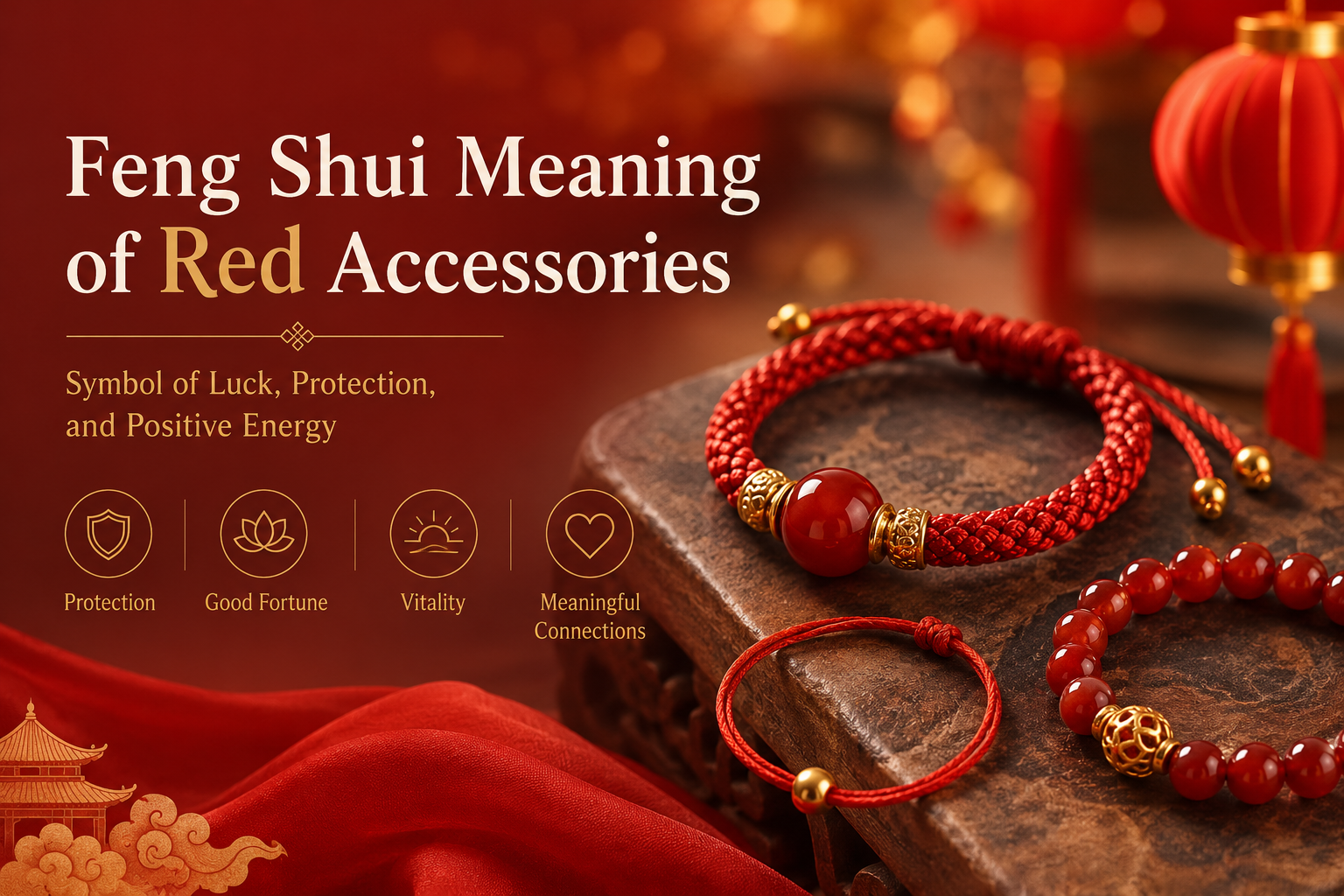
A red bracelet or pendant may be described as “feng shui jewelry,” but the label alone does not explain the object’s history, intended practice, or materials. To understand a red accessory, distinguish the cultural associations of its color from the promises a particular seller attaches to it.
You can choose red because you enjoy how it looks, because it suits an occasion, or because a giver has explained a personal meaning. None of those reasons requires believing that the accessory changes your luck.
A specific reference for red and fire
The Smithsonian National Museum of Asian Art’s Chinese Red discusses red’s symbolic connections with fire, the sun, and the southern direction. This provides cultural context for color language. It is not a technical instruction to “activate” a person’s career, finances, or relationships by wearing jewelry.
When a product description makes that extra claim, ask what source or named practice supports it. A broad color association does not demonstrate a physical mechanism or an outcome for the wearer.
Celebration is another context
In Penn State’s Lunar New Year Q&A, Xiaoye You describes red’s auspicious associations and notes variation in customs. That makes a useful starting point for understanding a celebratory gift while avoiding claims about what all families believe.
Ask about the occasion rather than treating “red” as a complete explanation. A gift exchanged between partners, a festival accessory, and an object received through a religious institution may each call for a different conversation.
Read a product listing carefully
- Check whether “red” describes the cord, a stone, a coating, or an enamel detail.
- Ask for the material name rather than assuming all red beads are the same gemstone.
- Look for measurements, fastening information, and treatment disclosures.
- Separate decorative charms from claims about a ritual or blessing.
If the listing guarantees protection, confidence, or prosperity, do not treat that promise as a verified feature. You can assess workmanship and fit without buying an expected change in life circumstances.
Choose a design you can actually wear
A narrow cord can provide a small line of color, while larger beads or a pendant create a more visible accent. Try the piece alongside the clothes and other jewelry you use most. Check how it feels when typing, putting on a sleeve, or carrying a bag.
For related interpretive language, read our feng shui bracelet guide. For a cord’s story, explore the red rope in China.
The red string tradition guide explains why wearing instructions need a particular context. A red accessory can express a wish or a style preference without becoming a promise about protection or personal energy.
Comments
Leave a comment
Comments are reviewed before publication.