
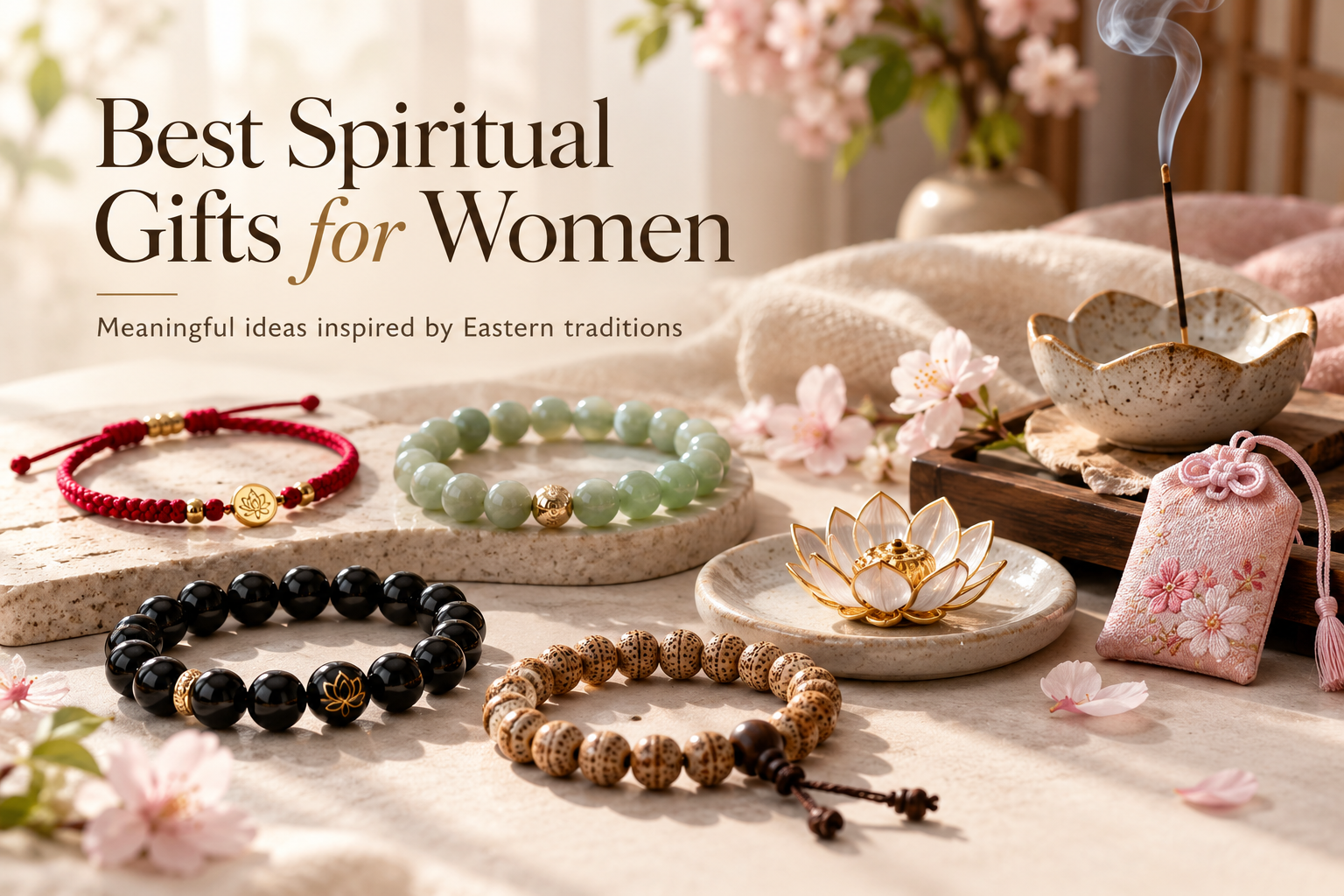
A meaningful gift starts with the person receiving it: the colors she wears, the traditions she values, and the small things that make her feel understood. A bracelet, a lotus pendant, or a carefully chosen incense holder can carry a thoughtful message without needing to promise a change in her luck.
These ten ideas draw on distinct Chinese and Japanese traditions, Buddhist symbolism, and modern jewelry preferences. They are not one shared belief system. Use the cultural background as a starting point, then let her taste and beliefs guide the choice.
1. A Red String Bracelet for Good Wishes
A fine red cord is a simple way to say, “I'm thinking of you.” Red is associated with happiness and good fortune in Chinese festive culture; the Victoria and Albert Museum discusses this symbolism in its Lunar New Year material.
Choose it for someone who likes understated jewelry, perhaps to mark a move or a new job. Include your own wish in a note rather than promising protection or a particular outcome. Our guide to red string bracelet meanings explores the stories behind this familiar design.
2. Jade Jewelry for an Enduring Connection
Jade offers more than a single “lucky” meaning. The National Palace Museum explains how Confucian thinkers associated its qualities with virtues such as benevolence, wisdom, courage, and integrity.
A jade pendant or bracelet can express admiration for someone's character, or become a personal reminder of family. Choose a shape she would enjoy wearing and check the seller's material and treatment disclosures. If you are considering nephrite, our introduction to Hetian jade adds useful cultural context; a meaningful name alone does not establish a piece's identity or origin.
3. A Pixiu Bracelet to Mark a New Chapter
Pixiu is a mythical creature associated with auspicious wishes and wealth symbolism. The National Palace Museum's Southern Branch describes the folklore behind its association with accumulating wealth.
For someone who enjoys Chinese mythical creatures, a small Pixiu charm can accompany a message of encouragement for a new venture. Present it as a symbolic gift, without suggesting that wearing it brings income or business success. Read our Pixiu bracelet guide before choosing a design.
4. An Obsidian Bracelet for a Quiet, Minimal Look
Obsidian is volcanic glass, as the U.S. Geological Survey explains. Its dark, often glossy appearance makes it an option for someone who prefers black jewelry to bright colors or decorative charms.
Some contemporary crystal interpretations describe obsidian as “grounding” or protective. Treat those words as personal symbolism, rather than established effects of the material. A note about steadiness or support can communicate your intention more clearly than a claim about absorbing negative energy.
5. Bodhi Beads for Someone Who Values Reflection
Bodhi beads have connections with Buddhist prayer practice, but the trade name does not mean every bead comes from the sacred Bodhi tree. A published ethnobotanical study documented Chinese Bodhi beads made from many different plant species.
They may suit someone who already appreciates prayer beads or enjoys natural seed textures. Ask which material she likes and respect the religious significance of the object. Our guide to white jade Bodhi beads explains why that name does not mean the beads are mineral jade.
6. Lotus Jewelry with a Message of Growth
The lotus has a long place in Buddhist art. The Metropolitan Museum of Art describes the lotus on its Bharhut stupa relief as an auspicious symbol associated with the Buddha's enlightenment.
A lotus pendant or charm can also carry a personal message of growth or encouragement, if that is a meaning the recipient welcomes. Keep your dedication personal rather than assigning one universal meaning to every lotus design. Our article on lotus symbolism offers more background.
7. A Japanese Omamori Chosen with Respect
An omamori is a religious amulet, not simply a decorative pouch. Meiji Jingu's own amulet page lists different purposes, including study, examinations, good fortune, and finding a partner. These are wishes expressed through shrine practice, not guaranteed results.
If she would welcome a Shinto amulet, obtain one from a shrine and follow that institution's guidance. Choose a purpose she is comfortable sharing; an unsolicited relationship or health amulet can feel presumptuous. If she prefers a secular gift, choose another idea from this list.
8. Rose Quartz Jewelry for Someone Who Loves Pink
Rose quartz is the pink variety of quartz, according to the Gemological Institute of America. Its soft color can make a lovely gift for someone who actually enjoys that palette.
Modern crystal symbolism often connects it with love and compassion. You can use it to express affection without suggesting it will heal emotional pain or attract a partner. Our rose quartz guide separates material facts from symbolic interpretations.
9. Incense and a Ceramic Holder for a Fragrance Enthusiast
Japanese incense culture includes religious use and the appreciation of fragrance. Incense maker Nippon Kodo's historical account discusses both Buddhist connections and the enjoyment of blended scents in courtly life.
This gift works best when you already know she enjoys incense. Pick a scent she likes and a stable holder intended for that incense format, and include the maker's burning instructions. If she avoids smoke or fragrance, choose jewelry or a ceramic decorative object instead. A thoughtful choice should fit her home and habits.
10. A Chinese Zodiac Bracelet with a Personal Detail
The Chinese zodiac uses a repeating cycle of twelve animals, documented by the Hong Kong Observatory. An animal charm can make a birthday gift feel personal without treating zodiac descriptions as fixed personality traits.
Check her animal rather than guessing from the Gregorian birth year alone, especially for a January or February birthday. The Observatory's Gregorian–lunar conversion tables help check dates around the lunar year boundary. Our Chinese zodiac bracelet guide explains the cultural background.
How to Make the Gift Feel Personal
Start with what she already likes: a fine cord or substantial beads, warm metal or silver tones, a religious symbol or a simple material. For jewelry, confirm the size, fastening, and material description. A discreet question can be more useful than choosing a stone based on a gender stereotype or a zodiac “rule.”
Add a short note explaining your choice: “This lotus reminded me of the new chapter you're beginning,” or “I thought you'd love this shade of pink.” That message is yours to give; it does not require an ancient tradition to validate it.
At Orient & Zen, we see cultural stories as a way to choose with greater care. The best fit is a gift she feels comfortable using, with a meaning you can explain honestly.
Comments
Leave a comment
Please note, comments must be approved before they are published.