
There was a time when I thought self-love sounded a little selfish. Growing up, I was taught to care for family, friends, and everyone around me before thinking about myself. It wasn't until much later that I realized something simple: when you feel peaceful inside, it's much easier to share kindness with others.
Many people believe crystals can serve as gentle reminders of our intentions. They aren't magic solutions, nor can they instantly change our emotions. Instead, many wear them as personal symbols—small objects that encourage mindfulness, gratitude, and self-care throughout the day.
Traditionally, in many Asian cultures, meaningful jewelry has never been only about decoration. In China, jade, crystal, and carved charms have long been worn to represent protection, harmony, and inner balance. While every culture has its own traditions, the idea of carrying a meaningful object close to the heart is something people around the world can relate to.
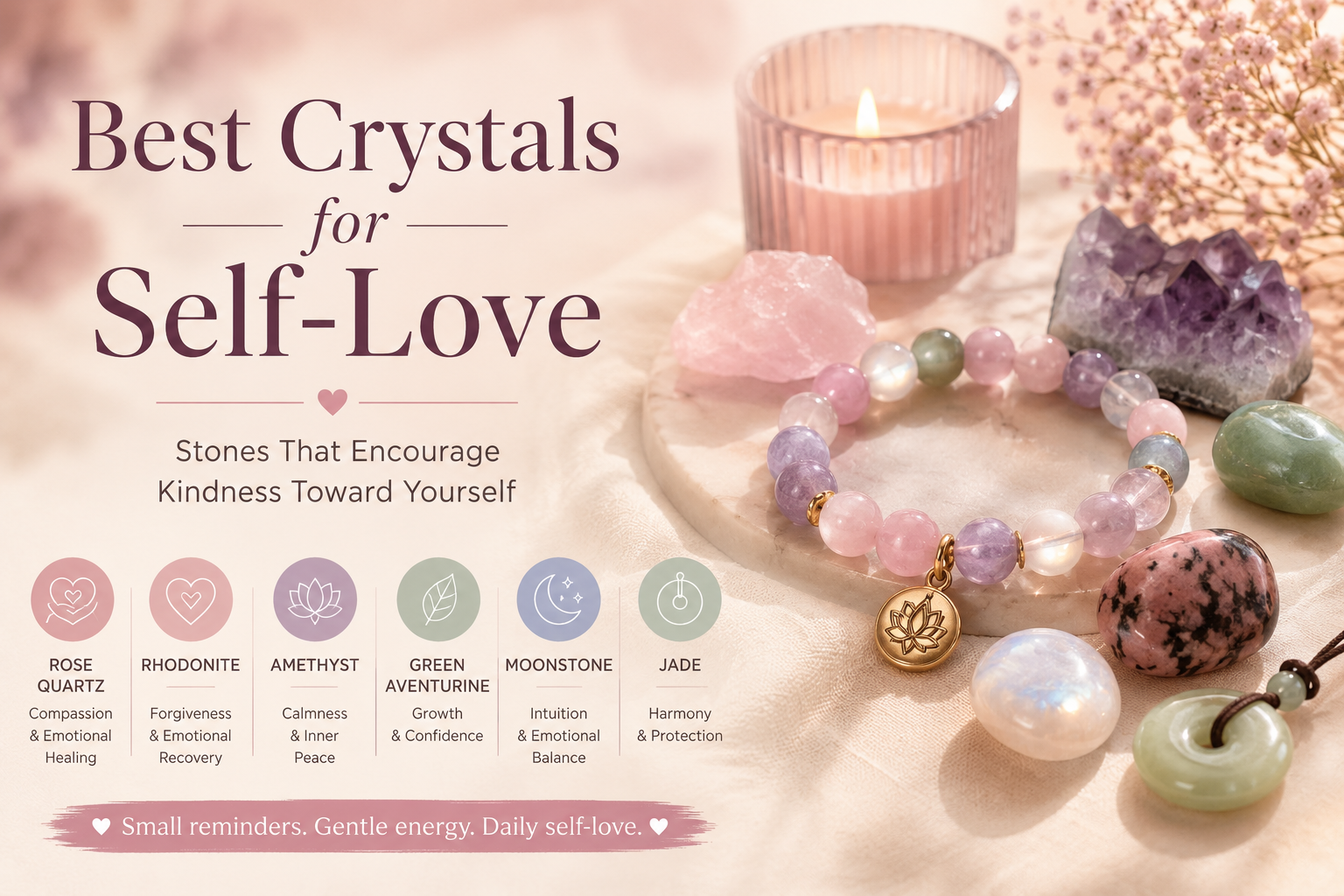
If you're looking for a crystal connected with self-love, here are some of the most popular choices.
Rose Quartz: The Classic Stone of Love
When people talk about self-love crystals, rose quartz is usually the first one mentioned.
With its soft pink color, rose quartz has become a symbol of compassion and emotional warmth. Many people believe it encourages gentleness—not only toward others but also toward yourself.
Traditionally, pink stones have been associated with the heart. In modern crystal communities, many wear rose quartz bracelets during periods of emotional healing or personal growth. Even if you simply enjoy its calming appearance, it can become a reminder to slow down and treat yourself with more patience.
Rhodonite: Learning to Forgive Yourself
We all make mistakes, yet many of us hold on to them longer than we should.
Many people believe rhodonite represents forgiveness and emotional recovery. Instead of focusing only on romantic relationships, it reminds people to let go of guilt and accept that growth takes time.
In daily life, some people wear rhodonite when starting a new chapter, changing careers, or rebuilding confidence after difficult experiences.
Amethyst: Finding Inner Peace
Self-love isn't always about feeling happier. Sometimes it's about creating a quieter mind.
Traditionally, amethyst has been connected with wisdom and calmness in many cultures. In both Eastern and Western traditions, purple gemstones were often associated with reflection and spiritual awareness.
Many people believe wearing amethyst encourages emotional balance during stressful periods. Whether you're meditating, reading, or simply enjoying a quiet evening, its gentle color often creates a peaceful atmosphere.
Green Aventurine: Growing With Confidence
Green aventurine is often called the "Stone of Opportunity," but many people also associate it with personal growth.
In Chinese culture, the color green is closely connected with renewal, spring, and fresh beginnings. Traditionally, new growth in nature symbolizes hope and positive change.
Many people believe green aventurine encourages optimism and helps them approach new experiences with greater confidence. Rather than chasing perfection, it reminds us that progress is enough.
Moonstone: Embracing Your Natural Rhythm
Life isn't always consistent, and neither are our emotions.
Many people believe moonstone represents intuition, balance, and acceptance of life's changing seasons. Just as the moon appears different throughout the month, our feelings naturally change too.
Instead of expecting yourself to feel positive every day, moonstone can serve as a reminder that every stage has its purpose.
Jade: The Ancient Symbol of Harmony
In China, few stones have a history as rich as jade.
For thousands of years, traditionally, jade has represented virtue, peace, protection, and balance. Ancient scholars carried jade ornaments not because they expected miracles, but because the stone reflected the qualities they hoped to develop within themselves.
Many people believe wearing jade encourages calm thinking and emotional stability. Even today, jade bracelets are often given as thoughtful gifts between family members to express wishes for happiness and well-being.
Its meaning fits beautifully with the idea of self-love—not dramatic change, but steady inner harmony.
Creating Your Own Self-Love Ritual
The crystal itself is only one part of the experience.
Many people develop small daily rituals that help them reconnect with themselves. You might put on your bracelet before leaving home, spend a few quiet minutes breathing deeply, or write down one thing you're grateful for each evening.
Traditionally, meaningful objects have often been used as reminders of personal values rather than sources of power. In many cultures, jewelry carries memories, intentions, and stories that stay with us over time.
Whether your bracelet features rose quartz, jade, amethyst, or another favorite crystal, what matters most is the meaning you give it.
Final Thoughts
There isn't one perfect crystal for self-love because every person's journey is different.
Many people believe the best crystal is simply the one that makes them feel calm, hopeful, or connected to their intentions. Traditionally, across many cultures, meaningful jewelry has represented more than beauty—it has reflected the values people wished to carry through life.
Perhaps that's why crystal bracelets continue to be so popular today. They remind us to pause, breathe, and offer ourselves the same kindness we so easily give to others. Sometimes, that's where self-love truly begins.
Comments (0)
No comments yet. Be the first to comment!
Leave a Comment
Please note, comments must be approved before they are published.