
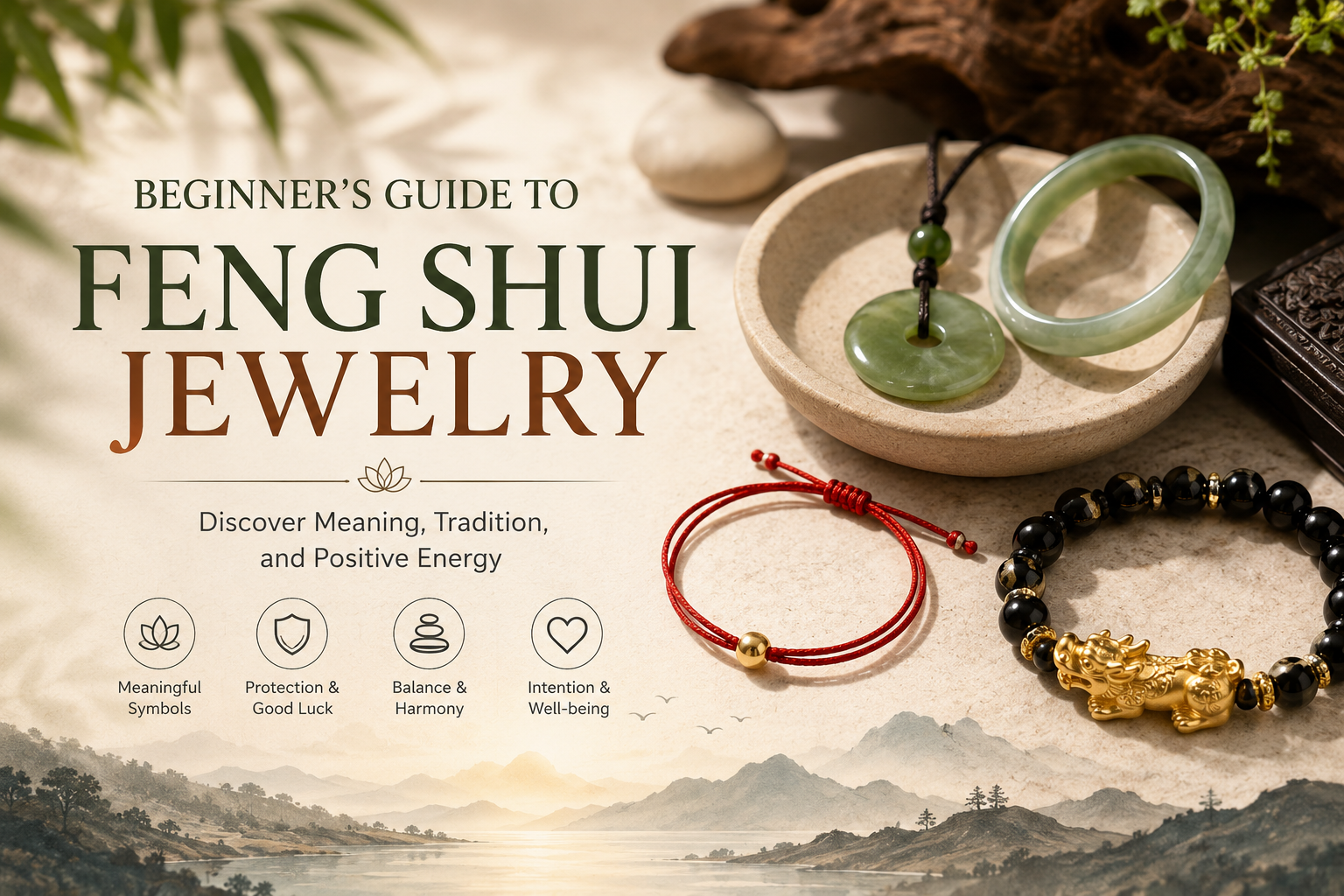
If you've ever walked through a Chinese market, visited a temple in Asia, or even browsed a modern jewelry shop online, you've probably noticed bracelets with red strings, carved jade pendants, or tiny mythical creatures called Pixiu. At first glance, they may look like simple accessories. But traditionally, many people believe Feng Shui jewelry carries deeper meaning — protection, balance, luck, love, or prosperity.
I didn't grow up thinking much about Feng Shui jewelry. To be honest, I used to see it as something older relatives wore. But over time, especially after traveling through different parts of China and talking to local artisans, I realized these pieces are often less about "magic" and more about intention, tradition, and personal comfort.
For beginners, Feng Shui jewelry can feel a little overwhelming. There are so many symbols, materials, and "rules" online that it's hard to know where to start. So here's a simple guide based on traditional beliefs and everyday experience.
What Is Feng Shui Jewelry?
In Chinese culture, Feng Shui is the practice of creating harmony between people and their surroundings. The phrase itself roughly translates to "wind and water." Traditionally, Feng Shui focuses on energy flow, balance, and how objects around us may influence mood and life experiences.
Feng Shui jewelry takes those ideas and turns them into wearable symbols.
Many people wear these pieces not because they expect instant miracles, but because the jewelry reminds them of certain goals or emotions — confidence, calmness, protection, or abundance.
In modern life, that emotional connection is probably one reason Feng Shui jewelry has become popular far beyond China.
Common Types of Feng Shui Jewelry
Pixiu Bracelets
One of the most famous Feng Shui accessories is the Pixiu bracelet. Pixiu is a mythical creature from Chinese folklore that traditionally symbolizes wealth and protection.
According to legend, Pixiu has a huge appetite for gold and treasure, but no way for wealth to leave its body. Because of this, many people believe Pixiu "attracts" and "keeps" prosperity.
Traditionally, Pixiu bracelets are often worn on the left hand because, in Chinese belief, the left side is considered the "receiving" side of the body.
Some people also avoid letting strangers touch their Pixiu bracelet because they believe it creates a personal energetic connection.
Jade Jewelry
Jade has been treasured in China for thousands of years. Ancient Chinese scholars once said that jade reflects qualities like wisdom, kindness, and inner peace.
In many Chinese families, giving jade jewelry is considered a meaningful gesture of protection and care.
Unlike flashy gemstones, jade has a softer and calmer appearance. Many people believe it carries gentle energy rather than strong or aggressive energy.
Traditionally, jade bangles are especially popular among women, often passed down between generations.
Red String Bracelets
The red string bracelet may look simple, but it carries strong symbolic meaning across many cultures, including Chinese traditions.
In Chinese culture, red is connected with luck, happiness, celebration, and protection against negative energy.
Many people wear red string bracelets during important life periods — starting a business, traveling, entering a relationship, or moving into a new home.
In some stories, the "red thread of fate" symbolizes invisible connections between people who are destined to meet.
Whether someone believes the spiritual meaning or not, the bracelet often becomes a comforting reminder of hope and positive intention.
How to Choose Feng Shui Jewelry as a Beginner
The biggest mistake beginners make is trying to follow too many complicated rules.
Traditionally, Feng Shui is deeply personal. What feels meaningful to one person may not resonate with another.
A simple way to start is this:
- Choose one symbol that genuinely speaks to you
- Avoid wearing too many different energy symbols at once
- Focus on intention rather than perfection
- Learn the cultural meaning behind the piece
For example, someone looking for calmness may naturally feel drawn to jade. Someone starting a new career may prefer a Pixiu bracelet. Others simply choose a red bracelet because it feels warm and uplifting.
There's no need to turn it into superstition.
Does Feng Shui Jewelry Really Work?
That depends on what "work" means to you.
From a traditional perspective, many people believe these symbols influence energy and luck. From a modern perspective, Feng Shui jewelry may work more like a personal ritual or emotional anchor.
A bracelet cannot magically solve life problems overnight. But wearing something meaningful can subtly change your mindset, confidence, and daily habits.
And honestly, that alone can be powerful.
I've met people who wear Feng Shui jewelry simply because it reminds them to stay grounded, optimistic, or focused during stressful times.
In a world where so much feels fast and chaotic, maybe that's part of the appeal.
Final Thoughts
Feng Shui jewelry is not just about fashion. It carries stories, traditions, and generations of cultural meaning.
Whether it's a jade pendant from a grandmother, a Pixiu bracelet bought during a new business journey, or a simple red string tied during a meaningful moment, these pieces often become personal symbols over time.
Traditionally, many people believe Feng Shui jewelry helps attract balance and positivity. But even beyond belief, it can also serve as a daily reminder of intention, culture, and connection.
And perhaps that's what makes it special in the first place.
Comments (0)
No comments yet. Be the first to comment!
Leave a Comment
Please note, comments must be approved before they are published.