
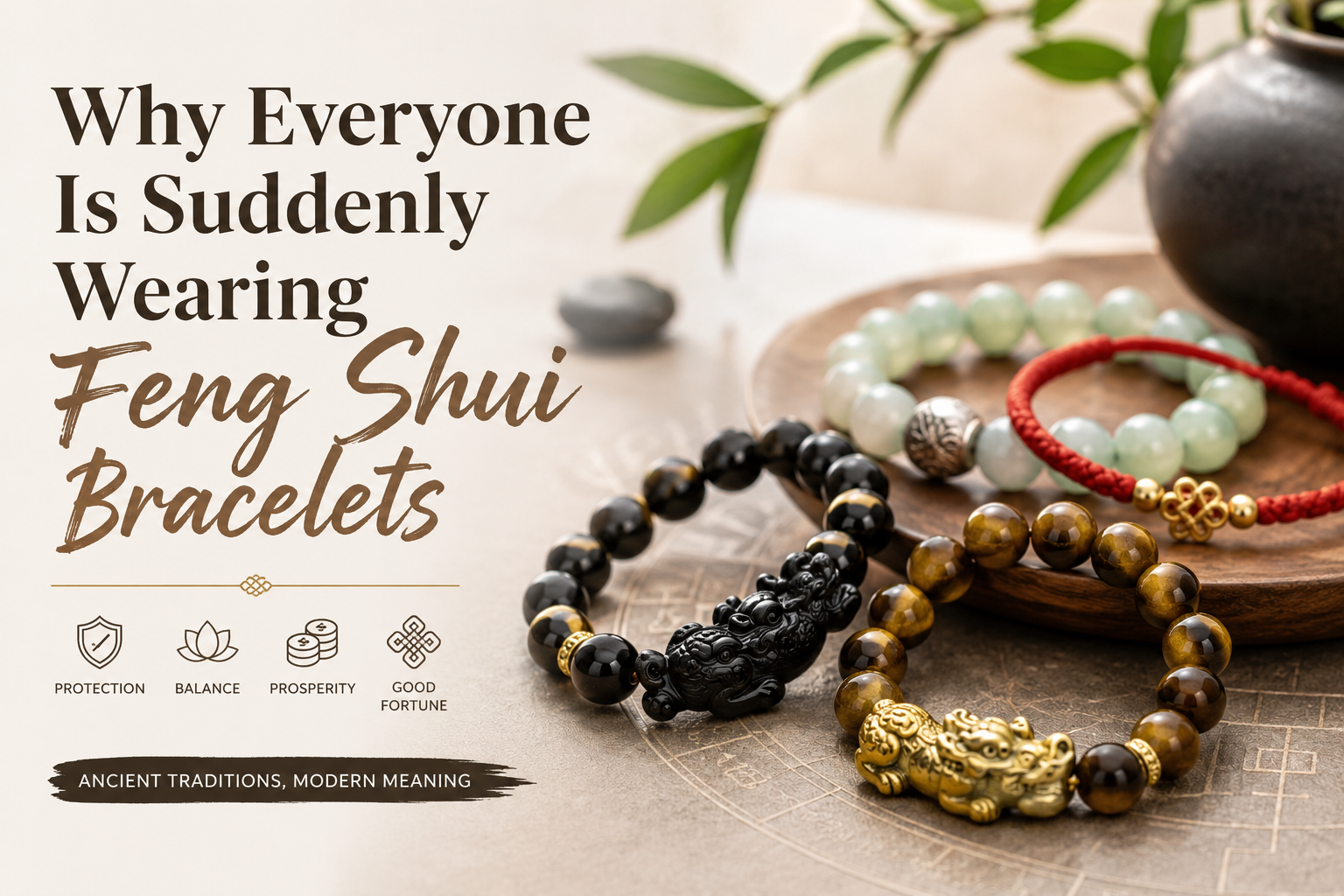
A distinctive charm, a polished bead or a color combination can make you pause over a bracelet in a shop or a photograph. The interest might begin with style and lead to curiosity about a symbol. Looking at those details gives you a more personal starting point than following a trend.
A design may start the conversation
Perhaps a contrasting charm catches your eye, or a strand of patterned beads works with clothes you already own. GIA’s tiger’s-eye quartz exhibit describes its silky chatoyancy, an optical appearance that offers a concrete reason to enjoy the material. No spiritual claim is needed to appreciate moving reflection.
Different viewers can respond to the same object differently. One may like the color, another may recognize a motif, and another may be searching for a gift. Those are possible routes to interest, not survey findings about why most people buy.
A broad label needs closer reading
“Feng shui bracelet” can introduce several layers of information: bead substance, creature imagery, cultural interpretation and a suggested personal intention. The label alone does not establish a continuous history for every combination sold under it.
Our comparison of feng shui and other bracelets explains why symbolism does not make an accessory a physically different class of object. Look at the individual design rather than assuming the category guarantees authenticity or depth.
Stories deserve evidence of their own
A description can invite worthwhile learning when it names its source and distinguishes older context from a modern interpretation. Our Pixiu introduction is one focused starting point.
A travel anecdote, a celebrity photograph or a widely shared video cannot by itself establish how a design originated or how many people wear it. Claims that “everyone” wants protection or that an entire generation is returning to tradition need evidence beyond visibility.
Make curiosity useful before purchasing
The FTC’s Jewelry Guides emphasize accurate product descriptions. Ask for the material and dimensions with the same interest you give the story. A compelling explanation is less useful if it leaves you uncertain about what will arrive.
Our bracelet buying guide turns that curiosity into practical questions about documentation, fit and transaction terms. You can enjoy learning about an object and still decide not to buy it.
Let your reason be sufficient
You might choose a bracelet because it is attractive, connected with an occasion or a reminder you have chosen for yourself. None of those reasons requires proof of a global trend. A considered choice can begin with a simple preference and grow through accurate information about the particular piece.
Comments
Leave a comment
Comments are reviewed before publication.