
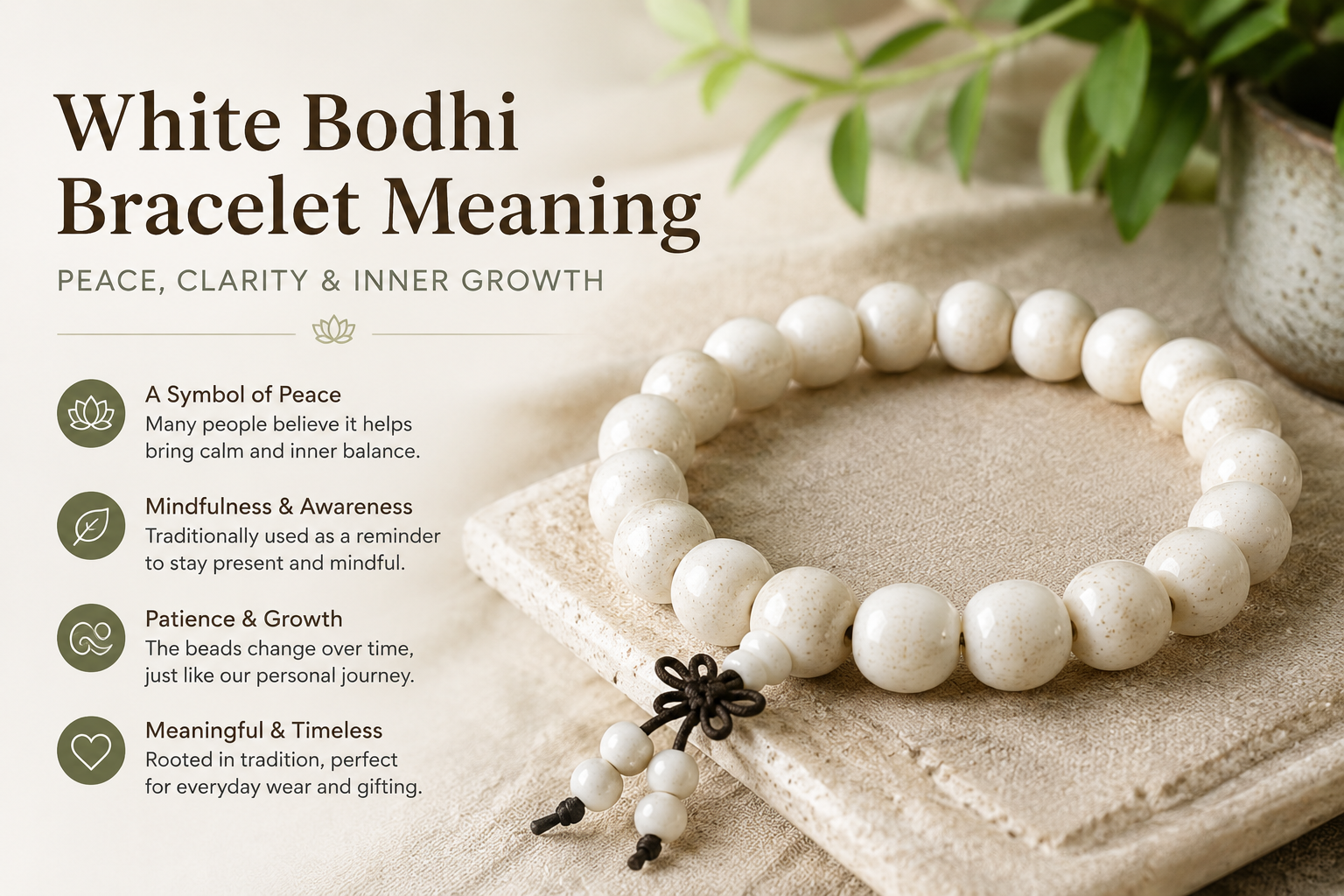
A white Bodhi bracelet may appeal because of its pale color and simple design. It can also invite questions about Buddhist associations and the material used for the beads. These are separate layers: neither a peaceful appearance nor the word “Bodhi” identifies a species or guarantees a particular effect on the wearer.
What does the name establish?
A 2014 original study, Seeds used for Bodhi beads in China, surveyed markets in six Chinese provinces and recorded 47 species, including two varieties. Its findings show that Bodhi beads in that sample came from multiple botanical sources, rather than one tree.
The study is not a current inventory of every product sold as white Bodhi. A listing still needs its own material description. Do not assume the beads are from Ficus religiosa simply because of the trade name.
“White jade Bodhi” is not gemstone identification
The word “jade” in a decorative product name is not evidence that the beads are jade. Ask the seller what substance is being described, which plant identification is supported if plant material is claimed, and whether the surface is dyed, coated or otherwise finished.
Our Hetian jade article introduces a distinct material topic. Similar color or smoothness does not make plant beads and gemstone jade interchangeable. If the seller cannot identify the material precisely, that uncertainty should remain clear.
Buddhist context deserves specificity
The Metropolitan Museum of Art describes a Buddhist stele showing enlightenment under the Bodhi tree at Bodhgaya. That is a documented religious image, not proof that a modern white bracelet shares the same material or a single prescribed use.
You may choose a personal association with patience or reflection, but it should not be presented as the universal meaning of white in Chinese culture. Nor does the pale color establish gentler energy than a black or red bracelet.
A personal meaning without a promise
If you want the bracelet to mark an intention, name it in your own words. It could represent taking time before answering or remembering a person who gave it to you. Wearing or touching the beads is optional; it is not an established treatment for worry or emotional distress.
For comparison with another design, our Pixiu introduction shows why different motifs should retain their own explanations.
Choose and care for the actual object
Check size, stringing and finish, and request care instructions appropriate to the identified substance. Do not assume a particular aging color is guaranteed or evidence of spiritual progress. Our bracelet selection guide helps connect fit with personal preference. A pale bracelet can be enjoyable jewelry without an invented origin or a promise about inner transformation.
Comments
Leave a comment
Please note, comments must be approved before they are published.