
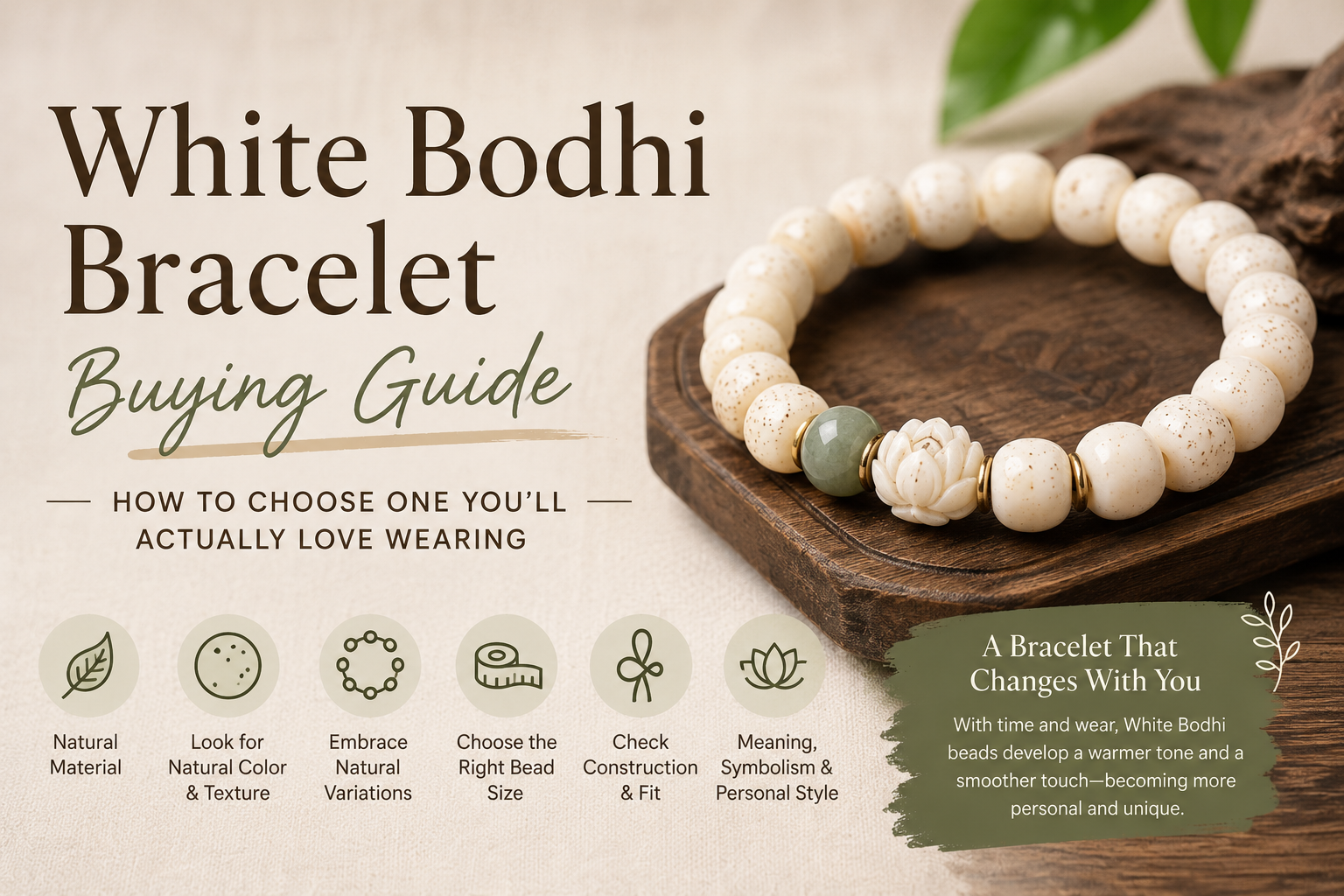
White Bodhi bracelets have a quiet kind of beauty.
They are not as flashy as crystal bracelets, and they do not have the deep, polished shine of obsidian. Most White Bodhi beads begin with a soft ivory or creamy tone, simple enough to wear with almost anything. But what makes them interesting is what happens after you start wearing them.
Over time, the beads may slowly change in color and texture. They pick up traces of daily life, becoming smoother, warmer, and more personal.
If you are thinking about buying your first White Bodhi bracelet, here is what I would look for.
First, What Is a White Bodhi Bracelet?
Despite the name, "White Bodhi" does not usually refer to a single botanical species called White Bodhi. In the bracelet market, the term is commonly used for pale, seed-based Bodhi beads valued for their natural texture and their connection with traditional Buddhist-inspired bead culture.
In China, Bodhi beads have long been associated with meditation, patience, and self-cultivation. Traditionally, strings of beads were used for counting recitations or supporting meditation practice. Over time, Bodhi beads also became everyday objects worn or handled outside strictly religious settings.
Many people believe the appeal of Bodhi is not only in how the beads look when they are new, but in how they change with you.
That is one reason I would not judge a White Bodhi bracelet only by how perfectly white it looks in a product photo.
1. Look for Natural Color, Not Perfect Whiteness
When shopping online, extremely bright white beads can look impressive. But natural White Bodhi usually has more character.
You may notice creamy tones, ivory shades, tiny variations, or subtle natural markings. These differences are not necessarily flaws. In fact, they can make the bracelet feel less factory-made.
I personally prefer a warm, natural-looking white rather than a cold, almost artificial white.
If every bead looks absolutely identical under every angle of light, it is worth checking the material description carefully.
2. Pay Attention to the Surface
Good White Bodhi beads should feel pleasant in the hand.
The surface may be polished, but it should not necessarily look like plastic. Natural beads often have small differences in texture, shape, or grain.
Traditionally, part of the pleasure of owning Bodhi beads comes from handling them. In Chinese bead culture, people sometimes refer to the practice of repeatedly handling and caring for beads as "pan" (盘). With time, oils from the hands, friction, and normal wear can gradually affect their appearance.
That slow transformation is part of the experience.
3. Don't Expect Every Bead to Be Identical
This is probably one of the biggest differences between buying natural-material jewelry and buying something manufactured from glass or resin.
Small variations are normal.
One bead may be slightly creamier than another. The grain may differ. Tiny marks may appear in different places.
Of course, there is a difference between natural variation and poor workmanship. Cracked beads, badly drilled holes, rough edges, or obviously mismatched sizes deserve more attention.
But "not perfectly identical" does not automatically mean "low quality."
Sometimes it means exactly the opposite: you are looking at something natural.
4. Choose the Right Bead Size
Bead size changes the entire personality of a White Bodhi bracelet.
Smaller beads tend to look lighter and more understated. They are easy to combine with a watch, jade bracelet, red string, or other jewelry.
Medium-sized beads usually give you the most traditional Bodhi bracelet look without feeling too heavy.
Larger beads make a stronger visual statement and can feel more like traditional prayer or meditation beads.
If this is your first White Bodhi bracelet and you want something for everyday wear, I would usually lean toward a moderate bead size rather than the largest option available.
Comfort matters more than photographs suggest.
5. Check the Bracelet Construction
The beads get most of the attention, but the string holding them together matters just as much.
Before buying, check whether the bracelet uses elastic cord, woven cord, or another construction. Look closely at the knotting and finishing in product photos.
For elastic bracelets, a good fit should sit comfortably around the wrist without squeezing too tightly.
For adjustable cord designs, check the minimum and maximum wrist size rather than assuming "adjustable" means it fits everyone.
This sounds obvious, but sizing is one of those boring details that suddenly becomes very important when the bracelet arrives.
6. Decide Whether You Want Pure Bodhi or Added Symbols
Some White Bodhi bracelets are intentionally simple: just a circle of pale beads.
Others include jade, cinnabar-style accents, lotus motifs, carved beads, metal details, or traditional Chinese symbols.
Neither is automatically better.
If you like meditation-inspired jewelry or minimalist pieces, plain White Bodhi can be beautiful because the material itself becomes the focus.
If you are buying the bracelet as a meaningful gift, an added symbol can make the piece feel more personal.
In Chinese culture, for example, lotus imagery is traditionally associated with purity and spiritual growth. Red accents may evoke good fortune, celebration, and protection in folk traditions.
Choose the symbolism because it means something to you, not because someone tells you that you "must" wear a particular combination.
7. Understand That White Bodhi Can Change Over Time
This is important.
A White Bodhi bracelet may not stay the same pale color forever.
With regular handling and wear, the beads can gradually become warmer or deeper in tone. Their surface may also develop a smoother appearance.
Many people believe this aging process gives Bodhi beads their character. Rather than trying to preserve them in a permanently new condition, some collectors actually enjoy watching the material develop over months or years.
It reminds me a little of well-used wooden furniture or an old leather bag. The changes tell a story.
If you want jewelry that always looks exactly as it did on day one, White Bodhi may not be the ideal choice.
If you enjoy objects that become more personal with use, that is where White Bodhi gets interesting.
8. Be Careful With Big Spiritual Promises
You will sometimes see White Bodhi bracelets advertised with very strong claims about luck, protection, healing, wealth, or changing someone's energy.
I would approach those promises carefully.
Traditionally, Bodhi beads have meaningful connections with Buddhist practice, meditation, mindfulness, and self-reflection. Many people believe wearing or handling them can serve as a personal reminder to slow down, stay patient, or return attention to the present moment.
That cultural meaning is already interesting enough.
A bracelet does not need a supernatural guarantee to be meaningful.
What I Would Choose for a First White Bodhi Bracelet
For a first bracelet, I would keep things simple: natural-looking ivory beads, comfortable sizing, clean drilling, secure construction, and minimal decoration.
Most importantly, choose one you genuinely want to wear.
There is an old-fashioned charm to Bodhi beads because they are not completely finished when you buy them. In a way, time finishes them.
The bracelet you receive today may look slightly different a year from now, shaped by countless ordinary moments: commuting, working, traveling, drinking coffee, sitting quietly, or simply turning the beads between your fingers.
And perhaps that is the best reason to choose White Bodhi.
Not because it promises to transform your life overnight, but because it can quietly become part of it.
Comments
Leave a comment
Please note, comments must be approved before they are published.