
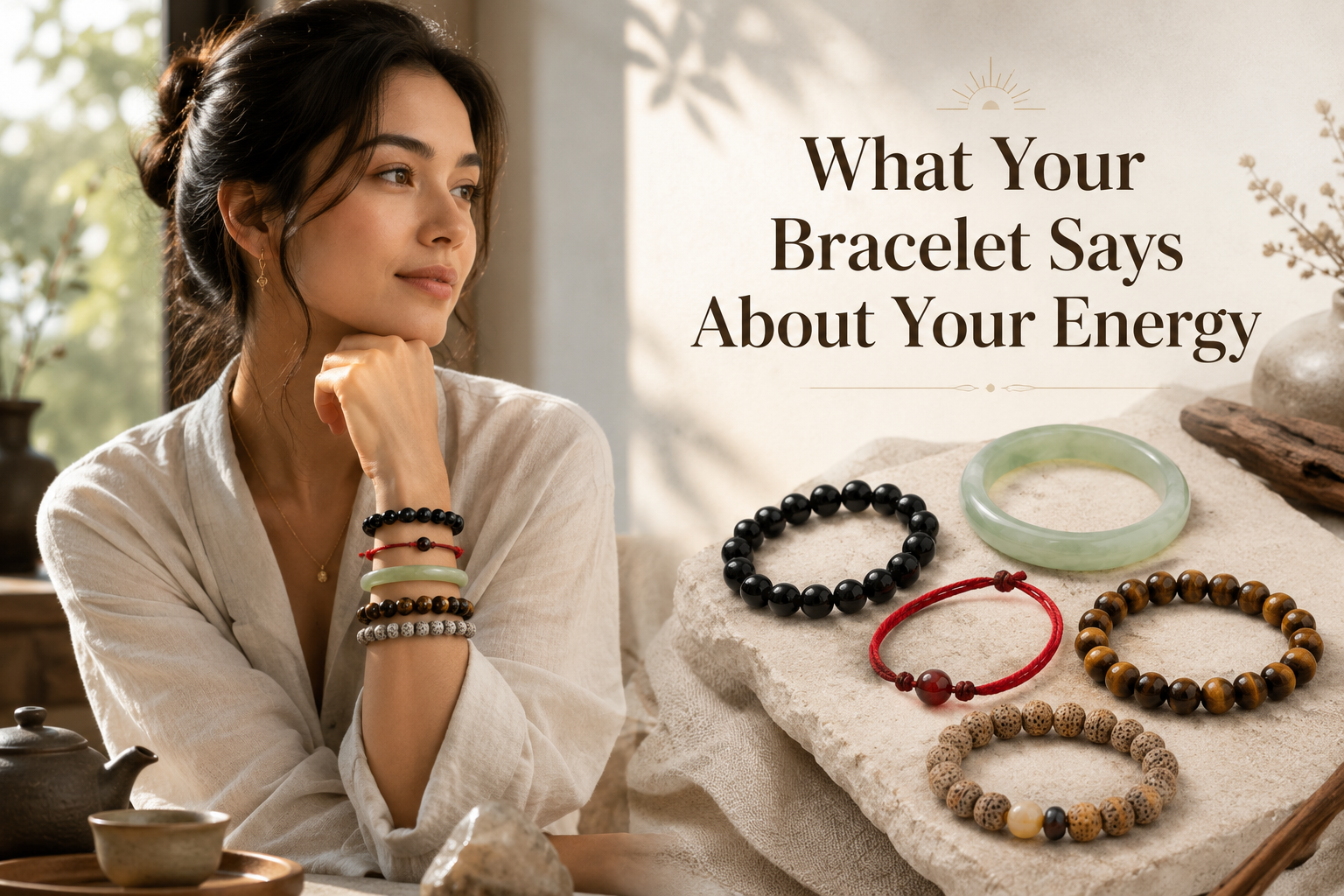
You cannot reliably read someone’s energy, personality or emotional condition from their bracelet. A black strand could be a gift, a wardrobe choice or something picked up without much thought. The wearer’s explanation, if they want to offer one, tells you more than a chart assigning traits to stones.
The same object can have several explanations
Someone may wear a pale bead bracelet because of a family memory. Someone else may like the color. A third person may follow a particular practice. You cannot infer which explanation applies by looking, and the owner is not obliged to disclose a private story.
When talking about your own piece, it is fine to keep the account simple: “I like it” or “It was a gift.” Meaning does not have to be elaborate to be real.
Cultural association is not a personality test
The Metropolitan Museum of Art notes jade’s association with moral virtue in its account of a Daoist sculpture. That does not mean every wearer of jade is calm, honest or searching for balance. An object’s symbolism is different from a judgment about its owner.
Our jade meaning guide explores cultural associations alongside the different personal stories a wearer may attach to a piece.
Color is not an emotional reading
GIA identifies rose quartz as a pink quartz variety. Its color is a physical description. It does not establish that a wearer is romantic, needs emotional healing or is going through a relationship change.
The same caution applies to dark beads described as protective. A person choosing them is not necessarily distressed or afraid. Ask about the design rather than guessing a vulnerability.
Give your own interpretation room to change
A bracelet may mark a project this year and simply be familiar jewelry later. You can assign a meaning without insisting it is stored in the material or permanently describes who you are.
Our personalized jewelry guide offers ways to make choices explicit. If a creature motif interests you, our Pixiu introduction explains that design without making claims about every wearer’s ambition or finances.
Choose curiosity over a label
“Do you like that design?” leaves more room than “You must need protection.” For your own selection, our preference-based bracelet guide starts with appearance and daily use. Jewelry can invite a conversation, but it does not grant access to another person’s inner life. Let the wearer decide whether there is a story to share.
Comments
Leave a comment
Comments are reviewed before publication.