
I remember the first time I noticed a simple black bead bracelet on someone's wrist. It wasn't flashy. There were no sparkling diamonds or oversized charms. Yet somehow it stood out.
When I asked where it came from, the answer surprised me. "It's inspired by traditional Chinese culture," they said. "I wear it because it reminds me to stay calm."
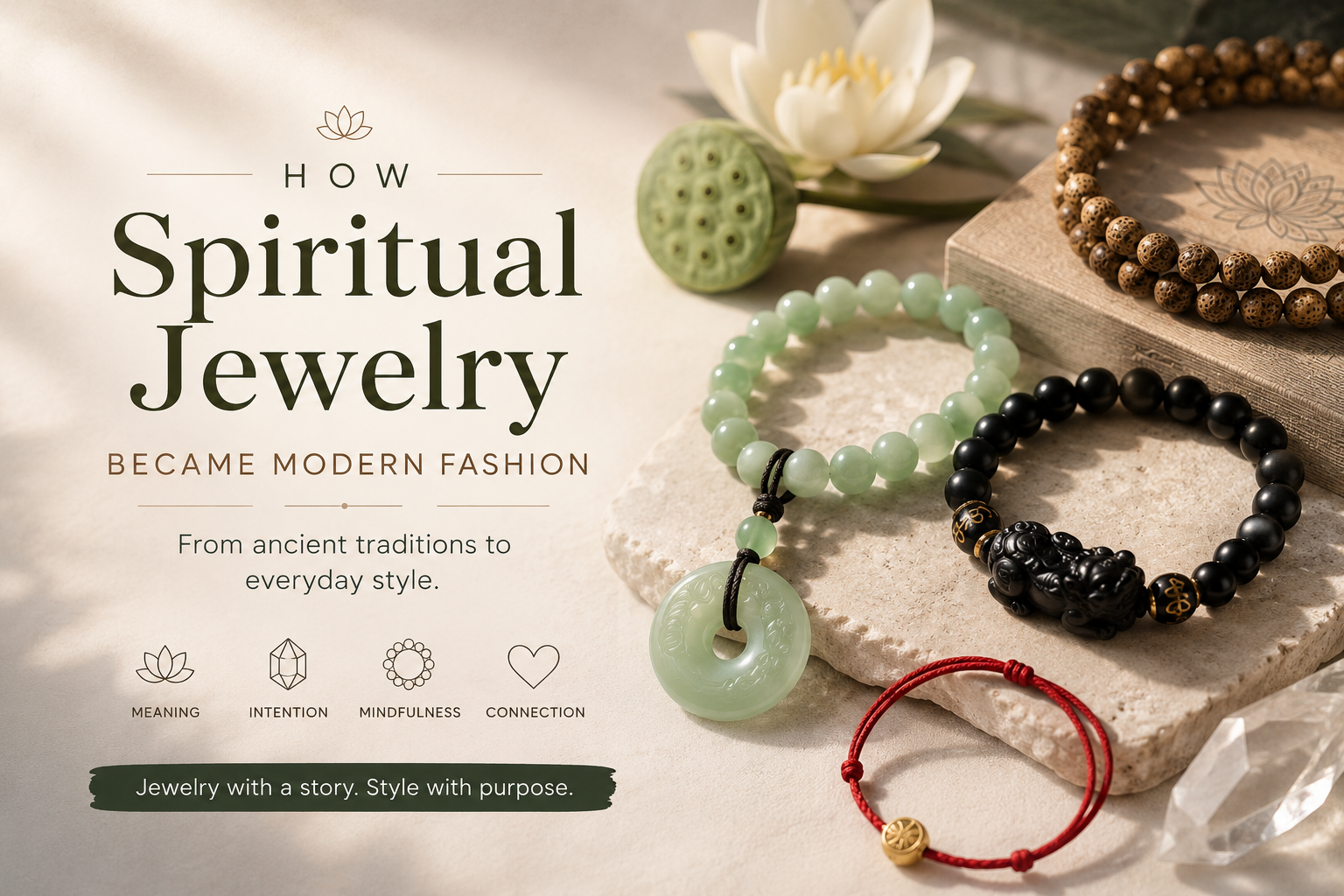
That conversation stayed with me. It also made me realize that spiritual jewelry has quietly become something much bigger than a passing trend. Today, you'll find crystal bracelets, jade pendants, Bodhi beads, and red string bracelets worn by people from all over the world—not only because they look beautiful, but because they often carry a personal meaning.
How Spiritual Jewelry Became Modern Fashion
Fashion changes every season, but meaningful jewelry seems to tell a different story. Instead of following trends, it often follows traditions that have existed for hundreds or even thousands of years.
Many people believe that wearing jewelry with symbolic meaning helps them feel connected to their intentions, memories, or cultural roots. Whether or not someone believes in spiritual energy, the stories behind these pieces continue to attract people across different cultures.
From Ancient Rituals to Everyday Style
Long before jewelry appeared in luxury boutiques, it was often connected with daily life, ceremonies, and beliefs.
Traditionally, in China, jade was treasured far beyond its beauty. Ancient scholars admired jade because it represented kindness, wisdom, honesty, and harmony. Instead of showing wealth alone, a jade pendant could reflect a person's character.
Bodhi seed bracelets also have deep historical roots. In Buddhist tradition, Bodhi seeds were used during meditation, helping practitioners focus their minds while reciting prayers. Over time, these bracelets became symbols of mindfulness rather than objects reserved only for temples.
Many people believe that black obsidian offers protection, while red string bracelets symbolize good fortune and meaningful relationships. These ideas have been passed down through generations, becoming part of everyday culture rather than strict religious practice.
The Power of Stories
One reason spiritual jewelry remains popular is that every piece tells a story.
In Chinese folklore, the Pixiu is known as a mythical creature that attracts wealth while protecting its owner. Traditionally, merchants displayed Pixiu statues in their businesses, hoping to invite prosperity.
Today, many people choose Pixiu bracelets for the same symbolic reason. Even if they don't expect magical results, wearing one can serve as a reminder to work hard, stay confident, and appreciate opportunities.
The same can be said for lotus jewelry.
In Chinese culture, the lotus grows from muddy water yet blooms into a beautiful flower. Because of this, many people believe it represents resilience, inner peace, and personal growth. It has become a meaningful symbol for people going through new chapters in life.
Stories like these make jewelry feel personal instead of simply decorative.
Why Younger Generations Love It
One interesting change over the past decade is that younger people are embracing traditional symbols in completely modern ways.
Instead of wearing formal ceremonial jewelry, many choose simple bracelets that pair easily with everyday clothing. A black obsidian bracelet looks just as natural with jeans as it does with business attire.
Minimalist fashion has also played a role.
Many spiritual bracelets feature natural stones, wood, or handcrafted beads. Their understated appearance fits today's preference for timeless accessories rather than overly flashy designs.
Many people believe that wearing meaningful jewelry allows them to express part of their personality without saying anything at all.
Social Media Helped Spread the Tradition
Years ago, learning about Chinese spiritual jewelry usually required visiting local markets or traveling abroad.
Today, social media has changed everything.
A creator might share the story behind a jade pendant, while another explains why they wear a red string bracelet every day. These personal experiences encourage curiosity rather than certainty.
This global exchange has introduced millions of people to traditions they may never have encountered otherwise.
Of course, it's also important to separate culture from exaggerated promises.
Traditionally, these items were respected as symbols of values, blessings, or intentions—not guaranteed solutions to life's challenges.
That perspective is one reason many people continue to appreciate them today.
More Than a Fashion Trend
The biggest reason spiritual jewelry has remained popular may be surprisingly simple.
People want objects that feel meaningful.
A bracelet can remind someone of a goal.
A pendant can honor family traditions.
A string of beads can encourage a quiet moment during a busy day.
Whether it's crystal jewelry, jade, Bodhi beads, or handcrafted red string bracelets, many people believe these pieces carry emotional value that goes beyond appearance.
Even those who don't follow traditional beliefs often enjoy the sense of connection these symbols provide.
Final Thoughts
Fashion trends come and go, but meaningful stories rarely disappear.
Spiritual jewelry has evolved from ancient cultural traditions into modern everyday fashion because it offers something many accessories cannot: a sense of purpose.
Traditionally, in Chinese culture, jewelry was never only about decoration. It reflected values, hopes, protection, gratitude, and personal growth.
Today, people around the world continue to wear these pieces for different reasons. Some appreciate the craftsmanship. Some enjoy the history. Others simply like having a daily reminder of the person they hope to become.
Perhaps that's why spiritual jewelry continues to feel both ancient and surprisingly modern at the same time.
Comments (0)
No comments yet. Be the first to comment!
Leave a Comment
Please note, comments must be approved before they are published.