
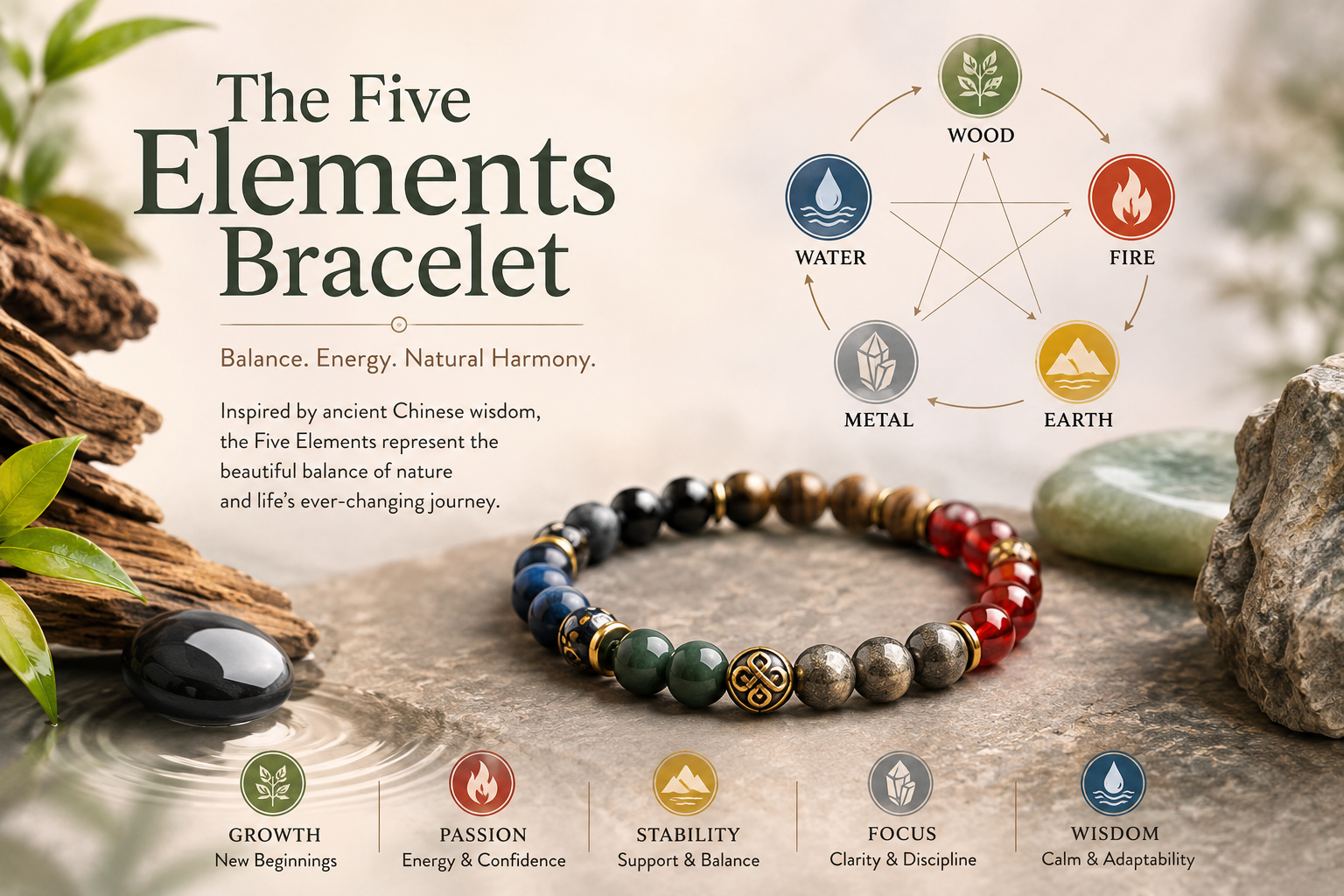
A “Five Elements” bracelet is usually a design inspired by wuxing: wood, fire, earth, metal and water. In this context, phases is a helpful translation because the framework concerns relationships and transformation. It is not a list of chemical elements, and a bracelet is not a laboratory model of what matter contains.
What the five phases describe
The University of Minnesota’s explanation calls wuxing the five phases of transformation and describes relationships between them. Its seasonal examples connect wood with spring growth and water with winter potential. These are examples within a traditional framework, not measurements showing that particular beads correct a person’s condition.
A symbolic cycle should also be distinguished from a literal chemical process. Read the cycle as a set of relationships within the framework, rather than as a description of how one chemical substance turns into another.
Is this the same as yin and yang?
They are related concepts in traditional discussions, but the labels are not interchangeable. Our introduction to yin and yang offers a separate explanation of interconnected contrasts. A design that combines the two references should say how the maker is using each one.
Be wary of a listing that moves from an introductory philosophy paragraph straight to a diagnosis of what your body lacks. A cultural analogy does not establish a treatment or identify a material you need to wear.
How a bracelet can reference the phases
A maker might use five colors, five groups of beads or a mixture of materials to express the idea. Ask for the design explanation. A red bead described as representing fire is a symbolic choice; it is not a universal instruction to buy one particular gemstone.
Our bracelet selection guide helps translate your preferences into questions about size, finish and fit. You can choose a combination for its appearance and ask the maker how the five groups or colors were arranged.
Check the materials independently
GIA emphasizes that different jewelry materials and treatments require appropriate care. Ask for an actual component list and maintenance instructions, even if the seller has already assigned every bead a phase.
A symbolic name does not tell you whether a charm is plated, whether a bead is treated or how the cord should be cleaned. Our material-first cleaning guide addresses those questions before a ritual or soaking method is considered.
Choosing it as a gift
Explain the design as a wish or a reference to a philosophical model, then let the recipient decide its personal meaning. Ask whether they like the colors and fastening. Do not frame the gift as evidence that they are deficient in a phase or need an accessory to become balanced.
A thoughtful Five Elements bracelet has an intelligible design and an honest product description. Cultural interest can enrich the piece while material identity, comfort and care remain practical decisions that deserve their own answers.
Comments
Leave a comment
Comments are reviewed before publication.