
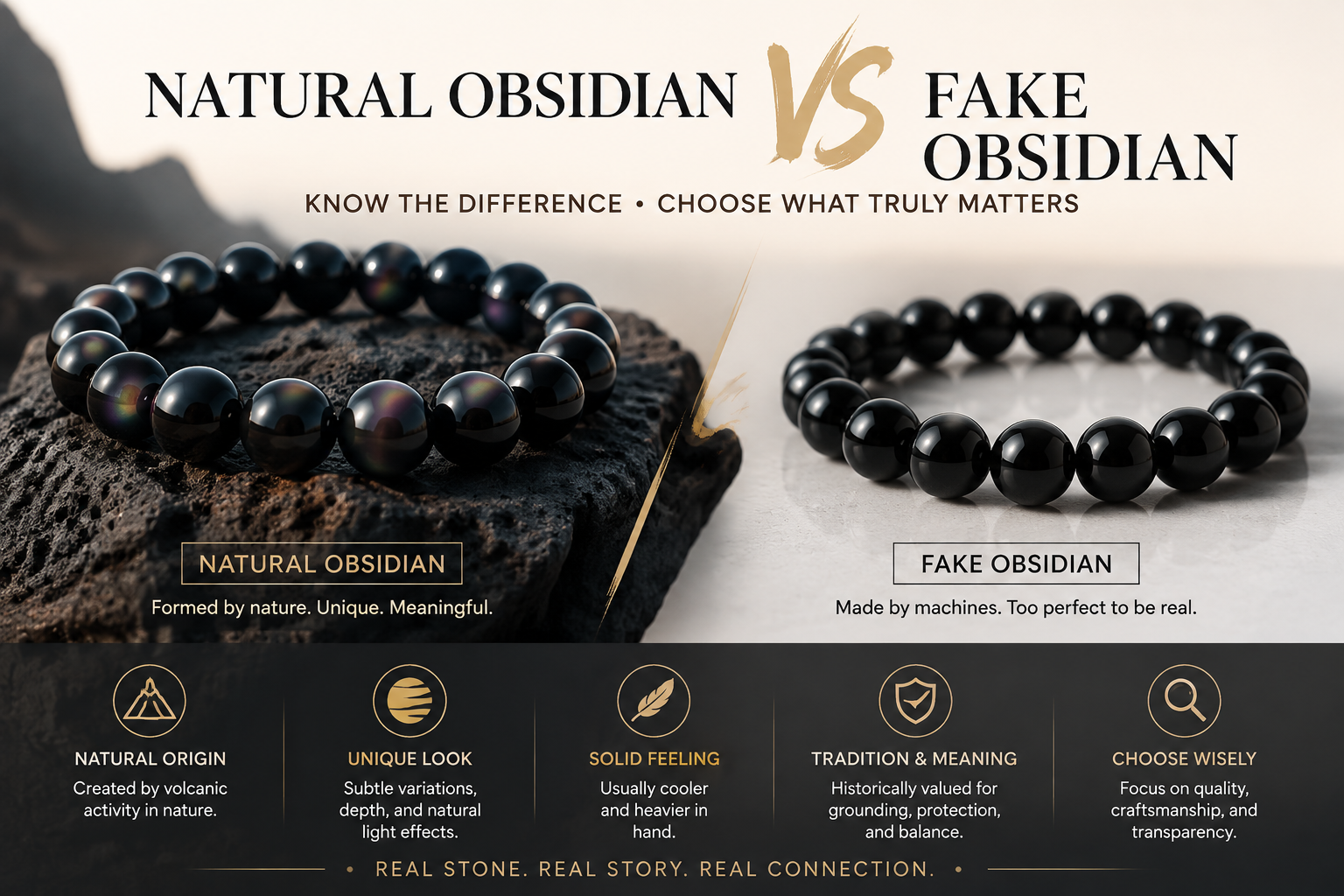
Obsidian has been admired for centuries for its deep black color, smooth texture, and mysterious volcanic origin. In Chinese culture, black stones have traditionally been associated with grounding, protection, and a connection to the natural world. Many people believe that obsidian carries a special meaning because it comes from the powerful forces of the earth itself.
Today, obsidian bracelets and jewelry are becoming popular around the world. However, with more demand comes more imitations. So, how can you tell the difference between natural obsidian and fake obsidian?
What Is Natural Obsidian?
Natural obsidian is a volcanic glass formed when lava cools rapidly. Unlike ordinary stones, it does not grow slowly over thousands of years. Instead, it is created through a dramatic moment in nature, when fire and earth transform into a smooth, glass-like material.
Traditionally, obsidian has been used in many cultures for tools, decorations, and spiritual objects. In ancient China, black stones were often valued for their elegant appearance and symbolic connection to balance and protection.
Natural obsidian usually has a rich black appearance, but some pieces may show subtle shades of brown, gray, or even a golden glow when viewed under light. These small variations are part of what makes each piece unique.
What Is Fake Obsidian?
Fake obsidian is usually made from colored glass, synthetic materials, or lower-quality stones that are treated to look like real obsidian.
Some imitations can look very similar at first glance, especially when polished into beads for bracelets. They may have a perfect black color and a shiny surface, but they often lack the natural details found in genuine obsidian.
A perfectly uniform appearance is sometimes a sign worth paying attention to. Real stones usually have small differences because they were formed naturally, not manufactured in a factory.
How to Tell Natural Obsidian from Fake Obsidian
1. Look at the Color and Texture
Natural obsidian is usually not a completely flat black. When placed under good lighting, you may notice slight depth, transparency around the edges, or natural patterns inside the stone.
Fake glass often looks too perfect, with a very even color and an artificial shine.
2. Check the Weight
Obsidian has a solid feeling because it is a natural volcanic glass. When you hold an obsidian bracelet, genuine beads often feel heavier and cooler compared with plastic imitations.
However, weight alone is not enough to confirm authenticity, because some fake materials can also feel heavy.
3. Observe the Surface
Natural obsidian usually has a smooth but slightly unique surface. Since every piece forms differently, tiny variations are common.
Fake obsidian made from glass may appear overly flawless, almost like every bead came from the same mold.
4. Look for Natural Light Effects
Some types of natural obsidian, such as rainbow obsidian or golden sheen obsidian, reveal beautiful colors when light reaches the surface from certain angles.
These effects are created naturally inside the stone and are difficult to reproduce perfectly.
Why Do People Choose Natural Obsidian?
For many people, wearing an obsidian bracelet is not only about appearance. It can also represent personal intention, mindfulness, and a connection with traditional beliefs.
In Chinese traditions, people have long appreciated natural materials because they carry a sense of history and harmony with nature. A handmade bracelet made from genuine stones often feels more meaningful because each bead has its own story.
Many people believe obsidian can remind them to stay calm, focused, and grounded during everyday life. Whether someone wears it for cultural appreciation, personal style, or symbolic meaning, the experience is often deeply personal.
A Simple Buying Tip
When choosing an obsidian bracelet, focus on craftsmanship, transparency from the seller, and the story behind the product. A trustworthy seller should be able to explain where the material comes from and how the bracelet is made.
Natural stones are never completely identical. Small differences are not flaws; they are part of their character.
Final Thoughts
Natural obsidian and fake obsidian can look similar, but the feeling behind them is different. Real obsidian carries the story of volcanic earth, ancient traditions, and natural formation.
Traditionally, people have valued stones not only for their beauty but also for the meaning they represent. Choosing natural obsidian is not just about owning a piece of jewelry — it is about carrying a small connection to nature and history with you.
Comments (0)
No comments yet. Be the first to comment!
Leave a Comment
Please note, comments must be approved before they are published.