
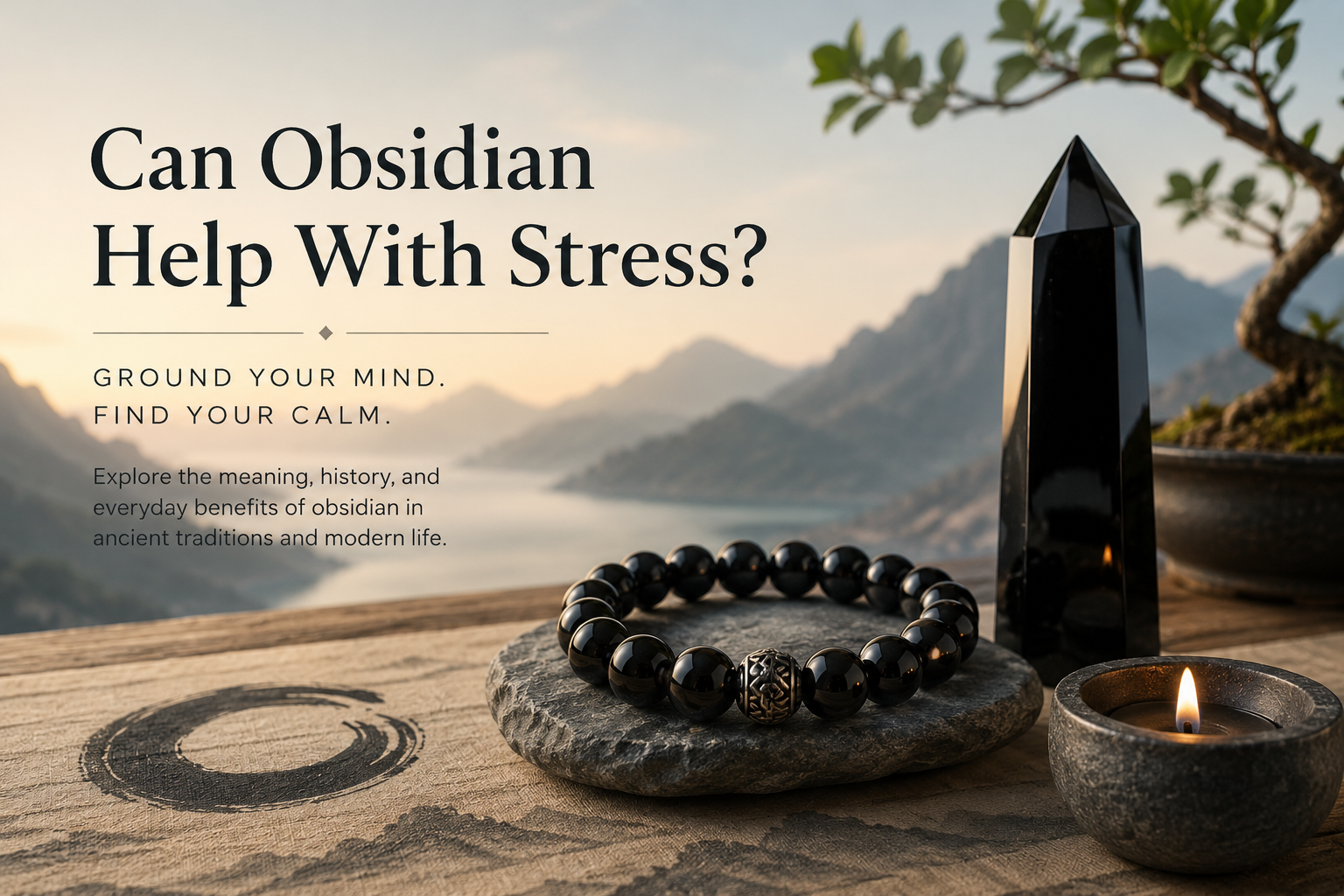
Obsidian can be a striking material to wear or display. Its polished dark surface may fit your style, and you can give a bracelet a personal meaning. That does not establish that the material reduces stress, absorbs a difficult day, or reveals emotions you have not recognized.
If you are drawn to it during a demanding period, it helps to make two separate choices: whether you like the object, and what practical support the situation calls for.
Begin with what the stone is
The USGS describes obsidian as volcanic glass formed through rapid lava cooling. Geological origin is an interesting part of its identity; it is not evidence of a therapeutic effect.
A seller may use “grounding” as symbolic language. Ask what that means in the particular description. If it becomes a claim that the object changes stress symptoms, a story about its appearance or origin cannot verify that claim.
Name the situation before selecting the accessory
Stress might be connected with a deadline, a difficult conversation, or too many competing responsibilities. A useful question is “what could make this situation more manageable?” The answer may involve time, information, help from someone else, or a boundary around additional tasks.
NIMH’s stress fact sheet distinguishes responses to external stressors from anxiety and discusses coping and support. It does not recommend a mineral. If symptoms persist or interfere with daily life, a qualified provider can help assess them.
An object can have a limited, chosen role
If you already own a bracelet, you could associate putting it on with checking one priority for the day. That is an action you choose, not an effect the stone guarantees. A written reminder or another familiar object could serve the same organizational purpose.
You also do not need to read a day’s mood as feedback about the material. Feeling stressed while wearing obsidian does not mean you chose incorrectly, failed to believe, or need to buy a stronger piece.
Make the jewelry decision ordinary
- Compare wrist measurements and the bracelet’s weight.
- Check how beads and knots sit against your desk or sleeve.
- Ask for clear material identification and construction details.
- Choose a price that makes sense without a promised stress benefit.
For related health claims, read our obsidian and anxiety discussion. For everyday maintenance, use the cleaning guide.
Our preference-based bracelet guide can help with the personal side of choosing. Enjoying a material does not require asking it to solve a demanding situation, and support does not depend on owning a particular stone.
Comments
Leave a comment
Please note, comments must be approved before they are published.