
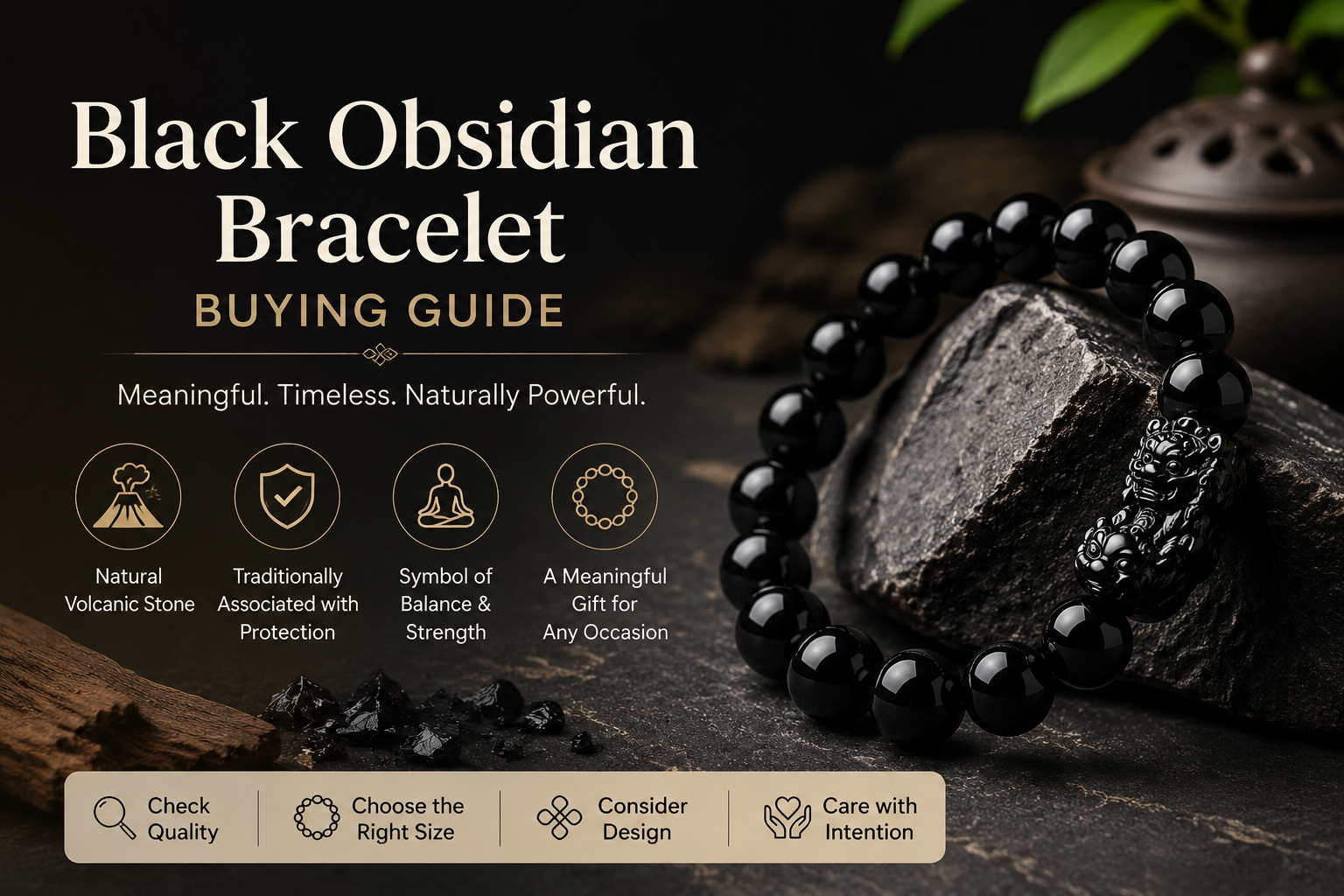
Before buying a black obsidian bracelet, make the listing concrete. You should know what is claimed about the beads, what else the piece contains and how it will fit. A useful comparison starts with those details rather than the number of benefits attached to the design.
1. Ask what the material name means
The National Park Service describes obsidian as volcanic glass. Ask whether the seller claims natural obsidian for all beads or only a focal component. A strand can include different substances even when the product name mentions only one.
Our obsidian identification guide explains why uniform color, natural-looking variations and a cool feel do not settle the question. A material claim deserves evidence suited to that claim.
2. Compare dimensions consistently
Record bead diameter, wearable circumference or adjustment range, and the size of any charm. Ask how the finished size is measured. Two strands with the same stated outer length may not sit identically if their beads differ.
Choose proportions for the activities you have in mind. Our daily-wear guide helps you consider desks, sleeves and occasions when the bracelet may need to come off.
3. Read the rest of the component list
Ask about cord, elastic, metal fittings, coatings and plating. The FTC’s Jewelry Guides emphasize accurate product descriptions. “Handmade” and “premium” should not obscure the substance or the work actually performed.
If a Pixiu design interests you, our motif introduction provides background. The charm’s symbolic association is separate from its material and manufacturing method.
4. Match documentation to the purchase
For a decision that depends on material identity, ask about appropriate independent identification. GIA’s colored-stone reports identify material and list detectable treatments. Read the scope rather than accepting the word “certificate.”
Check that the description relates to the offered object and clarify whether one bead or the whole submitted item was examined. A report should not be stretched into proof of every component, a guaranteed mine origin or spiritual efficacy.
5. Confirm what happens after ordering
Review total cost, delivery, return conditions, sizing help and repair options. Keep a copy of the listing and the seller’s answers. Ask for care instructions for the finished piece; our cleaning guide explains why construction matters.
Choose the object you understand and would enjoy wearing. If an essential answer is missing, wait or compare another listing. A volcanic material can be interesting jewelry without a promise that buying it will improve your luck, and there is no need to rush a decision out of fear.
What should you check before buying black obsidian?
Compare a seller’s actual material description, bead and wrist measurements, construction, availability, price and return terms. Ask what supports a natural-obsidian claim and whether any report covers the specific piece, rather than relying on a category name or one photograph.
The National Park Service describes obsidian as volcanic glass. That describes the material, not the identity of a particular listing. A current price can only be checked for the actual item; this guide does not establish a market value or guarantee inventory.
Comments
Leave a comment
Comments are reviewed before publication.