
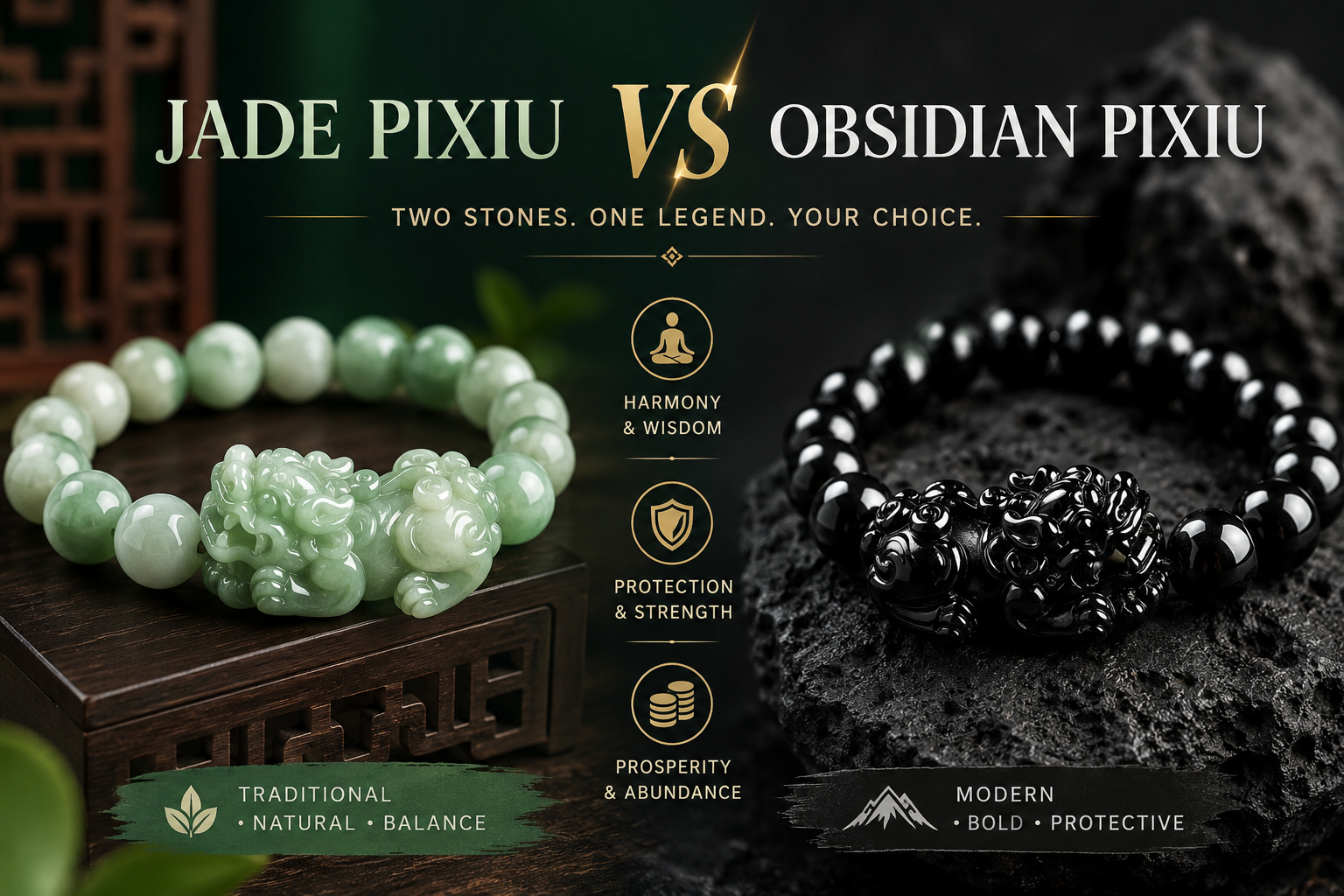
Choose between jade and obsidian Pixiu jewelry by comparing the actual materials and finished designs. Neither name establishes a stronger spiritual effect. Nor does one automatically belong to an older age group or a more modern style: the carving, color and proportions matter too.
What does jade identify?
GIA explains that jade includes jadeite and nephrite and, under particular conditions, green omphacite. It also describes a range of colors. A bracelet labeled simply “green jade” therefore needs more information before you can make a useful comparison.
Ask what the seller identifies, which treatments are disclosed and what documentation supports the description. A material report, where provided, should refer to the actual item or sample it examined rather than being treated as a certificate for unrelated stock.
What is obsidian?
The U.S. Geological Survey defines obsidian as volcanic glass formed when lava cools rapidly. It is typically black, but the material name does not authenticate an unidentified dark bead. A picture alone cannot settle every question about identity or treatment.
For a closer look at product descriptions, use our Pixiu material-claim guide. Cultural enthusiasm should not replace a clear account of what is being sold.
Compare finished pieces in similar photographs
Request ordinary-light images and measurements. Look at whether the carving’s details are easy to see, whether you enjoy the surface variation and how the charm sits beside the beads. A different polish or shape can change the visual effect as much as the material category.
If possible, compare pieces of similar size. Do not conclude that one material is more comfortable by comparing a small bracelet with a much larger one. Our Pixiu buying checklist helps make the comparison consistent.
Read care information before choosing
GIA’s jade guide distinguishes hardness from toughness and notes that treatments affect cleaning choices. Even specific jade advice does not establish what the cord, plating or other components tolerate. Ask for instructions covering the assembled bracelet.
For an obsidian design, obtain its own component and care details as well. Do not transfer a jade instruction to another material simply because both bracelets depict Pixiu. Our Pixiu care guide explains how to keep those details together.
What should decide the purchase?
- Which actual piece do you enjoy looking at and wearing?
- Are its materials described precisely enough for the price?
- Can it be resized or repaired if needed?
- Are the maintenance and return terms clear?
You may attach your own family memory or personal meaning to either choice. There is no need to characterize jade as calming and obsidian as protective to justify a preference. Choose a well-described piece whose appearance and upkeep suit you.
Comments
Leave a comment
Please note, comments must be approved before they are published.