
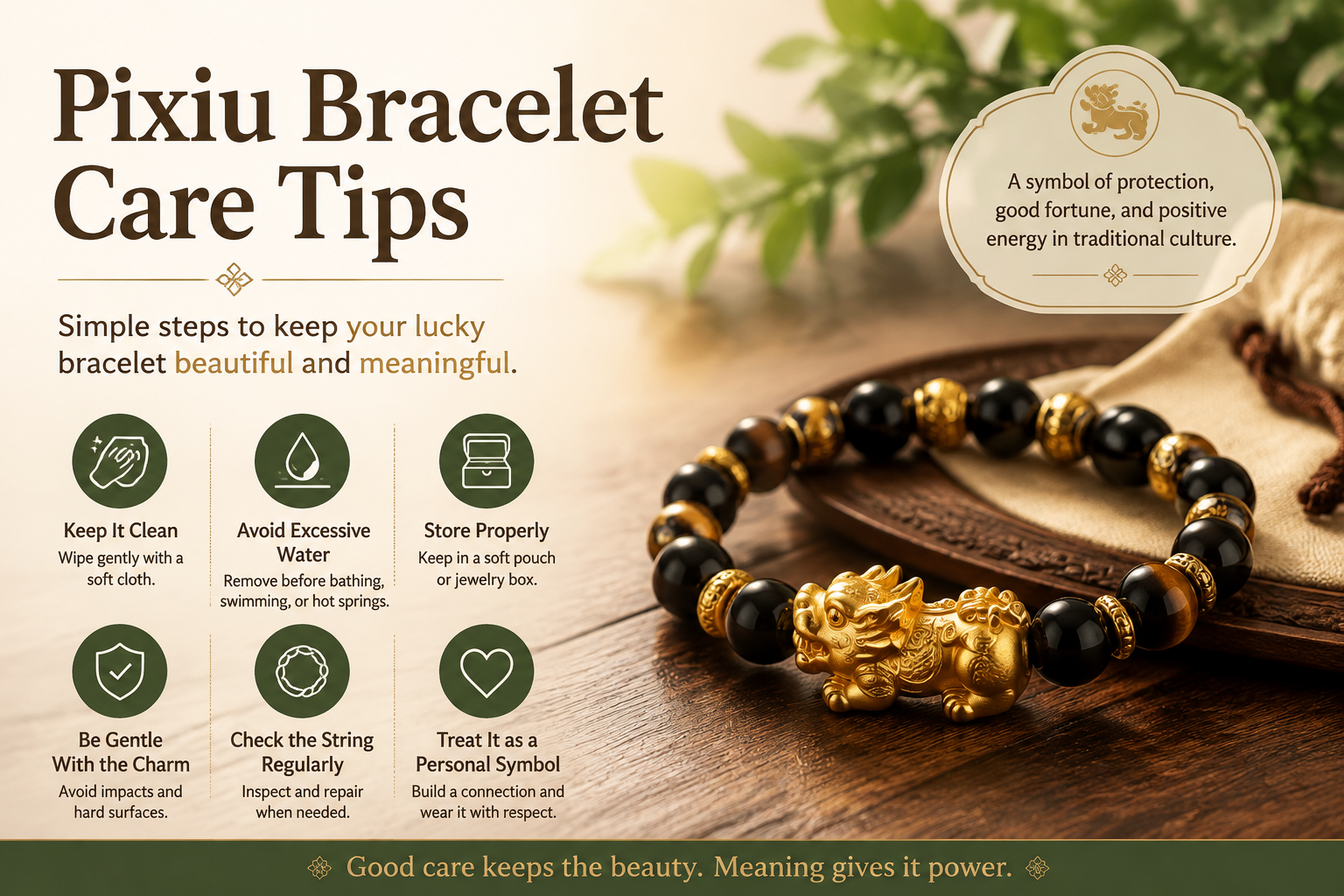
Good Pixiu bracelet care begins with knowing what the piece contains. Keep a short record of the beads, charm, cord and fittings, then follow maintenance instructions suited to that combination. A mythical motif does not create one cleaning method for every bracelet.
Save the information while it is available
Keep the product description, receipt, disclosed treatments and care instructions with a photograph. Ask the seller about missing details before the listing changes or disappears. If a bracelet is a gift, ask whether this information came with it.
GIA emphasizes that gemstone treatments affect care. This makes identification an ongoing practical aid, not simply something to check at purchase. Our buying checklist sets out questions worth resolving early.
Look before each cleaning
Check whether anything is loose, frayed or rough. If the bracelet has changed since the last photograph, note where the change appears. Set a damaged piece aside rather than handling it repeatedly during an attempted cleaning.
Work on a clear surface with a container available for loose parts. Read both cleaning and drying instructions before starting. Do not assume a method is suitable just because it appears gentle in a short video.
Use gemstone advice at its proper scope
GIA’s jade guide recommends warm, soapy water for jade and cautions that treatment matters for other cleaning methods. That does not authorize soaking a complete bracelet whose cord, coating or adhesive has not been identified.
Our material-first cleaning guide considers this distinction. Ask for instructions for the whole piece, especially when several materials are assembled together.
Create a consistent storage habit
GIA recommends protecting jewelry from contact that can scratch or damage it. Choose a suitable separate compartment or container instead of leaving the bracelet among keys and other accessories. Follow the maker’s drying instructions before putting it away.
Use the same place when removing it at home, and a recognizable container when away. Storage should make the piece easy to find without exposing it to unnecessary knocks.
When to stop and ask for help
- A fitting no longer closes or sits as it did before.
- The cord is visibly frayed or a knot has changed.
- A carved area has chipped or developed an uncomfortable edge.
- A surface change remains unexplained after ordinary inspection.
Photograph the concern and ask the seller or a jeweler what they recommend. Our repair and keepsake guide helps when a part has already failed. Avoid using a household adhesive or a stronger cleaner simply to keep the bracelet wearable.
A brief record makes future decisions easier: what the piece is, how it should be maintained and what has changed. None of this requires interpreting dirt or wear as a sign of absorbed energy, and no ritual can replace attention to the actual condition.
Comments
Leave a comment
Please note, comments must be approved before they are published.