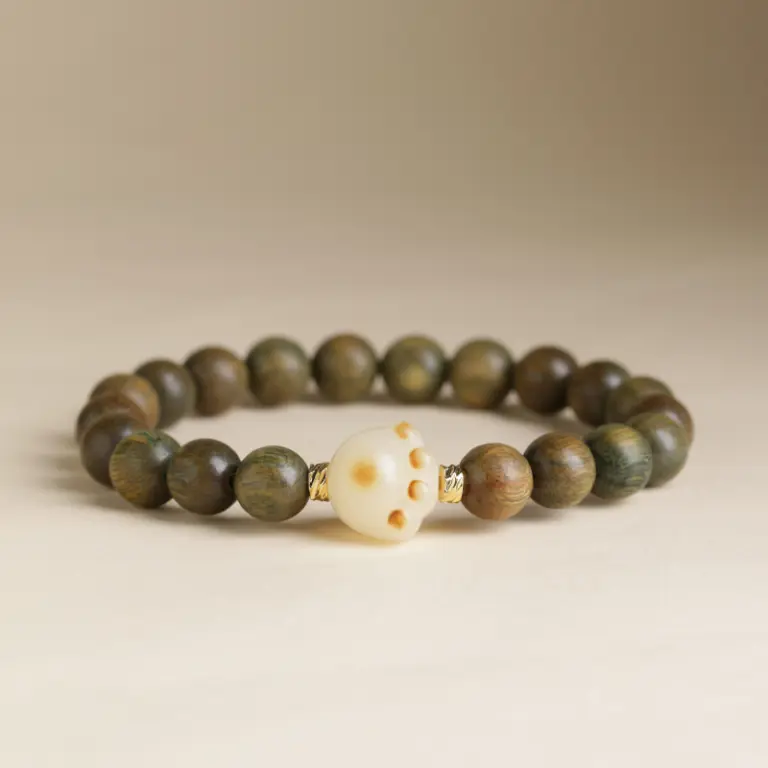
A practical look at grain, weight, variation, prayer-bead context, and everyday handling.
Product names may identify sandalwood, peach wood, rudraksha, or Bodhi-style beads. The exact species or seed should be treated as confirmed only when the individual product description states it.
Two distinct materials, compared through formation, surface, Chinese decorative history, and wear.
Obsidian is volcanic glass. “Jade” can refer to nephrite or jadeite; a product page must name the material before a more specific identification is presented as fact.
A careful distinction between product naming, historic cinnabar lacquer, red-cord symbolism, and the facts a shopper should check.
“Cinnabar” in a product title does not by itself establish mineral composition or a traditional carved-lacquer technique. Refer to the individual product description for its stated material and construction.