
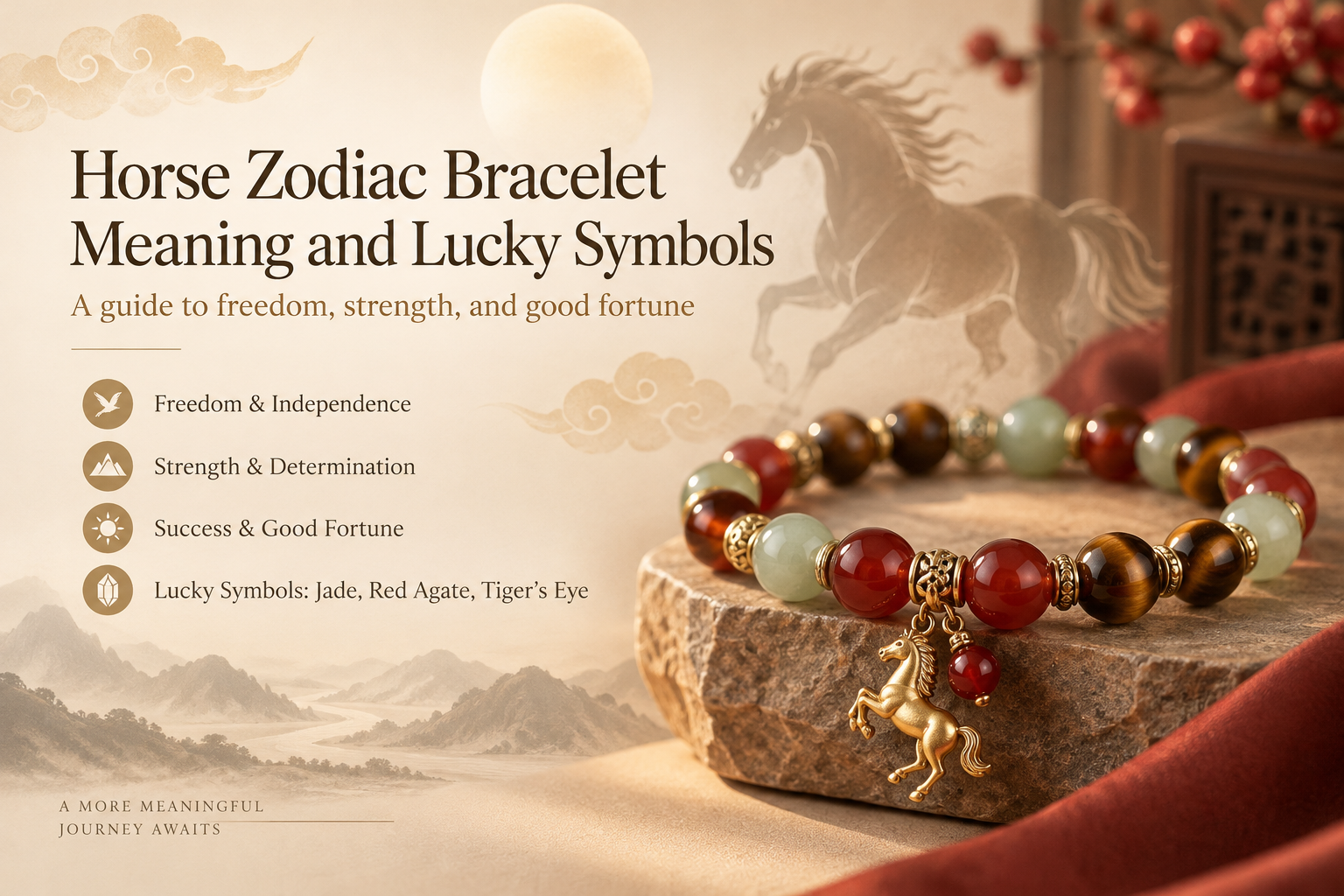
A horse motif can suggest movement through its pose: a turning head, lifted hoof, or sweeping tail changes the whole design. You can choose a Horse zodiac bracelet for a birth-year connection, a love of horses, or the pleasure of that particular silhouette.
A particular painting offers a way to look more closely before assigning broad meanings.
One horse with a specific history
The Met’s Night-Shining White, attributed to Han Gan and dated about 750, portrays a horse of Emperor Xuanzong. The museum discusses its expressive features and the seals and inscriptions added by later collectors.
The image is a portrait with a long history of ownership and appreciation. Its expressive details invite close looking: you might notice a horse’s head or legs differently after seeing it. That is an engaging artistic connection to share with someone who enjoys equestrian subjects.
Choose a pose you enjoy
A standing, turning, or extended form can create a different silhouette. Compare how the head, legs, and tail read at the bracelet’s actual scale. Avoid treating each pose as a fixed traditional code unless the maker provides a source for that interpretation.
A simpler outline may be more readable on a small charm. A larger sculpted horse can offer more detail but may need more room on the wrist.
Check movement against the cord
Projecting legs and tails deserve attention where they meet fabric or neighboring jewelry. The Canadian Conservation Institute identifies snagging as a source of textile damage. The general material lesson is useful when inspecting a cord beside a detailed charm.
Try the bracelet under a sleeve and at a desk. Check whether the charm rotates underneath, catches, or repeatedly presses against a surface. The right design for you may be low-profile rather than large.
Keep materials open to preference
- Choose a cord color that works with your clothes.
- Confirm the charm’s actual metal or stone.
- Ask about the usable adjustment range.
- Keep cleaning instructions for all components together.
There is no universal requirement to wear red, tiger’s eye, or another material because of a Horse birth year. A meaningful reference does not need a mandatory lucky-stone pairing.
Mark an occasion in your own words
A gift can celebrate a graduation, a family birthday, or a shared interest in art. Mention the moment you are celebrating, and perhaps the detail that made you choose this horse. A few specific words can make the gift feel especially considered.
The zodiac beginner’s guide covers identifying an animal. The selection guide turns that choice into a practical purchase, and the Monkey article explores a different connection between animal imagery and artistic wishes. The pose, the story, and your own message can give a horse charm a connection that feels distinctly yours.
Comments
Leave a comment
Comments are reviewed before publication.