
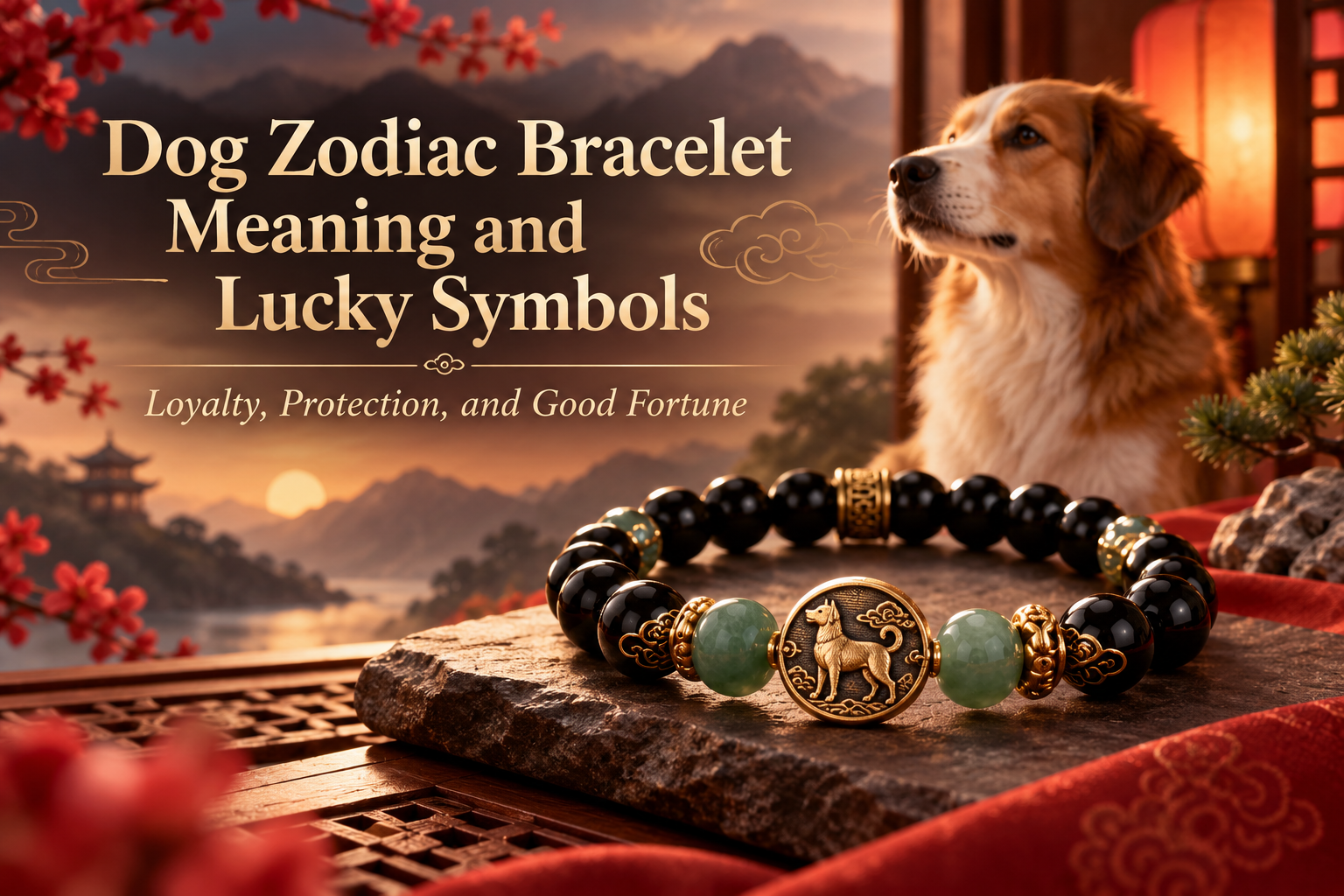
Some gifts become meaningful through the qualities we see in another person. A Dog zodiac bracelet can be a small way to celebrate someone who keeps their promises, stays close through difficult moments, or makes others feel welcome.
In Chinese zodiac imagery, the Dog is commonly associated with loyalty and watchfulness. Those associations offer a language for a thoughtful gift, while leaving room for the actual person behind the sign. Here is how to understand the animal, check the year, and choose a design with a clear sense of what its materials mean.
What Does the Dog Symbolize?
The Dog is the eleventh animal in the repeating twelve-year cycle listed by the Hong Kong Observatory. Our introduction to the Chinese zodiac and its animal order explains the wider calendar tradition.
The Metropolitan Museum of Art's Celebrating the Year of the Dog connects the animal with loyalty and vigilance, and describes its historical roles in protection, work, and companionship. Its exhibition also shows how dogs have appeared in Chinese art over many centuries.
For a bracelet, that imagery might express lasting friendship, sincerity, or a wish for someone to feel cared for. A zodiac sign does not determine a person's character or predict their future. The most personal meaning comes from the relationship and the intention behind the gift.
Which Years Are Dog Years?
Dog years include 1958, 1970, 1982, 1994, 2006, 2018, and 2030. These links open the Observatory's individual calendar tables.
Check the full birth date if it falls near the beginning of the year. The traditional Chinese calendar is lunisolar. Under the common convention that changes the zodiac animal at Lunar New Year, the boundary is not January 1: the 2018 Dog year began on February 16.
The Gregorian–lunar conversion tables help you check the relevant date. Before choosing a birthday charm, confirm the recipient's animal and the convention their family follows rather than relying on the Gregorian year alone.
Choosing Materials for a Dog Zodiac Bracelet
A Dog charm identifies the animal motif; beads and cord contribute their own texture, color, and associations. There is no need to treat one material as a compulsory lucky choice. Begin with what the recipient enjoys wearing.
Jade: A Connection with Virtue
The National Palace Museum's The Virtue of Jade describes jade's associations with qualities including benevolence and integrity. That cultural connection can sit comfortably alongside a gift meant to express sincerity or trust.
Our article on Hetian jade, its material, and its meaning explores this background further. Cultural significance does not establish the identity, origin, or treatment of a particular bead; those details need to come from the individual piece's description and supporting information.
Red Cord: Warmth and Good Wishes
The V&A's Lunar New Year introduction associates red with good fortune and happiness. A red cord and Dog charm can bring that festive color into a simple, everyday gift.
For the cord's separate layer of meaning, read our guide to red string symbolism. A wish for connection or well-being is a thoughtful message; it is not a promise that wearing a bracelet will change someone's luck.
Black Obsidian: A Dark, Understated Look
Obsidian offers a different visual character. The U.S. Geological Survey describes it as volcanic glass, formed when molten rock cools without developing crystals.
Some contemporary jewelry descriptions give obsidian meanings such as protection or grounding. Treat those as symbolic interpretations, separate from its geology. You can choose a dark bracelet for its appearance or personal significance without attributing protective or healing effects to the material.
A Different Calendar Connection: Japan's Dog Day
Japan's Inu no Hi, or Day of the Dog, adds another cultural context. Tokyo's Suitengu Shrine explains its Dog Day custom, including prayers associated with pregnancy and a traditional belly-band ceremony often observed in the fifth month.
Here, the Dog day returns every twelve days; it is distinct from being born in a Dog year. The shrine describes a religious custom expressing hopes for safe childbirth. It does not establish a medical benefit from a bracelet, and a Dog-themed gift should not be presented as protecting a pregnancy.
Making the Gift Feel Personal
Think about the recipient's routine. A small charm may suit someone who prefers quiet details, while a more visible animal carving may appeal to someone who enjoys expressive jewelry. Consider wrist fit, bead size, fastening, and the stated materials alongside the symbolism.
Our beginner's guide to Chinese zodiac bracelets offers a broader starting point if you are comparing designs. You do not need to be born in a Dog year to appreciate the motif, but checking the sign matters if the gift is specifically intended to mark a birth year.
A short note can give the piece its clearest meaning: “Thank you for always being there,” or “A small reminder of a friendship I value.” The Dog provides the image. Your own words make the keepsake belong to the person receiving it.
Comments
Leave a comment
Please note, comments must be approved before they are published.