
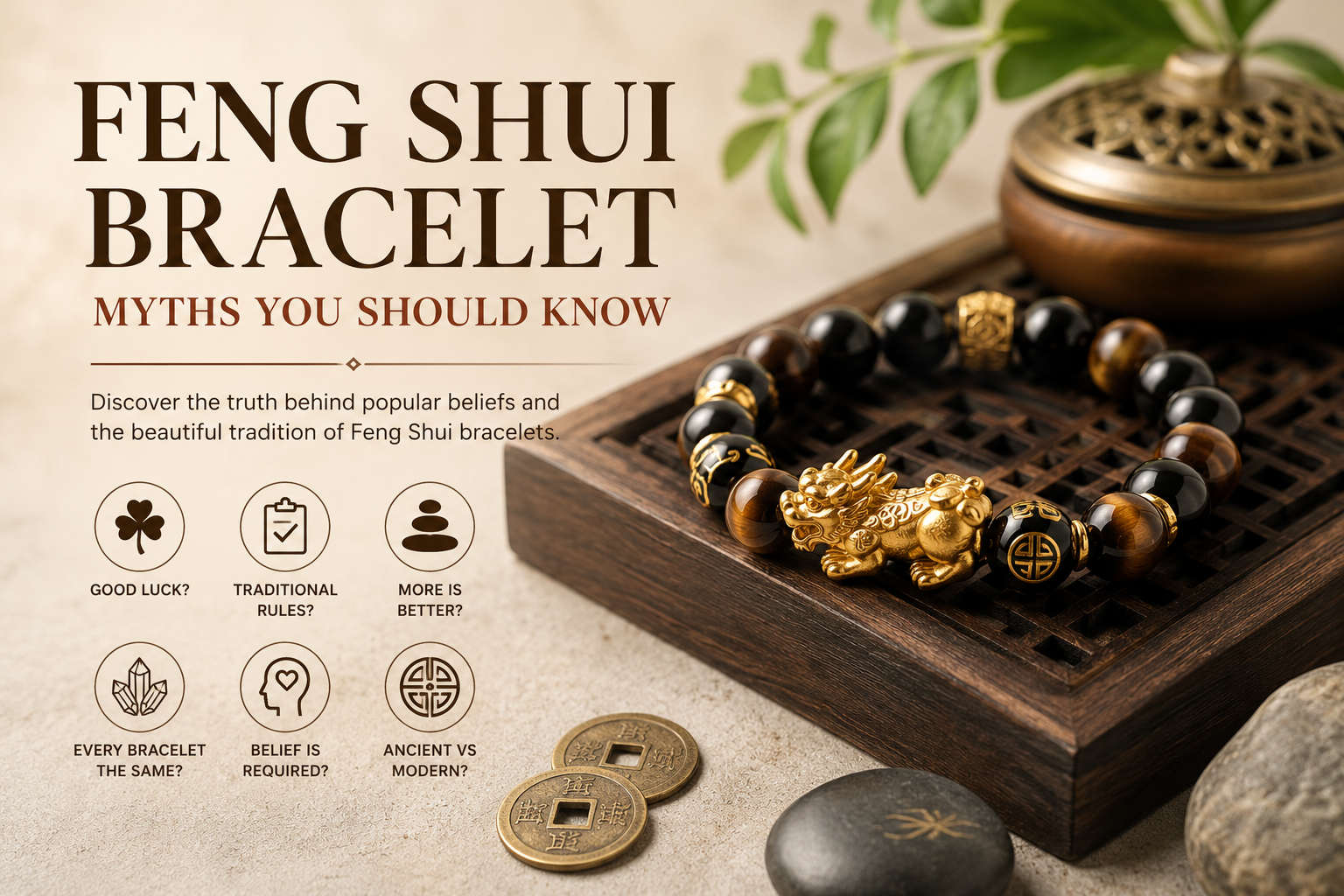
If you've spent any time looking into Feng Shui bracelets online, you've probably seen some pretty bold claims. Some people say they can instantly attract wealth. Others insist you must follow dozens of strict rules or the bracelet simply "won't work."
When I first became interested in Chinese cultural jewelry, I believed many of those stories too. But after talking with artisans, older family members, and people who have worn these bracelets for years, I realized something important: many popular beliefs are actually modern myths mixed with traditional customs.
If you're new to Feng Shui bracelets, here are a few myths worth knowing before you buy your first one.
Myth 1: A Feng Shui Bracelet Guarantees Good Luck
This is probably the biggest misunderstanding.
Traditionally, Feng Shui has never been about magical shortcuts. Instead, it's about creating harmony between people and their surroundings. A bracelet is often seen as a reminder of your intentions rather than a guarantee that life will suddenly change.
Many people believe wearing a Pixiu or crystal bracelet can symbolize prosperity, protection, or confidence. But in Chinese culture, those qualities are usually paired with personal effort, kindness, and good habits.
In my experience, the people who appreciate these bracelets the most don't expect miracles. They enjoy the meaning behind them.
Myth 2: You Must Follow Every Rule Perfectly
If you've searched online, you've probably read advice like:
- Never let anyone touch your bracelet.
- Never wear it after sunset.
- Never take it off except under certain conditions.
The truth is much more relaxed.
Traditionally, different regions of China have different customs. Some families pay close attention to these traditions, while others simply wear the bracelet because it reminds them of good fortune or positive energy.
Many people believe respecting the symbolism matters more than following every internet rule word for word.
Myth 3: More Bracelets Mean More Luck
It sounds logical, but that's not really how most people think about Feng Shui.
I've visited markets where craftsmen actually recommended choosing one bracelet that felt meaningful instead of stacking several together just because they represented wealth, love, health, and protection.
Traditionally, balance has always been one of the core ideas in Chinese philosophy. Wearing something that feels comfortable and meaningful often reflects that idea better than wearing as many pieces as possible.
Myth 4: Every Feng Shui Bracelet Is the Same
This surprised me when I first started learning.
Some bracelets feature Pixiu, while others use jade, sandalwood, obsidian, cinnabar, or different natural crystals. Each material carries its own cultural background.
For example, jade has long been admired in China for representing purity and good character. Obsidian is often associated with protection in modern spiritual practices. Sandalwood has been connected with meditation for centuries.
Many people believe the symbolism comes from the combination of the material, the craftsmanship, and the personal meaning—not simply from the words "Feng Shui bracelet."
Myth 5: You Have to Believe in Feng Shui for the Bracelet to Have Meaning
Not at all.
One thing I've noticed is that many overseas customers wear these bracelets because they appreciate Chinese culture, beautiful craftsmanship, or the reminder to stay calm and focused.
In the same way that someone might wear a four-leaf clover necklace without expecting magical luck, a Feng Shui bracelet can simply represent hope, balance, or a fresh start.
Many people believe symbols become meaningful because of the intention behind them.
Myth 6: Ancient Chinese People Wore These Bracelets Exactly as We See Them Today
Modern Feng Shui bracelets are inspired by traditional culture, but today's designs have also evolved.
Historically, Chinese people carried lucky charms, wore jade pendants, tied red cords, and displayed symbolic carvings at home. Over time, modern jewelry designers combined these cultural elements into wearable bracelets that fit contemporary lifestyles.
That doesn't make today's bracelets less meaningful—it simply shows how traditions continue to evolve while keeping their cultural roots.
A Traditional Story Worth Remembering
One story I heard from an elderly craftsman has stayed with me.
He told me that his grandfather always carried a small piece of jade while traveling. Before leaving home, he would quietly hold it for a moment—not because he believed the stone could control his future, but because it reminded him to stay patient, honest, and careful.
Traditionally, many families passed down similar habits. The object itself wasn't considered magical. Instead, it represented values they wanted to carry with them every day.
I think that perspective explains Feng Shui bracelets better than any list of strict rules ever could.
Final Thoughts
The beauty of a Feng Shui bracelet isn't about superstition. It's about culture, symbolism, and the stories that have traveled through generations.
Many people believe these bracelets can bring positive energy into their lives. Others simply enjoy wearing a meaningful piece of Chinese tradition.
Whichever perspective you share, understanding the myths helps you appreciate these bracelets for what they truly are: small reminders of intention, balance, and centuries of cultural heritage.
And honestly, I think that makes them even more interesting.
Comments
Leave a comment
Please note, comments must be approved before they are published.