
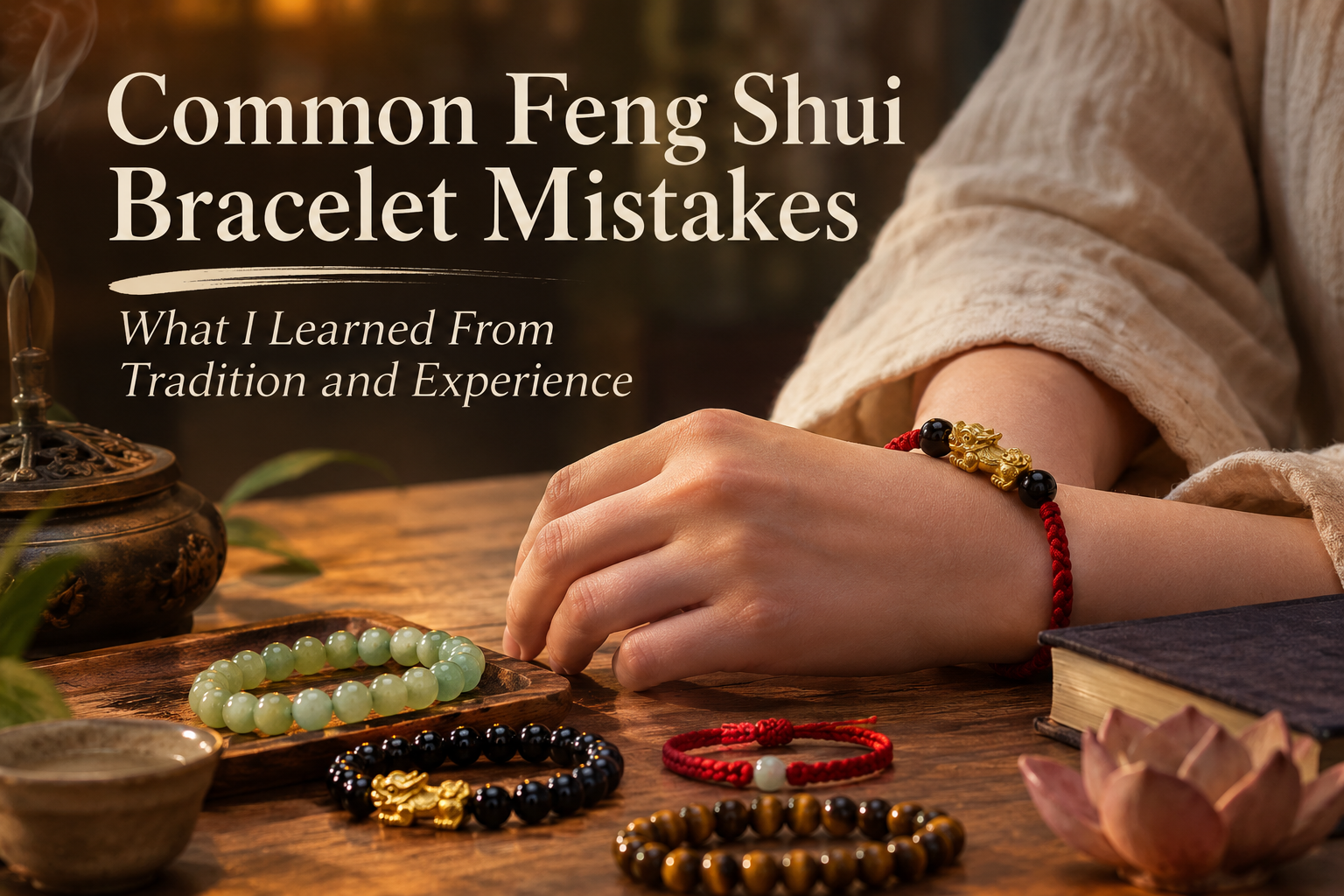
The first Feng Shui bracelet I ever bought looked beautiful, but honestly, I had no idea what I was doing. I wore it simply because I liked the design. Later, after talking with artisans and older family members in China, I realized that many people don't see these bracelets as ordinary accessories. Traditionally, they're worn with a bit more intention.
That doesn't mean there are strict rules everyone has to follow. Feng Shui is deeply personal, and different families often have different customs. Still, there are a few common mistakes I've seen people make—especially those who are just discovering Chinese culture.
1. Treating It Like Just Another Fashion Bracelet
There's nothing wrong with appreciating a Feng Shui bracelet because it looks good. Many modern designs are genuinely beautiful.
However, many people believe the meaning behind the bracelet is just as important as its appearance. In traditional Chinese culture, symbols like Pixiu, lotus flowers, jade, or black obsidian are chosen because they represent wishes such as protection, peace, or prosperity.
In my experience, learning the story behind a bracelet makes wearing it much more meaningful.
2. Choosing a Bracelet Without Understanding the Symbol
One mistake I often notice is buying the most popular bracelet without knowing what it represents.
For example:
- Pixiu is traditionally associated with attracting wealth.
- Jade is often connected with harmony and protection.
- Red string bracelets are commonly worn as symbols of luck and blessings.
- Black obsidian is believed by many people to help block negative energy.
These meanings come from centuries of folklore rather than scientific proof, so it's worth choosing a bracelet that resonates with your own intentions instead of simply following trends.
3. Ignoring Traditional Wearing Customs
One question I hear all the time is, "Which hand should I wear it on?"
The answer isn't universal.
In many Feng Shui traditions, people believe the left hand is associated with receiving positive energy, while the right hand is linked to releasing or giving energy. Because of this, many people prefer wearing certain Feng Shui bracelets on the left wrist.
Traditionally, some bracelets—especially Pixiu bracelets—also have specific recommendations about how the charm should face. Different teachers explain these customs differently, so don't be surprised if you hear more than one version.
4. Expecting Instant Results
This might be the biggest misunderstanding of all.
I've seen people wear a bracelet for three days and then ask, "Why hasn't my luck changed?"
Many people believe Feng Shui works by encouraging mindfulness, positive habits, and a better relationship with your surroundings—not by creating instant miracles.
Traditionally, good fortune is thought to come from a combination of preparation, character, opportunity, and timing. A bracelet is often seen as a meaningful reminder of those values rather than a shortcut.
5. Forgetting to Care for the Bracelet
In China, people often treat meaningful objects with respect.
Many people believe that regularly cleaning a Feng Shui bracelet helps maintain its symbolic energy. Whether it's wiping jade with a soft cloth, keeping wooden beads dry, or placing crystal bracelets under moonlight according to personal tradition, the ritual itself encourages people to slow down and reconnect with their intentions.
Even if you simply think of it as good jewelry care, your bracelet will usually last much longer.
6. Wearing It While Feeling Constantly Negative
An older craftsman once shared something with me that I've never forgotten.
He smiled and said, "A bracelet can't replace a peaceful heart."
That simple sentence reflects an old Chinese way of thinking. Traditionally, external objects are meant to support inner balance—not replace it.
Many people believe kindness, gratitude, and patience create the best "Feng Shui" in daily life. The bracelet simply reminds you of that goal.
A Story I Often Think About
There's an old Chinese saying that good fortune favors those who prepare themselves.
In one traditional story, a young merchant spent years searching for a magical object that would instantly make him wealthy. Eventually, he met an elderly master who handed him a simple charm and said, "This will remind you to make wise decisions every day."
The merchant later became successful—not because of magic, but because the charm changed the way he approached his work. Many people believe that's the deeper lesson behind many Feng Shui traditions. The object isn't always the source of good fortune. Sometimes it's the reminder that changes the person wearing it.
Final Thoughts
If you're new to Feng Shui bracelets, don't worry too much about getting every detail perfect.
Learn the meaning behind the symbols. Choose one that genuinely speaks to you. Wear it with respect, enjoy its craftsmanship, and appreciate the cultural stories that have been passed down for generations.
In my experience, that's what makes a Feng Shui bracelet truly special. Whether you wear one for its symbolism, its beauty, or simply your curiosity about Chinese culture, understanding the tradition behind it adds a whole new layer of meaning.
Comments
Leave a comment
Please note, comments must be approved before they are published.