
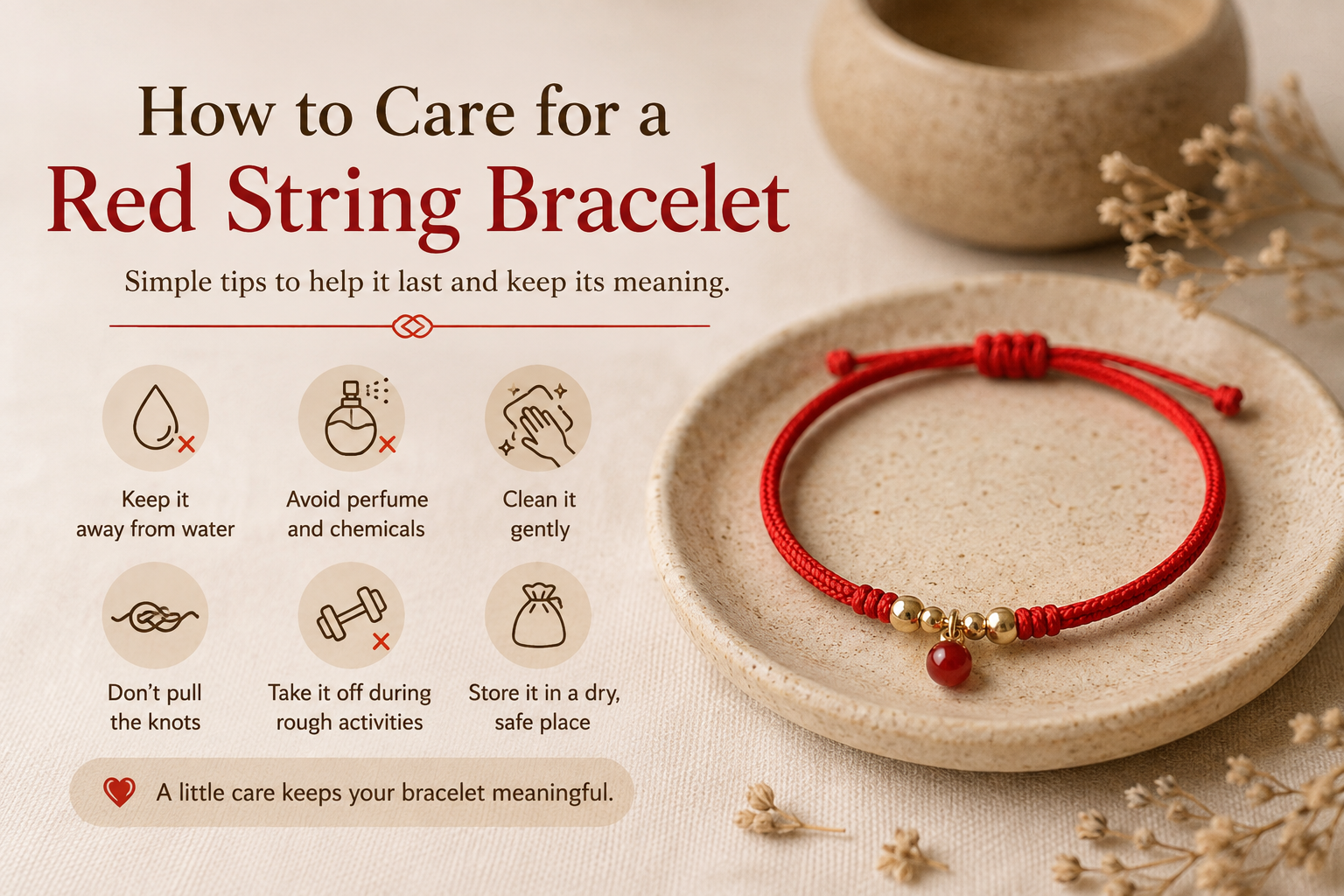
A red string bracelet looks simple, but for many people, that simplicity is exactly what makes it special.
It might be a bracelet you picked up while traveling, a small gift from someone you love, or something you chose because you were drawn to the symbolism behind the red thread. In Chinese culture and in several other traditions, red has long been associated with good fortune, protection, happiness, and meaningful connections.
But red string is still string. It gets wet, absorbs oils from your skin, catches on clothing, and slowly changes with wear.
If you want your bracelet to stay with you for as long as possible, a little everyday care can make a difference.
1. Try Not to Soak It Too Often
One of the easiest ways to extend the life of a red string bracelet is to keep it away from unnecessary water.
An occasional splash usually isn't a big concern, but regularly wearing it in the shower, swimming pool, hot tub, or ocean can cause the fibers to weaken over time.
Chlorine, salt water, soap, and shampoo may also affect the color and texture of the cord.
If your bracelet has beads, metal charms, jade, crystals, or decorative knots, water can affect those materials differently too.
Personally, I treat a red string bracelet the same way I treat delicate handmade jewelry: I don't panic if it gets wet, but I don't intentionally soak it either.
2. Keep Perfume and Skincare Products Away From It
This is something that's surprisingly easy to forget.
Hand cream, sunscreen, perfume, body oil, and other skincare products can gradually build up on the fibers. A bright red bracelet may eventually look darker or slightly dull around the areas that touch your skin most.
A simple habit helps: apply your skincare or fragrance first, let it dry, and then put on your bracelet.
This is especially useful if your bracelet includes natural stones or metal details.
3. Clean It Gently
If your red string bracelet starts looking a little dusty or dirty, gentle cleaning is usually better than aggressive washing.
Use a soft cloth slightly dampened with clean water and carefully wipe the surface. For a plain cotton or woven cord, you can sometimes use a tiny amount of mild soap, but avoid scrubbing the knots.
Afterward, let the bracelet air-dry naturally.
Avoid hair dryers, heaters, and direct high heat. Heat may cause certain fibers to shrink, become stiff, or weaken.
And if the bracelet contains jade, crystals, wood, metal, or other materials, check how those individual materials should be cleaned before putting the entire bracelet in water.
4. Don't Pull the Knots Too Hard
Many traditional-style red string bracelets are held together by hand-tied knots.
These knots may look surprisingly strong, but repeatedly pulling, twisting, or tightening them can put unnecessary stress on the cord.
Traditionally, knots have an important place in Chinese decorative arts. Chinese knotting is often associated with ideas such as continuity, connection, harmony, and good wishes.
That gives the knot more meaning than simply being the part that keeps your bracelet together.
When adjusting your bracelet, pull gently and avoid forcing a knot that feels stuck.
5. Take It Off During Rough Activities
If you are lifting weights, moving furniture, gardening, playing sports, or doing anything where the bracelet could catch on something, taking it off is usually the practical choice.
Red string bracelets are meant to be worn, but handmade cord naturally develops friction over time.
Many people believe that a well-worn bracelet becomes more personal because it carries traces of everyday life. That's a lovely way to look at fading and softness.
Still, there's a difference between natural aging and accidentally tearing the bracelet on a gym machine.
6. Store It Somewhere Dry and Simple
If you don't wear your bracelet every day, keep it in a clean, dry place.
A small jewelry pouch, wooden box, or fabric-lined drawer works well. Try not to leave it in a humid bathroom or in direct sunlight for long periods, since moisture and strong sunlight may gradually affect the cord.
In many Asian households, meaningful personal objects are traditionally treated with a certain amount of care, even when they aren't especially expensive.
The value isn't always in the material.
Sometimes it's in the story.
7. Don't Worry Too Much About Fading
One thing I actually like about red string bracelets is that they rarely stay perfect.
After months of wear, the red may soften. The cord may become slightly fuzzy. The knots may look less crisp than when the bracelet was new.
That isn't necessarily a bad thing.
Traditionally, red is an auspicious color in Chinese culture, especially around celebrations such as Lunar New Year and weddings. But the meaning of a personal red string doesn't depend on it remaining a perfect shade of scarlet forever.
Many people believe that signs of wear simply show that the bracelet has been part of your daily life.
I think that's a healthier way to see it than trying to keep a handmade bracelet looking untouched forever.
What If Your Red String Bracelet Breaks?
This question comes up often because red string bracelets can carry symbolic meaning.
In some modern spiritual interpretations, people believe that a broken red string means it has "finished its purpose" or protected the wearer from something negative.
That's a belief, not something that can be proven.
Sometimes the explanation is much simpler: string wears out.
If your bracelet breaks, you can repair it if the cord is still in good condition, replace the string while keeping the original charm, or simply keep it as a small memory.
There isn't one universal rule.
A Bracelet Is Meant to Be Lived With
A red string bracelet doesn't need complicated rituals or constant attention.
Keep it reasonably dry, avoid harsh chemicals, treat the knots gently, and remove it when you're doing something likely to damage it.
Beyond that, wear it.
In Chinese tradition, red can represent joy, good fortune, and auspicious wishes. In other cultures, red threads have developed their own meanings around protection, connection, faith, and relationships.
But perhaps the most interesting meaning is the one a bracelet collects after you start wearing it.
A little fading, a softer cord, and a knot that no longer looks perfectly new aren't always flaws.
Sometimes they're simply signs that the bracelet has become yours.


blog.comments (0)
blog.noComments
Leave a Comment
Please note, comments must be approved before they are published.