
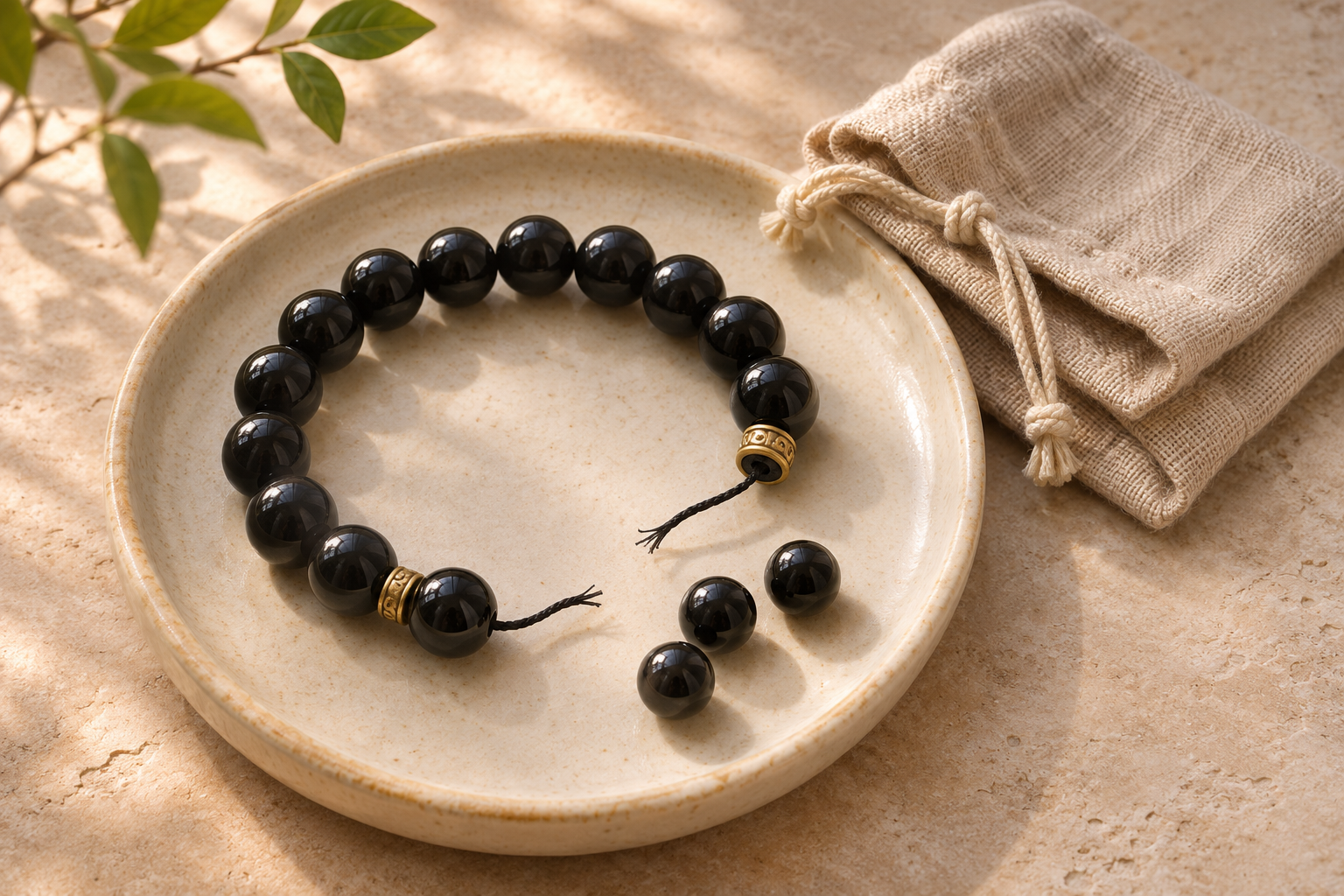
A Feng Shui bracelet can carry a wish, a memory, or a connection to someone you love. When the cord snaps or a bead chips, deciding what to do with it can feel more personal than disposing of ordinary jewelry.
A practical approach is to collect the pieces safely, see whether the bracelet can be repaired, and keep or dispose of the remaining materials responsibly. If it came from a specific temple or religious community, ask that community about its own practice before choosing a ritual.
During research for this article, we did not find an authoritative source establishing red-cloth burial or river disposal as a universal rule for Feng Shui bracelets. Advice about such rituals should identify the tradition and source behind it. The environmental references below support waste-handling recommendations; they do not establish religious rules.
First, check what actually broke
Put the pieces on a tray or in a small container. Keep loose beads away from children and pets, and avoid handling sharp fragments with bare hands.
- Only the cord broke: if the beads are intact, ask a jewelry repairer about restringing and checking the bead holes for rough edges.
- A bead or charm cracked: stop wearing it if there is a sharp edge or a risk of further breakage. A repairer can assess whether the part should be replaced.
- The bracelet has sentimental value: keep the pieces in a labeled pouch while you decide. There is no need to rush into disposal.
A break alone does not establish that a bracelet absorbed misfortune or that something bad will happen. Check its physical condition before drawing conclusions from spiritual interpretations.
Can you repair or reuse the beads?
Consider repair before disposal. The US Environmental Protection Agency recommends repairing broken or worn objects where possible and checking local recycling options when repair or reuse is no longer suitable. Applying that general principle to jewelry, intact beads may be candidates for restringing or a smaller keepsake. This is a practical suggestion, not a religious requirement.
If the bracelet was a gift, keeping one intact bead or taking a photograph may help preserve the memory. You can also store the whole bracelet without continuing to wear it. Choose an option that feels comfortable to you.
Do you have to wrap it in red cloth and bury it?
We could not verify this as a rule applying to every Feng Shui bracelet. If someone recommends it, ask which community or teaching the instruction comes from and whether it applies to your particular item.
If wrapping the bracelet helps you mark an ending, a clean reusable pouch or cloth can serve that personal purpose while you keep it indoors. No particular color is required by the sources cited here.
We do not recommend burial as the default disposal method. A finished bracelet can contain elastic, synthetic cord, coatings, adhesives, or mixed metal fittings. A natural stone bead does not make the entire bracelet suitable to leave in the soil. Use an appropriate local waste route for parts you cannot keep or repair.
Should you place it in a river or the sea?
Do not release the bracelet, loose beads, cord, or wrapping into waterways. NOAA explains that litter from inland communities can reach streams and rivers and travel to the ocean. It also describes the risks marine debris poses to wildlife and habitats.
Our recommendation is to express any wish of thanks privately while keeping the physical materials out of the water. You can pause, reflect on what the bracelet meant to you, and then take it home for storage, repair, or proper disposal. This is an optional personal gesture.
How to dispose of parts you cannot repair
- Separate materials only if safe. Keep intact beads apart from sharp pieces and cord.
- Ask before recycling. Check with a local recycler or jewelry repairer about metal components. Do not assume small jewelry parts or stone beads are accepted in household recycling.
- Contain sharp fragments. Use suitable protective packaging and follow local instructions so that people handling the waste are not exposed to loose sharp pieces.
- Use local disposal guidance for the remainder. If the material is unknown, ask the waste service rather than putting it into a recycling bin on guesswork.
What if it was blessed or came from a temple?
A bracelet sold as Feng Shui jewelry, prayer beads used in a religious practice, and an item blessed by a particular community may have different contexts. Contact the original temple, teacher, or community and describe the item and the damage. Ask whether they offer guidance or accept damaged items before taking or sending anything to them.
The sources in this article do not determine how a consecrated item should be treated. Guidance from one community should not be presented as a requirement for all traditions.
Common questions
Can I wear it again after restringing?
From a practical jewelry-care perspective, have the beads, fittings, and new cord checked for safe use. If your concern relates to a specific religious practice, ask the community connected with the bracelet.
Do I need to buy a replacement immediately?
A broken bracelet alone does not establish a need to buy another one. Take time to decide whether repair, storage, or disposal suits you.
Is keeping the broken pieces disrespectful?
Keeping them carefully in a pouch or box is one practical way to preserve a meaningful object while you decide. If your tradition has particular guidance, seek advice from that tradition.
A thoughtful way to let go
You can acknowledge what the bracelet meant to you without choosing a complicated ritual. Collect the pieces, consider repair, and choose a safe destination for the materials. Any personal gesture of gratitude can accompany those steps without leaving objects in soil or water.
Source scope: the EPA reference supports repair, reuse, and checking local recycling acceptance. The NOAA reference supports preventing litter from entering waterways. Neither source endorses bracelet rituals or claims about luck.
Comments
Leave a comment
Comments are reviewed before publication.