
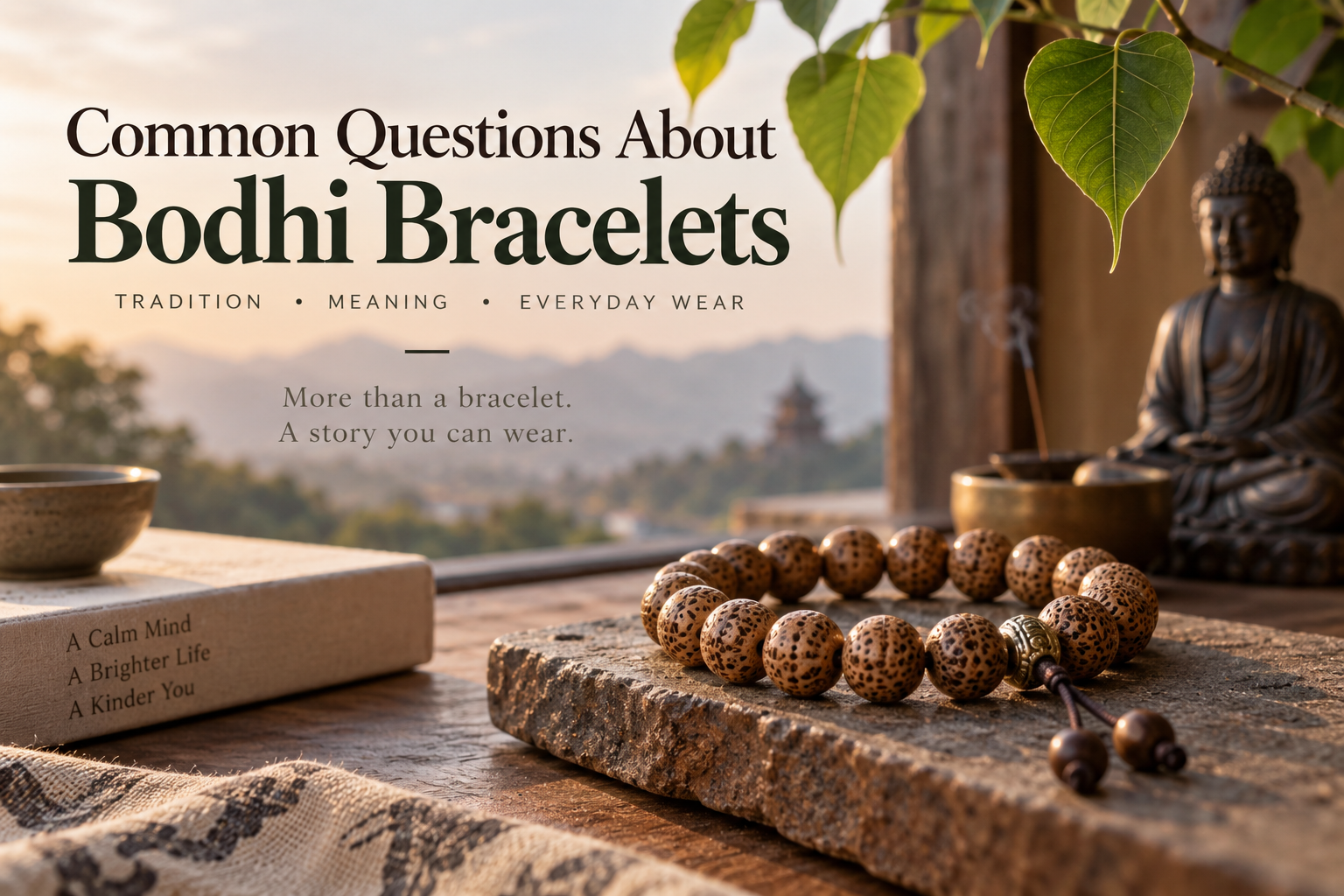
Bodhi bracelets are the kind of jewelry that often make people curious before they make people spiritual.
You might first notice the smooth beads, the warm natural texture, or the way an older bracelet slowly develops a deeper color. Then come the questions: What does "Bodhi" actually mean? Can anyone wear one? Does it need to be blessed? Can you shower with it?
If you are new to Bodhi beads, here are some of the questions I hear most often, along with a little cultural background.
1. What Is a Bodhi Bracelet?
A Bodhi bracelet is usually made from natural seeds or plant-based beads associated with Buddhist prayer beads and meditation traditions.
The word "Bodhi" is connected with awakening or enlightenment in Buddhism. The most famous story, of course, is that Siddhartha Gautama attained enlightenment while meditating beneath the Bodhi tree.
That does not mean every bracelet sold as a "Bodhi bracelet" is made from the actual Bodhi tree. In the modern jewelry world, the term can describe several types of natural seed beads.
In China, Bodhi beads have also become part of the broader "wenwan" culture, where people enjoy handling, wearing, and gradually aging natural objects.
2. Can Anyone Wear a Bodhi Bracelet?
Generally, yes.
You do not have to be Buddhist to appreciate or wear Bodhi beads. Many people wear them simply because they enjoy natural materials, traditional craftsmanship, or the quiet symbolism behind them.
Traditionally, prayer beads have a religious purpose, so I think it is worth wearing them with some cultural respect. But a modern Bodhi bracelet can also be a personal reminder to slow down, stay patient, or simply be more present.
You do not need to pretend it means more to you than it actually does.
3. Which Hand Should You Wear It On?
There is no single rule that everyone follows.
In different Buddhist, folk, and modern spiritual traditions, you may hear different explanations about the left and right hands. Some people believe the left hand is associated with receiving positive energy, while others simply choose whichever wrist feels more comfortable.
For everyday jewelry, comfort is probably the most practical answer.
If you use the beads during meditation, you may develop your own habit over time.
4. Do Bodhi Bracelets Bring Good Luck?
This depends on what "good luck" means to you.
Traditionally, Bodhi beads are more closely connected with Buddhist practice, mindfulness, wisdom, and spiritual cultivation than with the idea of a magical lucky charm.
However, in Chinese folk culture and modern spiritual jewelry, many people believe natural beads can carry positive symbolic meaning.
I prefer to think of a Bodhi bracelet as a reminder rather than a promise. A bracelet cannot make decisions for you, but sometimes a small object on your wrist can remind you of the kind of person you want to be.
5. Do Bodhi Beads Need to Be Blessed?
No, not necessarily.
Some people choose to have prayer beads blessed at a temple because it gives the object personal or religious significance. Others buy Bodhi bracelets and wear them without performing any ceremony.
In traditional practice, intention and behavior often matter more than simply owning an object.
If you are wearing a Bodhi bracelet as everyday jewelry, there is no requirement to have it blessed.
6. Why Do Bodhi Beads Change Color?
This is actually one of my favorite things about natural Bodhi beads.
With regular handling, the beads interact with oils from your skin, moisture, air, and friction. Over time, they may become smoother, darker, and slightly more lustrous.
In Chinese wenwan culture, this gradual transformation is often appreciated rather than treated as damage. People sometimes spend years handling natural beads and watching their appearance develop.
An older bracelet can end up looking very different from a brand-new one, and that is part of its charm.
7. Can You Shower With a Bodhi Bracelet?
I would avoid it.
Bodhi beads are natural materials, and repeated exposure to water, soap, shampoo, humidity, and sudden temperature changes may affect their surface or durability.
Take the bracelet off before showering, swimming, or soaking in water. If it gets wet accidentally, gently wipe it and allow it to dry naturally.
Think of Bodhi beads more like wood than glass or metal.
8. Can You Sleep With a Bodhi Bracelet?
You can, but you do not really need to.
Some people find bracelets uncomfortable while sleeping, and constant pressure or pulling can put unnecessary stress on the elastic cord.
If your bracelet has larger beads, jade pieces, metal charms, or delicate decorative elements, I would usually take it off before bed.
9. How Should You Clean Bodhi Beads?
Keep it simple.
For everyday care, a clean, soft, dry cloth is usually enough. Avoid harsh chemicals, alcohol-based cleaners, perfume, and prolonged soaking.
Traditionally, part of the appeal of natural Bodhi beads is allowing them to age gradually. Trying to make them look permanently "new" can actually work against the character of the material.
10. Can a Bodhi Bracelet Be Given as a Gift?
Absolutely.
A Bodhi bracelet can make a thoughtful gift for someone interested in meditation, Asian culture, natural jewelry, or simply more meaningful accessories.
Many people believe the symbolism of Bodhi makes it especially suitable for moments of transition: graduation, a new job, moving to a new place, or beginning a new chapter in life.
Instead of saying, "This will bring you good luck," I like something simpler:
"I hope this reminds you to stay calm and trust your path."
That feels much more personal.
A Bracelet That Changes With You
Perhaps the most interesting thing about a Bodhi bracelet is that it does not stay exactly the same.
The surface becomes smoother. The color deepens. The cord may eventually need replacing. After months or years, the bracelet carries visible traces of being handled and worn.
In Chinese wenwan culture, that slow change is part of the experience. In Buddhist traditions, Bodhi carries a much older association with awareness and awakening.
You do not have to attach supernatural expectations to either idea.
Sometimes a bracelet can simply be a bracelet, while still carrying a story worth knowing.


Comments (0)
No comments yet. Be the first to comment!
Leave a Comment
Please note, comments must be approved before they are published.