
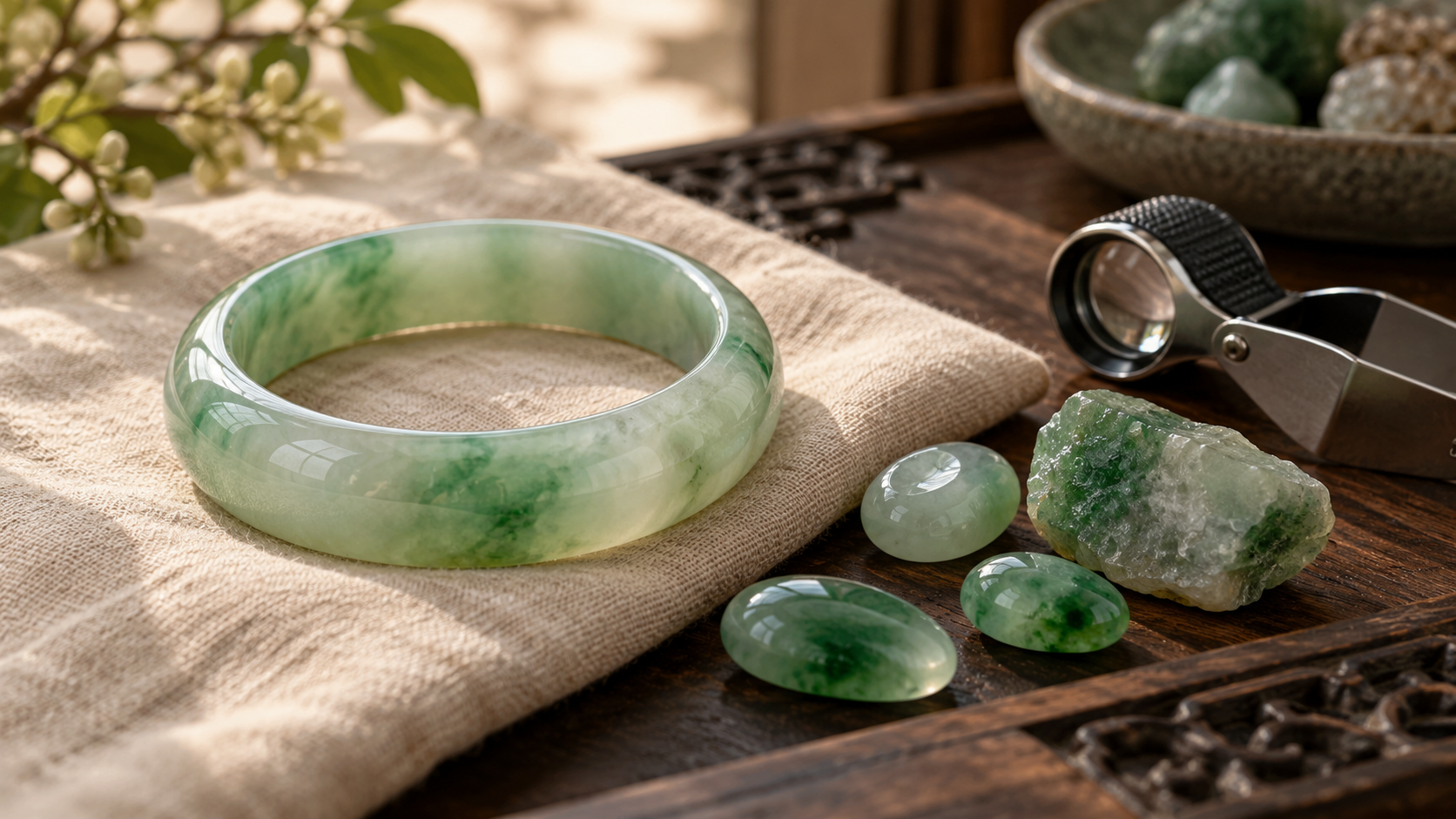
There is no single price for ‘real jade’. A buyer first needs to know what material is being discussed, what is known about its condition and treatment, and whether the question is identification, insurance or a purchase offer. A photograph or a place name cannot settle those questions.
Start with the material rather than a price chart
Jade can refer to nephrite and jadeite as well as some other material names used under particular conditions. ‘Hetian’ may refer to a historic geographic association or be used more broadly in trade. GIA’s nephrite trade account describes this naming complexity. Ask the seller to distinguish the identified material from the evidence for any origin claim.
What affects the value of jadeite?
GIA’s jadeite quality discussion identifies color, transparency and texture as important market factors for jadeite. It also discusses features such as polish and fractures. This is a discussion of jadeite: it should not automatically be turned into a universal ranking for nephrite or a quote for your bracelet.
Is nephrite valuable?
Nephrite pieces can differ in material, workmanship, dimensions, condition and provenance. An attractive appearance or a familiar trade label does not establish the identity, treatment history or geographic origin of an individual object. A specialist needs to assess the actual piece before giving an opinion of value.
What can an identification report tell you?
Review the laboratory’s description of its colored-stone service and read the individual report. Check which item was submitted, what material was identified and which treatments or other conclusions are actually stated. An identification report and an appraisal answer different questions; do not assume a report includes a purchase price.
Questions to ask before buying or seeking an appraisal
- What material is stated for each bead, charm and other component?
- Are treatments known, disclosed or untested?
- What evidence supports a specific origin, and which item does it describe?
- What is the size, condition, workmanship and intended use of the piece?
- What question will the laboratory or appraiser answer, and what is outside its scope?
Compare an actual written offer with the seller’s shipping and return terms. Do not scratch, heat or chemically treat a piece as a home authenticity test. Our existing jade identification guide covers what appearance cannot establish.
Comments
Leave a comment
Please note, comments must be approved before they are published.