

What the hand notices
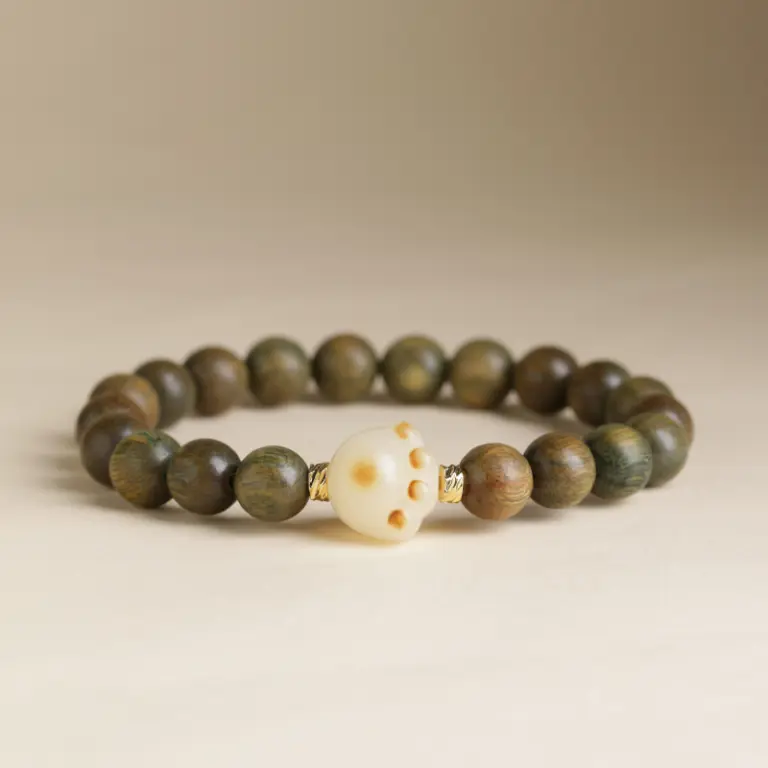
Wood and seed beads are generally light in the hand. Grain, pores, color, and surface tone can differ from bead to bead, so close-up product photographs matter more than perfect visual uniformity.
A practical look at grain, weight, variation, prayer-bead context, and everyday handling.
วัสดุและการใช้ทุกวัน
Wood and seed beads are generally light in the hand. Grain, pores, color, and surface tone can differ from bead to bead, so close-up product photographs matter more than perfect visual uniformity.
Keep strung beads away from long soaking, household chemicals, and hard impacts. Wipe the surface with a soft dry cloth and review the individual product page for cord and size details.
บริบททางวัฒนธรรม
Strung beads have been used as counting and prayer objects in several Asian traditions. A museum object can establish that historical use; it does not prove a modern bracelet has spiritual effects.
ข้อมูลเหล่านี้สนับสนุนบริบทวัสดุหรือประวัติศาสตร์ แต่ไม่ได้ยืนยันสินค้าชิ้นใดชิ้นหนึ่ง