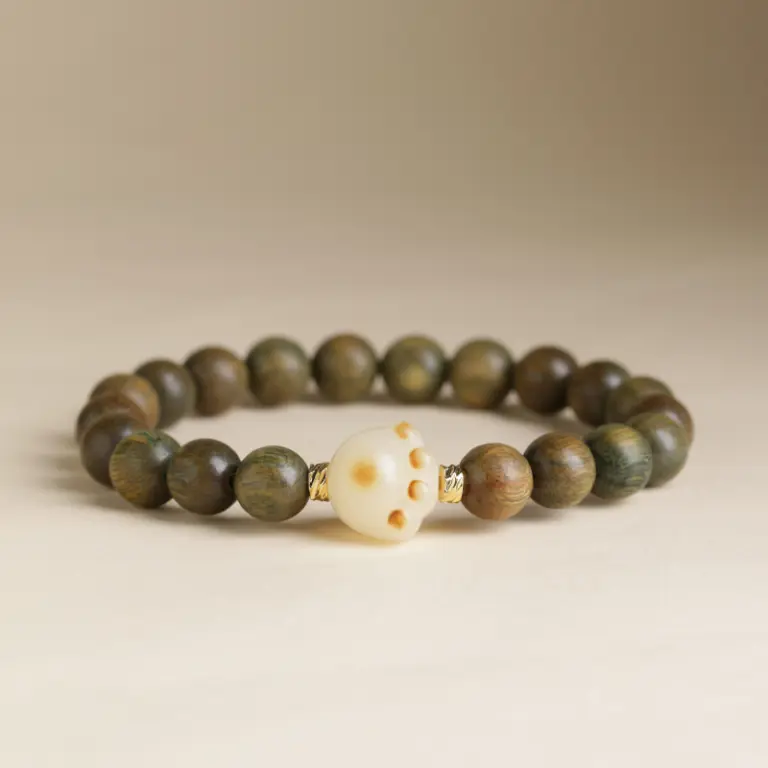
Three focused stories separate visible material facts from cultural symbolism, so you can choose by touch, construction, and daily use.
Current catalogue photography. Natural color and markings can vary.
Wood & Seed Beads: Warmth Made Tactile
A practical look at grain, weight, variation, prayer-bead context, and everyday handling.
Product names may identify sandalwood, peach wood, rudraksha, or Bodhi-style beads. The exact species or seed should be treated as confirmed only when the individual product description states it.
Current catalogue photography. Natural color and markings can vary.
Obsidian & Jade: Dark Glass, Quiet Luster
Two distinct materials, compared through formation, surface, Chinese decorative history, and wear.
Obsidian is volcanic glass. “Jade” can refer to nephrite or jadeite; a product page must name the material before a more specific identification is presented as fact.
Current catalogue photography. Natural color and markings can vary.
Cinnabar & Red Cord: Color, Motif, Construction
A careful distinction between product naming, historic cinnabar lacquer, red-cord symbolism, and the facts a shopper should check.
“Cinnabar” in a product title does not by itself establish mineral composition or a traditional carved-lacquer technique. Refer to the individual product description for its stated material and construction.