
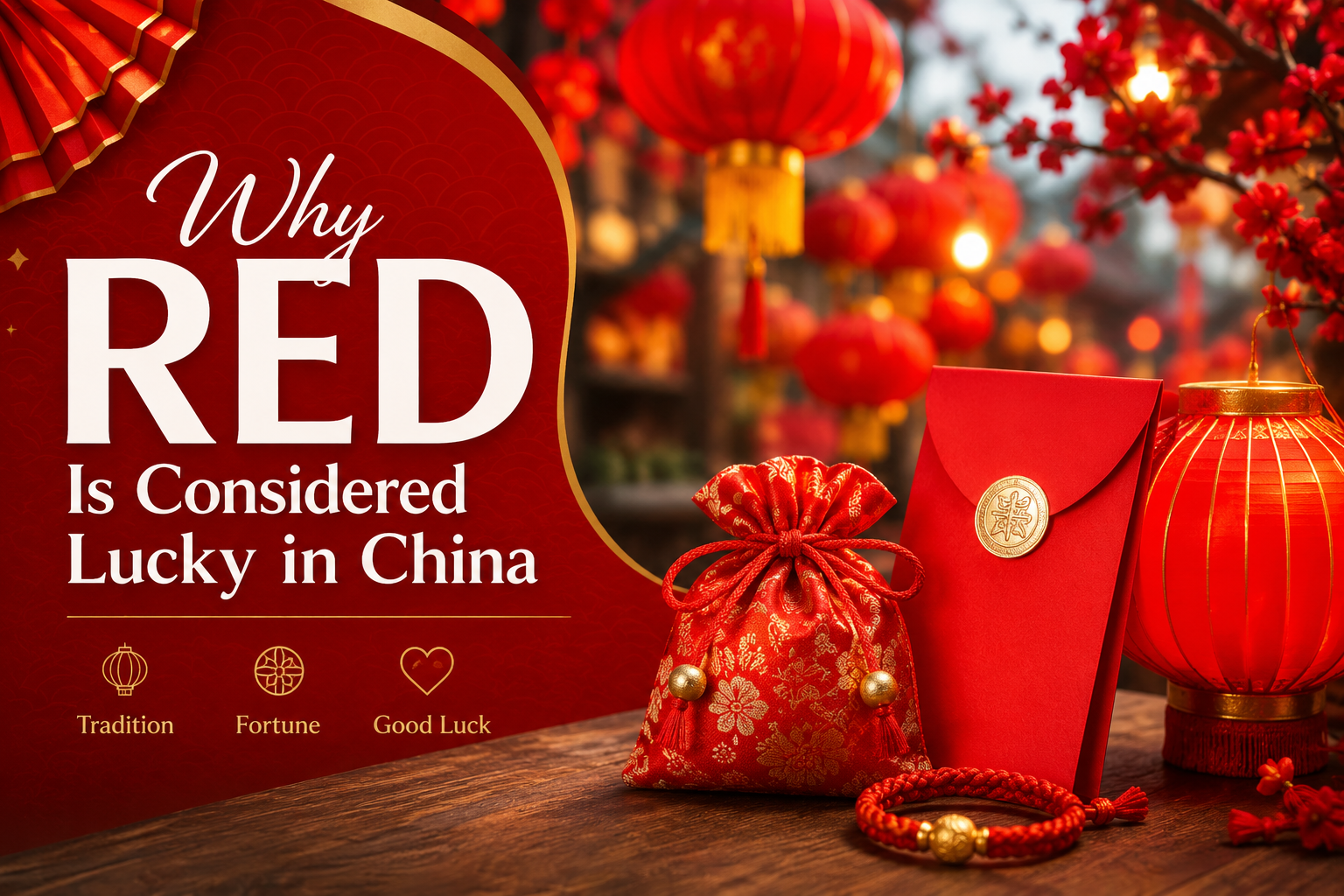
If you've ever visited China during Lunar New Year, one thing immediately stands out: red is everywhere.
Red lanterns hang from doorways. Red paper decorations cover windows. Children receive red envelopes filled with money. Even wedding dresses, gifts, and festive clothing often feature bright shades of red.
As someone who grew up around Chinese traditions, I often get asked, "Why is red such a lucky color in China?"
The answer is a mix of history, folklore, symbolism, and cultural beliefs that have been passed down for centuries.
The Ancient Legend Behind the Color Red
One of the most famous stories comes from an old Chinese legend about a monster called "Nian."
According to the story, Nian would appear at the end of each year and frighten villagers, destroy crops, and attack livestock. People lived in fear until they discovered that the creature was afraid of three things: loud noises, fire, and the color red.
Traditionally, villagers began hanging red cloth and red paper outside their homes to scare the monster away. They also set off firecrackers and lit lanterns.
Many people believe this legend helped establish red as a symbol of protection and good fortune. Even today, the tradition continues during Chinese New Year celebrations.
Whether the story is historically true or not, it remains an important part of Chinese culture and explains why red is closely linked with positive energy.
Red Represents Happiness and Celebration
In Chinese culture, red is often associated with joy, success, and important life milestones.
Traditionally, red is used during some of the happiest moments in life:
- Weddings
- Birth celebrations
- New Year festivals
- Business openings
- Family reunions
In many Chinese weddings, brides historically wore red dresses instead of white ones. Many people believe red symbolizes a joyful marriage and a prosperous future.
Even today, red decorations remain common at weddings throughout China and among Chinese communities worldwide.
The Connection Between Red and Good Fortune
In Chinese symbolism, colors often carry deeper meanings.
Many people believe red attracts good luck and helps invite positive opportunities into life. While not everyone takes these beliefs literally, the symbolism remains powerful.
In traditional Feng Shui, red is associated with the fire element. The fire element is often linked with vitality, passion, confidence, and life force.
Because of this connection, red is commonly used in homes, businesses, and personal accessories.
You might notice red bracelets, red strings, red tassels, or red charms being worn by people who appreciate traditional Chinese culture.
For many, these items serve as reminders of hope, positivity, and good intentions rather than magical objects.
Why Red Envelopes Are So Important
One of the most beloved Chinese traditions involves red envelopes, known as "hongbao."
During Lunar New Year, elders give red envelopes containing money to children and younger family members.
Traditionally, the money inside is meant to symbolize blessings, good fortune, and protection for the coming year.
As a child, receiving a red envelope always felt exciting. It wasn't just about the money. It was about the wishes that came with it.
Many Chinese people still remember the feeling of receiving their first red envelope from parents or grandparents.
In this way, red becomes connected not only with luck, but also with family, generosity, and love.
Why Red Jewelry Became Popular
In recent years, red bracelets and red string jewelry have gained popularity around the world.
Many people believe these bracelets symbolize protection, good luck, or meaningful connections.
One traditional story often linked to red string bracelets is the "Red Thread of Fate." According to folklore, people who are destined to meet are connected by an invisible red thread.
Whether viewed as a spiritual belief or simply a beautiful story, the symbolism resonates with many people.
In modern life, wearing a red bracelet can be a small way to carry a piece of Chinese culture and tradition wherever you go.
Is Red Always Considered Lucky?
While red is generally viewed positively in Chinese culture, context still matters.
Traditionally, red is reserved for celebrations and joyful occasions. Different shades may also carry slightly different meanings.
However, compared to many other colors, red remains one of the most universally positive symbols in Chinese society.
From ancient legends to modern festivals, its meaning has remained remarkably consistent.
Final Thoughts
So why is red considered lucky in China?
The answer isn't just about superstition.
It's about stories passed from one generation to another. It's about family traditions, cultural identity, celebration, and hope for the future.
Many people believe red brings good luck. Others simply appreciate what it represents: happiness, prosperity, protection, and positive energy.
In a world that changes quickly, these traditions continue to connect people with their roots.
And perhaps that's the real reason red remains so special in Chinese culture today.
Comments
Leave a comment
Please note, comments must be approved before they are published.