
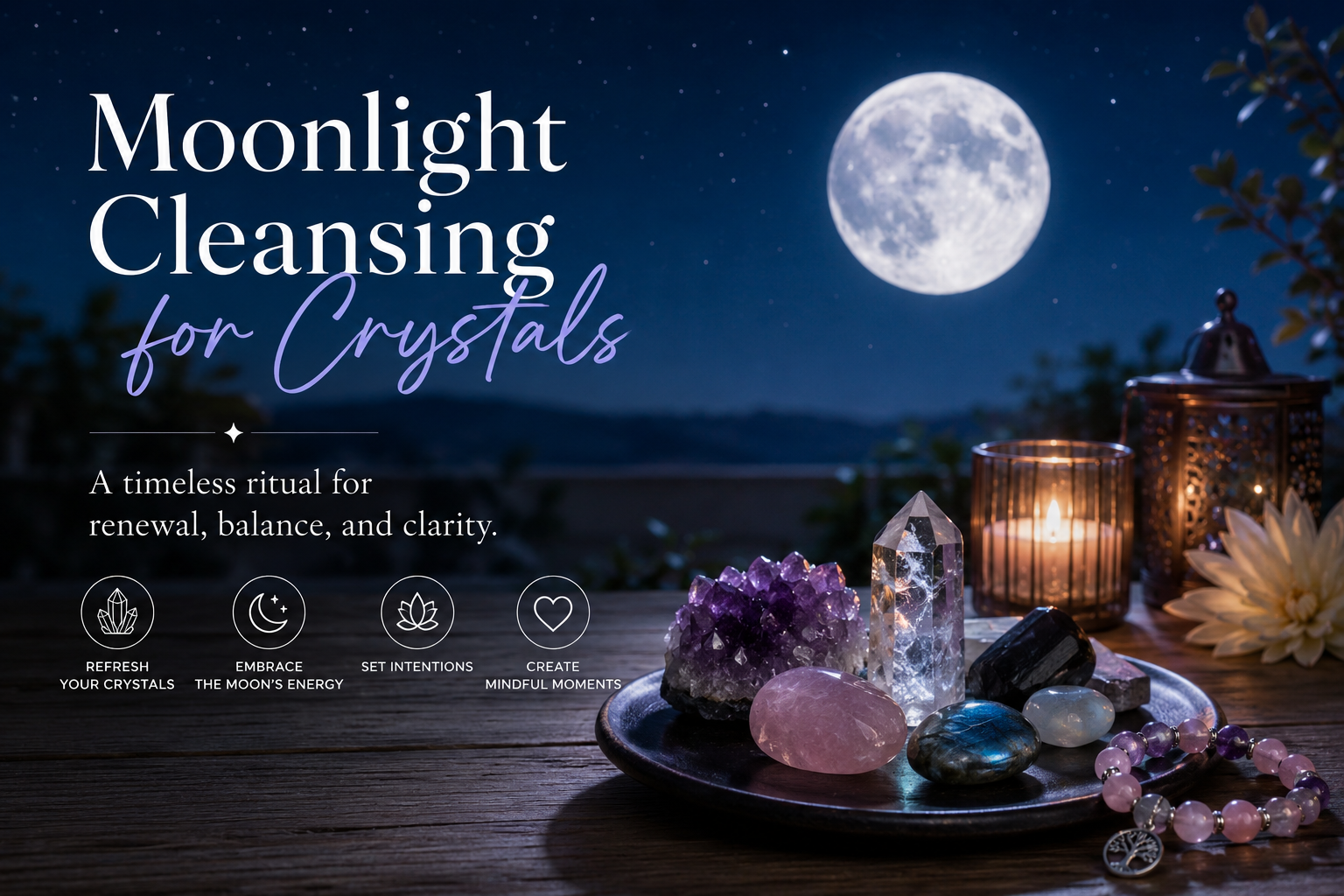
An evening associated with the Moon can be a pleasant occasion to pause with a familiar bracelet. The most interesting thing to observe, however, is the Moon itself. You can enjoy its changing appearance without treating a gemstone as a battery or requiring your jewelry to spend the night outdoors.
Follow the light
NASA explains that moonlight is sunlight reflected from the lunar surface. The phases show the changing overlap between the Moon’s illuminated half and the side facing Earth. A crescent is not a partly missing Moon, and a full moon does not establish a stronger effect on bracelet materials.
The bright and dark patches have a physical story too. NASA identifies the darker lunar seas, or maria, as ancient volcanic lava flows. Learning to recognize one patch gives you something observable to return to on another evening, rather than searching for a feeling that supposedly proves a crystal has charged.
Try a short observation journal
Choose a place with a comfortable view of the sky. Keep your bracelet on a stable indoor tray or wear it if appropriate. You need no special jewelry placement for looking at the Moon.
- Record the date, approximate time and whether clouds interrupt the view.
- Sketch the illuminated shape. A rough outline is enough.
- Note one feature you can actually see: a dark patch, a bright area or the boundary between light and shadow.
- On another evening, repeat the observation and compare the drawings.
NASA’s viewing guide notes that the Moon can be observed with the unaided eye. For terrain shadows, a phase other than full can be more revealing, particularly with binoculars or a telescope. You do not have to wait for the fullest-looking disk to have a worthwhile evening.
Add a personal meaning if you want one
You might place a short note beside the bracelet about an event you want to remember. Keep the observation and the interpretation separate: “the Moon looked like this” records what you saw; “this evening marks a new chapter” describes your choice.
The everyday reset guide develops that second activity without a lunar schedule. If you miss an evening, continue when convenient. The journal is a record of attention, not a streak you must preserve for protection.
Keep exposure separate from cleaning
There is no established gemstone-recharging effect to infer from these astronomical facts. Moonlight also leaves fingerprints and dust where they are. If cleaning is needed, use material-appropriate bracelet care instead.
GIA explains that jewelry maintenance depends on materials and treatments. An overnight stay on a ledge adds concerns about loss, moisture and what happens when morning sun arrives. Let the bracelet return to its usual storage place after your observation.
The evening can finish with a sketch, a remembered occasion or simply a better view of a familiar sky. None requires changing the object you brought to it.
Comments
Leave a comment
Comments are reviewed before publication.