
A few years ago, during a particularly stressful period of my life, I noticed something interesting. A friend of mine always seemed calm, even when everything around her felt chaotic. One day, I asked her what her secret was.
She smiled and held up a simple bracelet made of wooden beads.
"It reminds me to breathe," she said.
That conversation stayed with me. Since then, I've become fascinated by meditation jewelry—not because I believe a bracelet can magically solve problems, but because of the meaning and mindfulness it can bring into everyday life.
Today, meditation jewelry is worn around the world. Many people believe it helps them stay grounded, focused, and connected to their intentions. Whether it's a bracelet, necklace, mala beads, or a symbolic pendant, the value often comes from the personal ritual behind it.
What Is Meditation Jewelry?
Meditation jewelry refers to wearable items that are associated with mindfulness, meditation, prayer, or spiritual reflection.
Traditionally, in many Asian cultures, beads were used to count prayers or mantras during meditation. Over time, these items became both practical tools and meaningful symbols.
In China, Buddhist prayer beads have been used for centuries. Monks and practitioners would move one bead at a time while reciting sacred phrases. The repetitive motion encouraged focus and helped quiet the mind.
Today, many people wear similar jewelry even when they are not practicing formal meditation. For some, it serves as a reminder to slow down during a busy day.
Why People Turn to Meditation Jewelry During Stress
Modern life can feel overwhelming.
Notifications never stop. Work follows us home. Even moments of rest are often filled with screens and distractions.
Many people believe meditation jewelry offers a simple way to create small moments of calm throughout the day.
When I first started wearing a bead bracelet, I noticed myself touching it during stressful meetings or long commutes. The bracelet didn't remove the stress, but it reminded me to pause, take a breath, and return to the present moment.
In that sense, meditation jewelry can become a mindfulness anchor.
Traditionally, in Buddhist practice, beads helped guide attention away from scattered thoughts and back toward the present. Many people use them in a similar way today.
The Meaning Behind Different Materials
One reason meditation jewelry remains popular is that different materials often carry symbolic meanings.
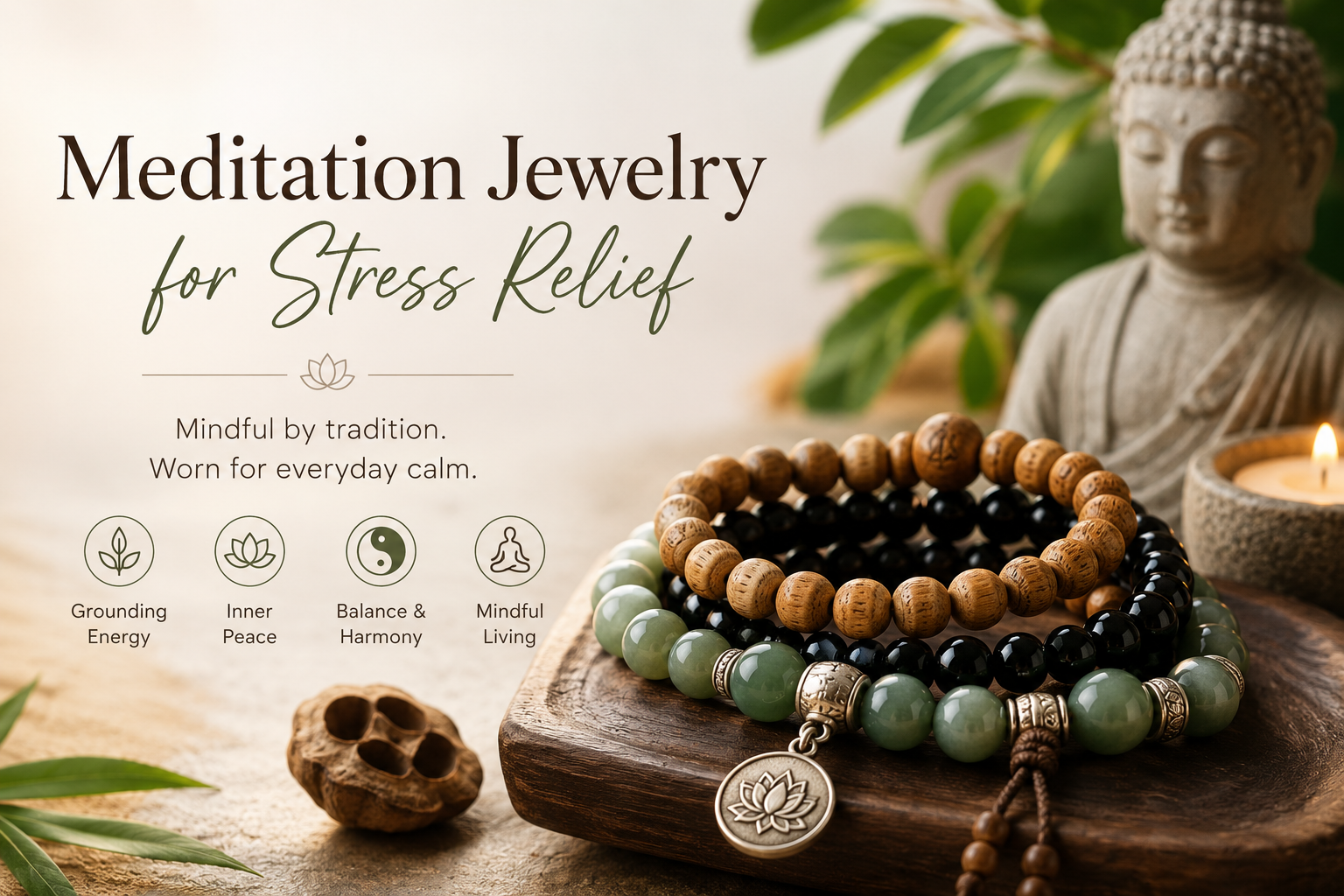
Sandalwood
Sandalwood has a long history in Buddhist and spiritual traditions throughout Asia.
Traditionally, its natural fragrance was believed to encourage tranquility and mental clarity. Many people enjoy sandalwood bracelets because they feel warm, natural, and calming.
Bodhi Seeds
In Buddhist tradition, the Bodhi tree is associated with enlightenment.
Many people believe Bodhi seed bracelets symbolize wisdom, personal growth, and inner peace. In China, Bodhi bracelets are often carried or worn during meditation practices.
Black Obsidian
Obsidian is a volcanic glass that has been valued in many cultures for thousands of years.
Many people believe black obsidian symbolizes protection and grounding. When life feels emotionally overwhelming, some wear obsidian jewelry as a reminder to stay centered and strong.
Jade
In Chinese culture, jade has long been treasured for both its beauty and symbolism.
Traditionally, jade represents harmony, balance, and well-being. Ancient Chinese stories often describe jade as reflecting the virtues of a noble person—calm, steady, and resilient.
A Traditional Story About Mindfulness
One story often shared in Chinese Buddhist culture tells of a young monk who struggled to focus during meditation.
His teacher handed him a string of prayer beads and instructed him to move one bead every time he completed a breath.
The monk expected some profound secret, but the exercise seemed almost too simple.
After several months, he returned and said, "The beads didn't change anything."
The teacher replied, "No. They changed you."
The lesson was that mindfulness doesn't come from an object itself. It comes from the awareness the object helps cultivate.
Many people view meditation jewelry in the same way today.
Creating Your Own Daily Ritual
One of the most meaningful things about meditation jewelry is that it can fit naturally into everyday life.
You don't need to meditate for an hour each day.
Some people hold their bracelet for thirty seconds before work.
Others touch a pendant when they feel anxious.
Some repeat a personal affirmation while turning a bead between their fingers.
These small rituals may seem simple, but many people believe consistency is what gives them meaning.
Final Thoughts
Meditation jewelry is not a cure for stress, nor is it a substitute for healthy habits, rest, or professional support when needed.
However, many people believe it serves as a gentle reminder to slow down and reconnect with themselves.
Traditionally, in Chinese and Buddhist culture, beads and symbolic jewelry were tools for mindfulness rather than objects of magic. Their true value came from the intention behind them.
Perhaps that's why meditation jewelry continues to resonate today.
In a world filled with noise, sometimes a small bracelet, a simple pendant, or a string of beads can remind us to pause, breathe, and find a moment of calm.
Comments (0)
No comments yet. Be the first to comment!
Leave a Comment
Please note, comments must be approved before they are published.