
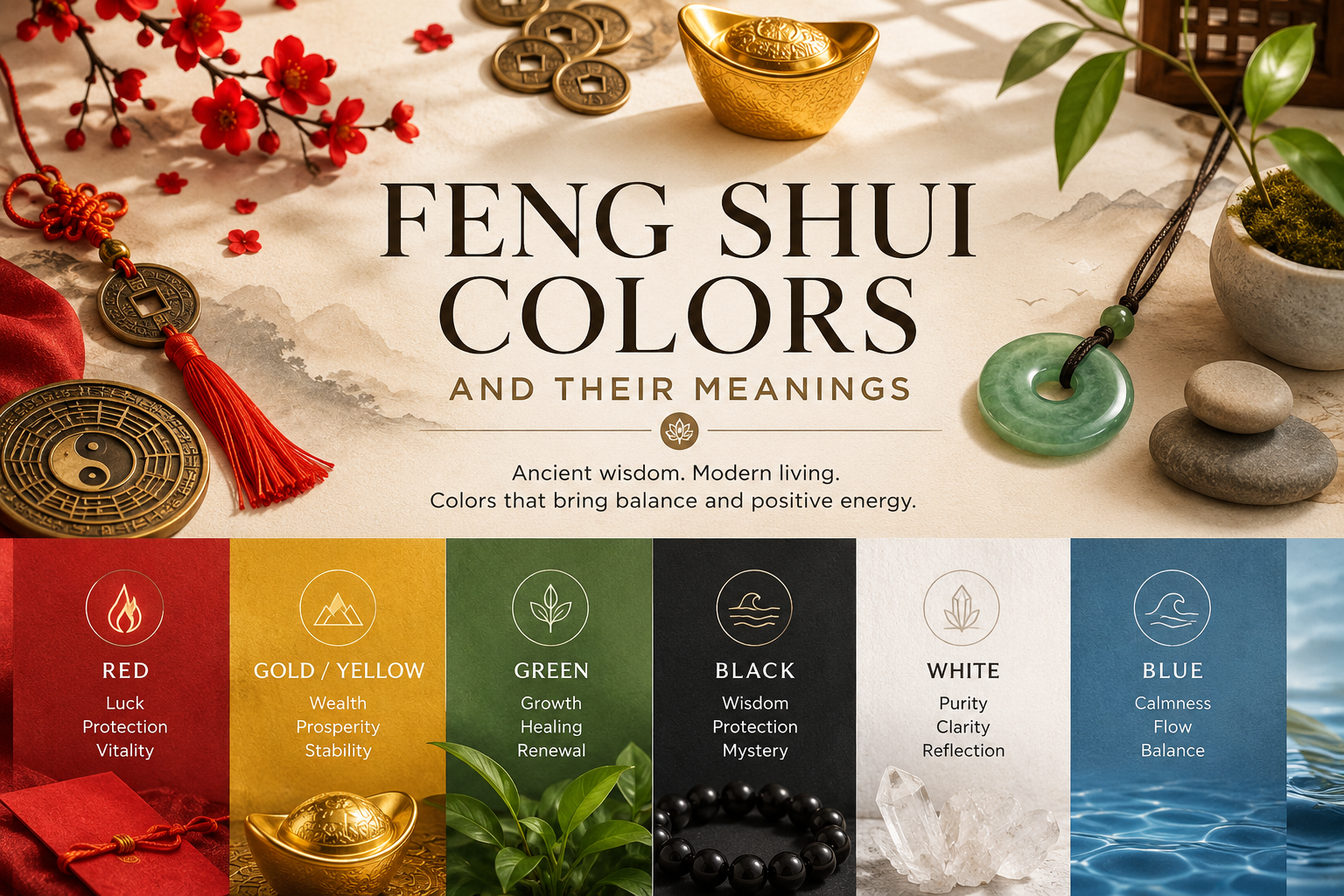
If you've ever walked into a Chinese temple, traditional tea house, or even an old family home in China, you may notice one thing immediately: colors matter.
Not just for decoration, but for meaning.
Growing up around Chinese culture, I heard people talk about certain colors almost like they carried energy. My grandmother would refuse to wear all black during festivals. Red envelopes appeared every Lunar New Year. Gold decorations showed up in shops before important business openings. At the time, I thought it was just tradition. Later, I realized much of it connects to Feng Shui.
Many people believe Feng Shui colors can influence the atmosphere of a space, your mood, and even the kind of energy you invite into your life. Traditionally, colors are linked to the Five Elements in Chinese philosophy: wood, fire, earth, metal, and water.
Of course, Feng Shui is not magic. But in many Asian cultures, color symbolism has been part of daily life for centuries. And honestly, once you start noticing it, you see it everywhere.
Red: Protection, Luck, and Vitality
Red is probably the most famous Feng Shui color.
In China, red has long been associated with celebration, happiness, and protection. Traditionally, people wear red during Lunar New Year, weddings, birthdays, and other important moments.
Many people believe red helps ward off negative energy. That's one reason red string bracelets became popular not only in China, but across many cultures worldwide.
I still remember older relatives hanging red decorations on doors during the New Year because they believed it invited good fortune into the home.
In Feng Shui, red is connected to the fire element. It represents passion, movement, confidence, and strong life energy.
But traditionally, too much red can feel overwhelming. That's why many Feng Shui-inspired homes use red as an accent rather than painting an entire room bright scarlet.
Gold and Yellow: Wealth and Stability
Gold is deeply connected to abundance in Chinese culture.
You'll often see gold combined with red during festivals or business celebrations. Many people believe the combination symbolizes prosperity and success.
Yellow also carries historical meaning. In ancient China, yellow was once associated with emperors and royalty. Traditionally, it represented power, balance, and the earth element.
Soft earthy yellows can make a space feel warm and grounded. In Feng Shui, these tones are often used to create a sense of comfort and stability.
Personally, I've noticed that many tea shops and traditional-style interiors use warm yellow lighting because it creates a calm and welcoming atmosphere.
Green: Growth and Healing
Green is linked to the wood element in Feng Shui.
Traditionally, it represents growth, renewal, health, and fresh beginnings. Many people believe green brings balance into a space, especially when life feels stressful or chaotic.
In modern Feng Shui-inspired design, green plants are everywhere for this reason.
There's also something very natural about green in Chinese aesthetics. Classical Chinese gardens often focus on harmony between nature and living space rather than overly perfect decoration.
Even today, many people place jade items in their homes because jade's green color is traditionally associated with peace, protection, and well-being.
Black: Mystery and Wisdom
Western culture sometimes treats black as purely negative, but in Feng Shui, it's more balanced than that.
Black is connected to the water element. Traditionally, it symbolizes depth, wisdom, and introspection.
Many people believe black can create a sense of strength and protection when used carefully. That's partly why black obsidian jewelry became so popular in Feng Shui-inspired accessories.
Still, in Chinese culture, large amounts of black can sometimes feel too heavy or yin if not balanced with lighter colors.
That balance is important in Feng Shui. It's rarely about one color being "good" or "bad." It's more about harmony.
White: Purity and Reflection
White has an interesting meaning in Chinese culture because it differs from Western traditions.
In the West, white is often connected to weddings and innocence. In China, traditionally, white was associated with mourning and remembrance.
At the same time, Feng Shui also links white to clarity, simplicity, and precision because it belongs to the metal element.
Modern Feng Shui spaces often use white to create calm, clean environments, especially when paired with natural materials like wood or stone.
It's a good reminder that color meanings can change depending on cultural context.
Blue: Calmness and Flow
Blue is associated with calm energy, healing, and peaceful communication.
In Feng Shui, lighter blues are often connected to relaxation and emotional balance. Many people believe blue works well in bedrooms or meditation spaces because it creates a softer atmosphere.
Traditionally, water-related colors like blue and black symbolize flow and adaptability.
Personally, I think blue works especially well when mixed with natural textures. It feels peaceful without trying too hard.
Why Feng Shui Colors Still Matter Today
Even if someone doesn't fully believe in Feng Shui, color psychology still affects how spaces feel.
A bright red café feels different from a pale blue bedroom. A gold-decorated shop creates a different mood than an all-gray office.
That's probably why Feng Shui colors continue to inspire modern home design, jewelry, fashion, and lifestyle products around the world.
Many people are not necessarily looking for "magic." They simply enjoy the stories, traditions, and sense of meaning behind these colors.
And honestly, that may be part of Feng Shui's lasting appeal.
It blends culture, symbolism, aesthetics, and personal intention in a way that still feels surprisingly relevant today.
Comments
Leave a comment
Please note, comments must be approved before they are published.