
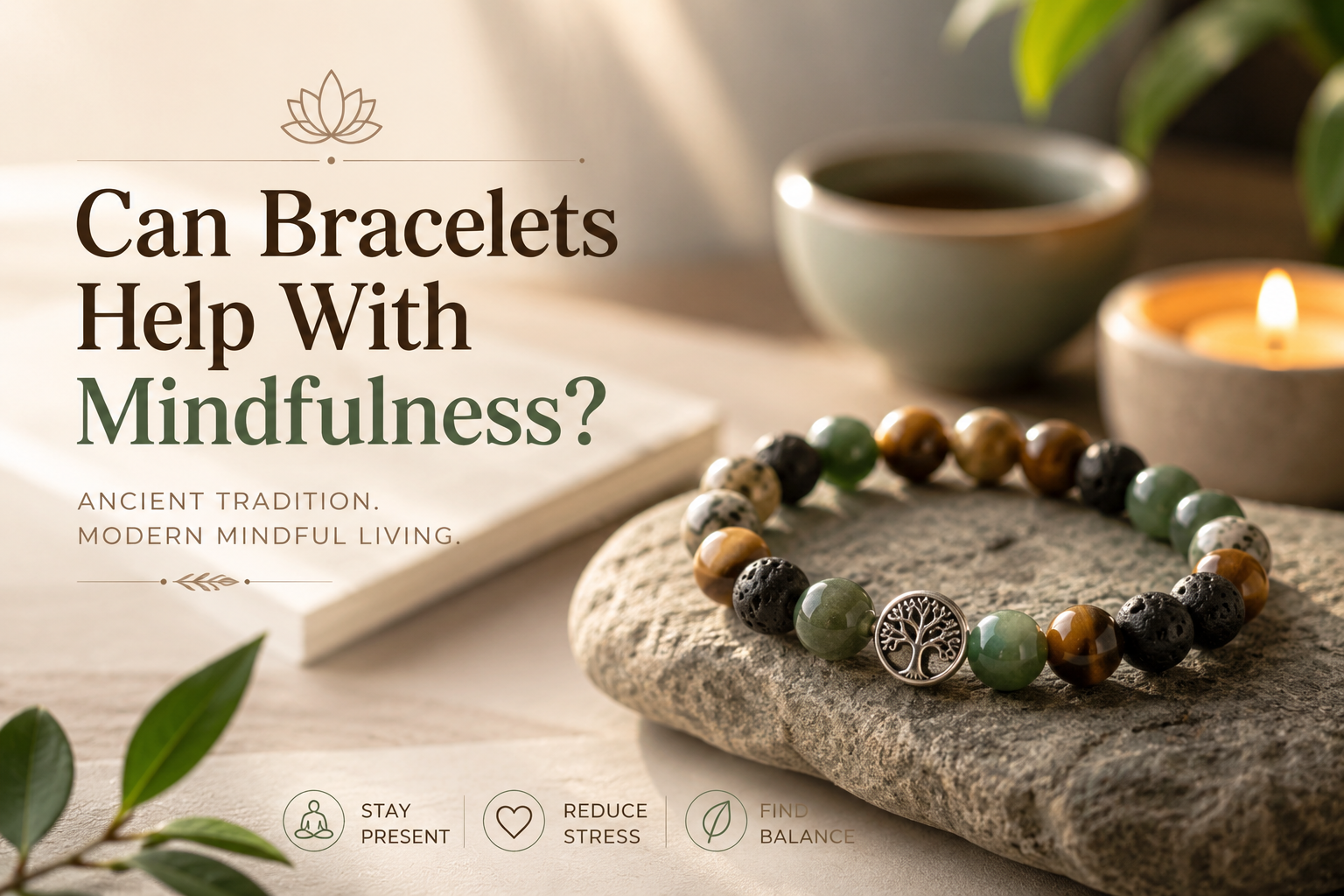
A bracelet can be something you choose to notice. Whether that becomes a useful mindfulness reminder depends on what you do when you notice it, not on a guaranteed property of its beads. It is reasonable to try a small, optional routine and equally reasonable to prefer a reminder that is not worn.
The question is practical: does this object fit the action you want to remember, or does it add distraction and expectation?
Define the action first
Choose something specific and modest. For example, when you sit down for a planned quiet moment, you might notice the bracelet’s shape and then return your attention to the activity you chose. The object does not need to promise calm or demand that your thoughts stop.
You could use a note on your desk or an existing ring instead. Beginning with an action keeps the decision from turning into a search for the most powerful material.
Know what the research is about
NCCIH describes mindfulness as present-moment awareness without judgment and reviews research with important limitations. Evidence about a taught program should not be transferred to a bracelet simply because both appear in a wellness description.
There is no need to claim a psychological benefit from this particular object in order to enjoy using it. If you want instruction in mindfulness, look for the practice and teacher rather than assuming a purchase supplies both.
Counting beads are a specific example
Tokyo National Museum’s Amber Buddhist rosary entry describes nenju or juzu used for repeated chants. This is a documented counting function in Buddhist practice, not the history of every bracelet advertised for focus.
A named religious object may have handling conventions or meanings that a short fashion strand does not share. Ask the relevant community if you want to follow that practice.
Make a small, pressure-free trial
- Choose a bracelet you already find comfortable.
- Name one moment when you intend to notice it.
- Decide on the ordinary action it will mark.
- Check later whether it was helpful, neutral, or distracting.
You need not turn every glance at your wrist into an exercise. Nor does forgetting the routine say anything about your ability to practice. Adjust or leave it aside when it does not suit you.
Our meditation bead guide explains context, while the daily-wear article covers comfort. For material claims, read our evidence discussion. A chosen reminder can remain a small practical experiment rather than a promise about your mind.
Comments
Leave a comment
Comments are reviewed before publication.