
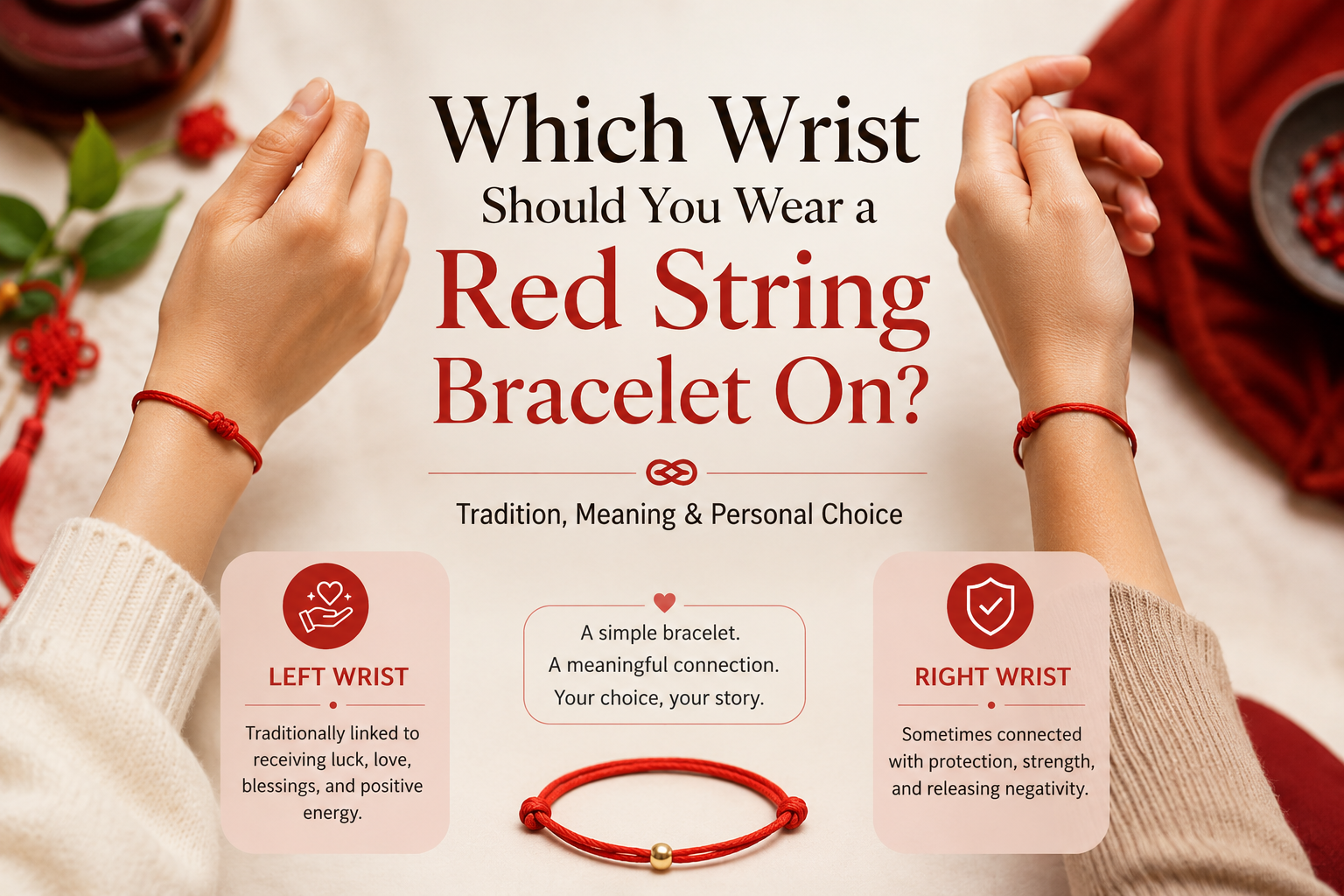
If you've ever bought a red string bracelet from a market in Asia or received one from a friend, you've probably asked the same question many people do:
"Which wrist am I supposed to wear it on?"
The short answer is: there's no single rule. But traditionally, in many parts of Chinese culture and other Asian traditions, the wrist you choose can carry different meanings.
And honestly, that's part of what makes red string bracelets interesting. They're less about strict rules and more about personal intention, stories, and symbolism passed down over time.
Why Red String Bracelets Matter
In Chinese culture, red has long been associated with luck, protection, happiness, and positive energy. You'll see it everywhere during Lunar New Year, weddings, birthdays, and festivals.
Traditionally, many people believe a red bracelet can help "ward off" negative energy or attract good fortune. Some wear it during important life changes. Others wear it simply because it makes them feel connected to family traditions or spiritual beliefs.
In recent years, red string bracelets have also become popular outside Asia, especially among people interested in mindfulness, spiritual jewelry, or meaningful accessories.
But the wrist question still comes up all the time.
Traditionally, the Left Wrist Is More Common
In many Chinese traditions, the left side of the body is connected to receiving energy, blessings, or luck.
Because of this, many people believe wearing a red string bracelet on the left wrist helps invite good fortune, protection, or love into your life.
You'll often hear older family members say things like:
"Wear it on your left hand to bring good things in."
Of course, this is more cultural belief than scientific fact. But traditions like these have been passed down for generations.
In feng shui-inspired thinking, the left side is sometimes seen as the "receiving side," while the right side is associated with giving or releasing energy.
So if someone is wearing a red bracelet for luck, wealth, love, or emotional support, traditionally they may choose the left wrist.
What About the Right Wrist?
That doesn't mean the right wrist is wrong.
In fact, some people intentionally wear red string bracelets on the right wrist when they want symbolic protection from negativity or stressful environments.
Many people believe the right side represents action, strength, or letting go.
For example, someone going through a difficult period might wear the bracelet on the right hand as a reminder to release fear, anxiety, or bad habits.
Again, these ideas vary depending on family customs, spiritual practices, and personal interpretation.
There isn't one universal "correct" answer.
The Story of the Red Thread of Fate
One reason red string bracelets became so meaningful is because of an old East Asian legend often called "The Red Thread of Fate."
Traditionally, many people believe invisible red threads connect people who are destined to meet — especially soulmates, close family members, or life-changing connections.
In Chinese folklore, the thread is tied by fate itself. It may stretch or tangle, but it never breaks.
That story is one reason couples sometimes exchange red bracelets. In modern culture, friends, siblings, and even parents give them as symbolic gifts too.
It's less about superstition and more about connection.
Honestly, Personal Meaning Matters Most
Over time, I've noticed that people tend to create their own rituals around red bracelets.
Some wear them every day until the string naturally breaks. Others make a wish when tying it on. Some never take it off at all.
And interestingly, many people switch wrists depending on what they're going through in life.
That's why these bracelets feel more personal than ordinary jewelry.
They're small, simple, and usually inexpensive — but they often carry stories, memories, or intentions that matter deeply to the person wearing them.
So, Which Wrist Should You Choose?
If you want to follow traditional symbolism:
- Left wrist: often associated with attracting luck, love, blessings, or positive energy
- Right wrist: sometimes connected with protection, strength, or releasing negativity
But in reality, many people simply choose whichever side feels comfortable or meaningful to them.
In Chinese culture, symbolism has always been flexible. Traditions evolve from family to family, region to region, and person to person.
So if you're wearing a red string bracelet, you probably don't need to worry too much about "getting it wrong."
Traditionally, the meaning comes more from intention than perfection.
Comments (0)
No comments yet. Be the first to comment!
Leave a Comment
Please note, comments must be approved before they are published.