
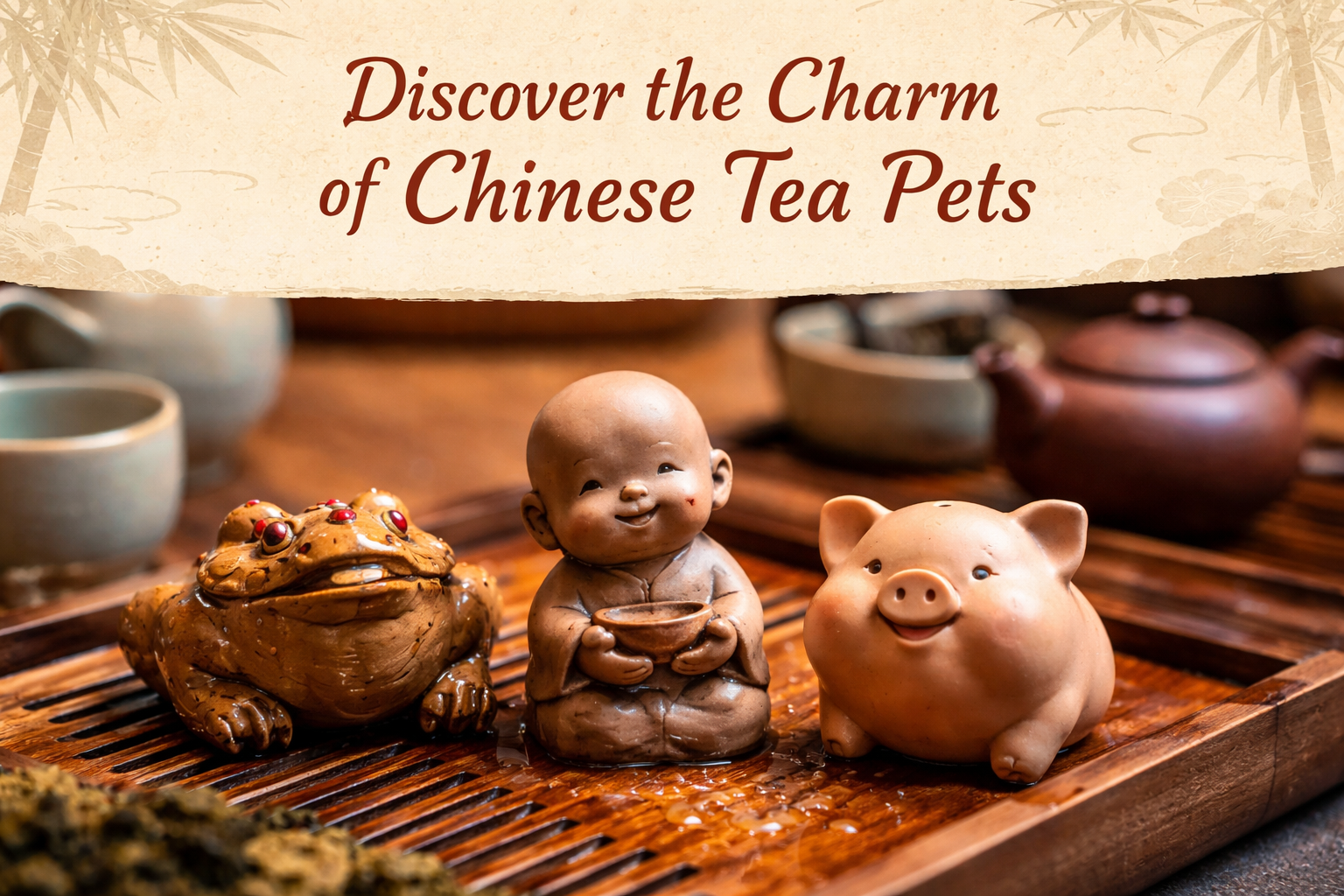
If you ever sit down at a traditional Chinese tea table, you might notice a small clay figure quietly resting beside the teapot. It could be a chubby pig, a playful frog, or even a tiny monk with a gentle smile. This is a tea pet—a humble yet deeply meaningful companion in Chinese tea culture.
At first glance, tea pets may look like simple decorations. But for those who understand them, they are something much more: part ritual, part storytelling, and part personal connection.
Tea pets are usually made from unglazed Yixing clay, the same material used for traditional teapots. Because the clay is porous, it absorbs tea over time. Owners “feed” their tea pets by pouring leftover tea over them during tea sessions. With patience and care, the surface gradually becomes smoother and shinier, developing a soft glow that reflects years of use. In a way, a tea pet grows alongside its owner, quietly recording shared moments.
There is something undeniably human about this practice. You don’t just own a tea pet—you nurture it.
Many tea pets are shaped like animals or mythical creatures, each carrying symbolic meaning. A popular one is the three-legged money frog, believed to attract wealth and good fortune. Another common figure is the Pixiu, a legendary creature said to bring prosperity while protecting its owner from loss. Even simple animals like pigs or turtles can represent abundance, longevity, or peace.
But beyond symbols, tea pets often come with stories.
One well-known tale tells of a poor scholar who dreamed of success but struggled to afford even basic necessities. One day, he found a small clay figurine discarded by the roadside. Feeling a strange attachment to it, he took it home and placed it beside his tea cup. Each day, he poured a little tea over the figurine as he studied. Years later, he finally passed the imperial examination and became an official. He credited not luck alone, but the quiet discipline and companionship symbolized by the small clay figure. Whether the story is true or not, it reflects how tea pets are seen—not as magical objects, but as reminders of patience and perseverance.
Tea pets are also deeply tied to the rhythm of Chinese tea ceremonies, especially Gongfu tea. These ceremonies emphasize mindfulness, respect, and presence. Every step—from warming the teaware to pouring the tea—is done with intention. The tea pet becomes part of this flow. Feeding it tea is not wasteful; it is a gesture of sharing, a small offering that makes the experience feel complete.
Over time, tea pets begin to mirror their owners. Some people carefully polish them after each session, while others let them age naturally. Some choose figures that reflect their personality, while others pick them as gifts with special meaning. It’s common to hear people talk about their tea pets almost as if they were old friends.
For many modern tea lovers, especially younger generations, tea pets offer a bridge between tradition and daily life. In a fast-paced world, they bring a sense of calm and continuity. You don’t need a formal tea ceremony to enjoy one—just a quiet moment, a cup of tea, and a willingness to slow down.
Today, tea pets are finding their way beyond China. As more people around the world explore tea culture, these small clay companions are becoming a unique cultural symbol—something that carries history, craftsmanship, and emotion all at once. They are also increasingly popular in creative design and cross-border e-commerce, appreciated not only for their meaning but for their charm and individuality.
If you ever decide to bring a tea pet into your life, don’t worry too much about choosing the “right” one. The best tea pet is simply the one you feel drawn to. Over time, as you share your tea with it, it will become something uniquely yours.
After all, in a world full of fast consumption and disposable things, a tea pet quietly teaches a different lesson: that beauty can grow slowly, and that even the smallest rituals can carry deep meaning.
Comments (0)
No comments yet. Be the first to comment!
Leave a Comment
Please note, comments must be approved before they are published.