
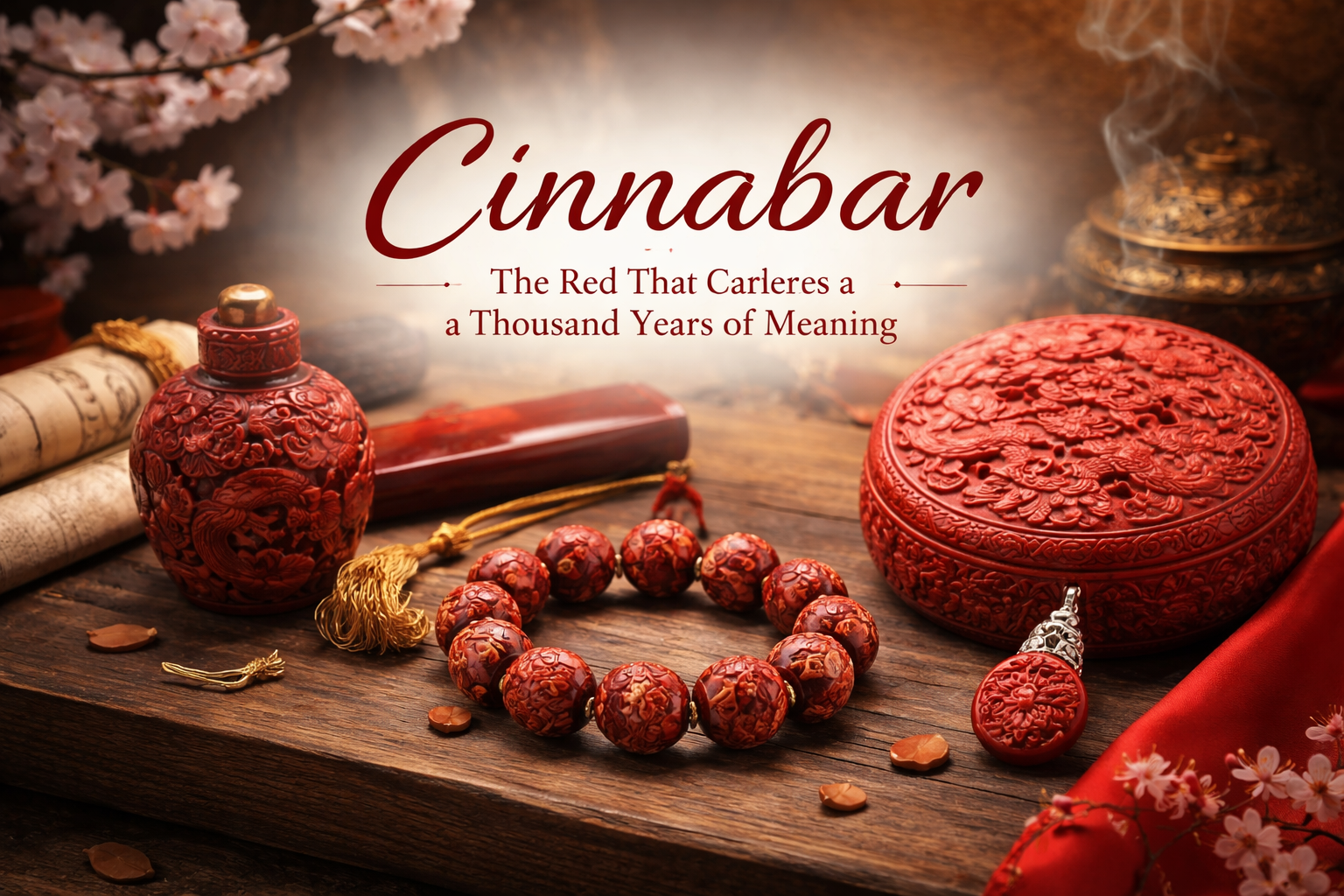
If you’ve ever wandered through a traditional Chinese market or browsed an antique shop, you might have noticed a deep, almost glowing red—rich, warm, and impossible to ignore. That color often comes from cinnabar, a material that has quietly traveled through thousands of years of Chinese history, carrying with it stories of protection, power, and spirituality.
At first glance, cinnabar looks almost too vivid to be natural. Its color sits somewhere between scarlet and crimson, with a density that feels grounded rather than flashy. Unlike modern dyes or synthetic pigments, cinnabar’s red has a weight to it—something that feels ancient, like it belongs to the earth as much as to human culture.
What Exactly Is Cinnabar?
Cinnabar is a natural mineral composed primarily of mercury sulfide. For centuries, it was the main source of mercury, but in China, it became something more than just a resource. Ground into powder, it was used as a pigment in art, lacquerware, and even calligraphy ink. Over time, artisans also began shaping it into beads, pendants, and carved ornaments.
These carvings are where cinnabar truly comes alive. Traditional pieces often feature intricate patterns—dragons, lotus flowers, clouds—each symbol carrying its own meaning. The craftsmanship can be astonishing, with layers of lacquer built up and carefully carved to reveal depth and texture.
A Color Tied to Protection and Spirit
In Chinese culture, red is more than a color—it’s a force. It represents life, luck, celebration, and protection. Cinnabar, with its naturally intense red, became closely associated with these ideas.
Historically, cinnabar was believed to ward off negative energy. It was often used in talismans, seals, and ritual objects. Even today, you’ll sometimes find cinnabar beads in bracelets worn not just for their beauty, but for their symbolic role as a kind of spiritual shield.
There’s also a strong connection between cinnabar and Taoist traditions. In ancient practices, cinnabar was linked to concepts of vitality and transformation. Some alchemists even believed it held the secret to immortality—an idea that sounds mythical now, but reflects how deeply people once respected its presence.
A Story from the Past
One traditional story tells of scholars carrying cinnabar ink as they traveled long distances for imperial examinations. The ink wasn’t just practical—it was symbolic. Writing with cinnabar red was believed to bring clarity of mind and protection from misfortune along the journey.
Another tale speaks of cinnabar seals used by emperors. These seals, pressed into documents in bold red, weren’t just signatures—they were authority made visible. The color itself carried weight, reinforcing the power behind the words.
Whether or not you believe these stories literally, they give a sense of how people once related to this material—not as decoration, but as something alive with meaning.
From Ritual to Everyday Life
Today, cinnabar has found a new place in modern life, especially in the world of cultural design and wearable art. You’ll see it in bracelets, pendants, and small carvings that blend traditional motifs with contemporary aesthetics.
For many people outside China, cinnabar offers something different from typical jewelry. It doesn’t try to sparkle or compete with gemstones. Instead, it draws you in quietly, through color and texture, through a sense of history you can almost feel in your hand.
There’s also something grounding about it. In a world full of fast fashion and mass production, cinnabar pieces often feel intentional—like they were made to last, not just physically, but culturally.
A Note on Modern Use
It’s worth mentioning that traditional cinnabar contains mercury, which can be toxic in certain forms. However, most modern cinnabar products—especially those used in jewelry—are either sealed, stabilized, or made using safer techniques that replicate the look without the risk.
If you’re purchasing cinnabar items, it’s always a good idea to choose reputable sources that prioritize safety and craftsmanship. That way, you’re not just buying an object—you’re connecting with a tradition in a responsible way.
Why Cinnabar Still Matters
What makes cinnabar interesting isn’t just its color or its history—it’s the way it bridges worlds. It connects ancient beliefs with modern design, ritual with daily life, symbolism with personal expression.
When you hold a piece of cinnabar, you’re not just holding something red. You’re holding a material that has been part of human imagination for centuries—a color that once marked emperors’ commands, protected travelers, and carried quiet hopes for luck and balance.
In that sense, cinnabar isn’t just decorative. It’s a story, still being told, one piece at a time.
Comments (0)
No comments yet. Be the first to comment!
Leave a Comment
Please note, comments must be approved before they are published.